A hot dog built for contrast
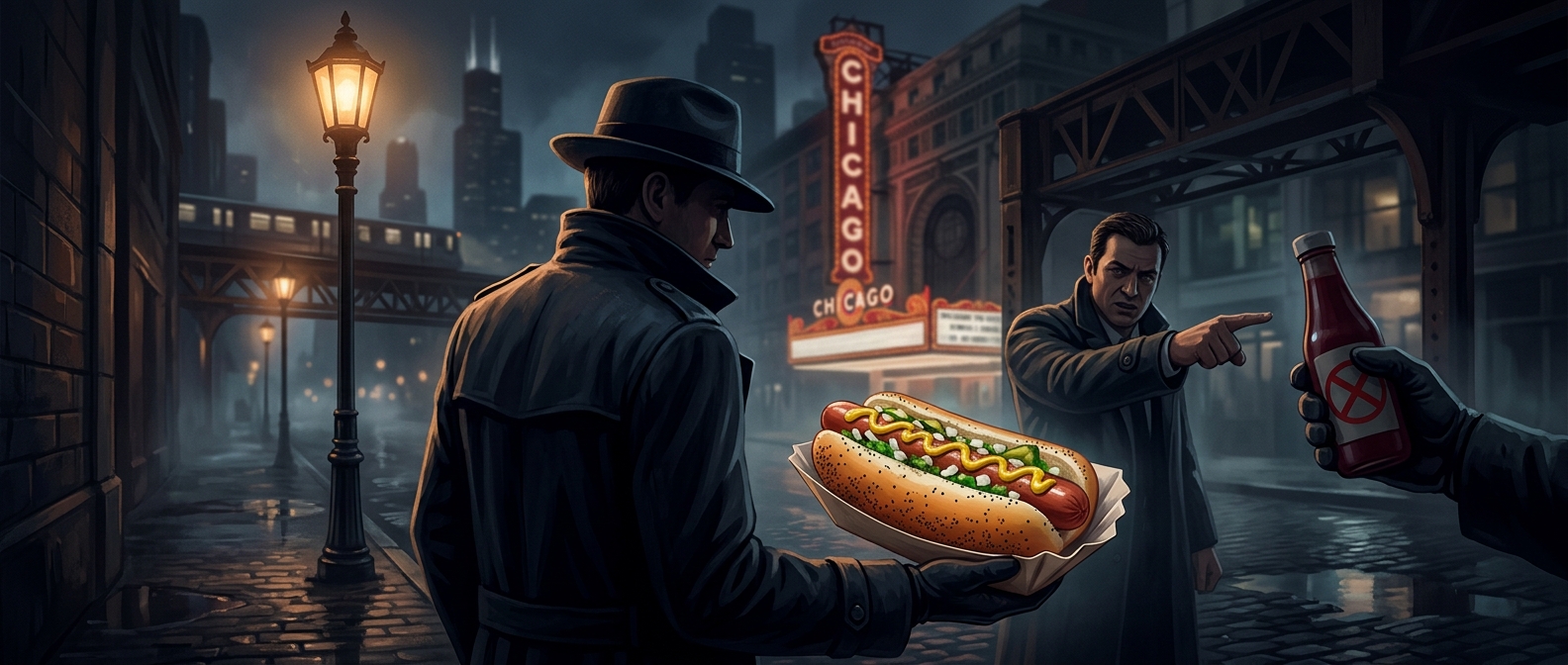
The Chicago-style dog is designed as a busy, balanced bite: mustard brings sharpness, relish adds sweetness and crunch, celery salt contributes a savory edge, and toppings such as onion, tomato, pickle, and sport peppers layer in freshness, acidity, and heat. The poppy-seed bun holds the combination together.
Ketchup can seem out of place not simply because it is sweet, but because its thick, sugary tomato flavor can dominate a dog whose other toppings are meant to stay distinct. A slice of fresh tomato is already part of the classic arrangement; ketchup changes the balance rather than filling an empty spot.
A local rule, not a law
In Chicago, ordering the traditional version without ketchup signals that you want the established combination, much as asking for a familiar regional dish “the usual way” does elsewhere. The rule is strongest at old-school stands and among people who treat the Chicago dog as a local emblem. It is cultural shorthand, not a claim that every resident follows the custom or that anyone is barred from ordering what they like.
That distinction is what makes the ketchup debate memorable: a small condiment choice becomes a way to recognize a particular food tradition. At a Chicago stand, leaving ketchup off lets the mustard, relish, peppers, and celery salt do the work they were assembled to do.