A year on 55 Cancri e lasts less than an Earth day
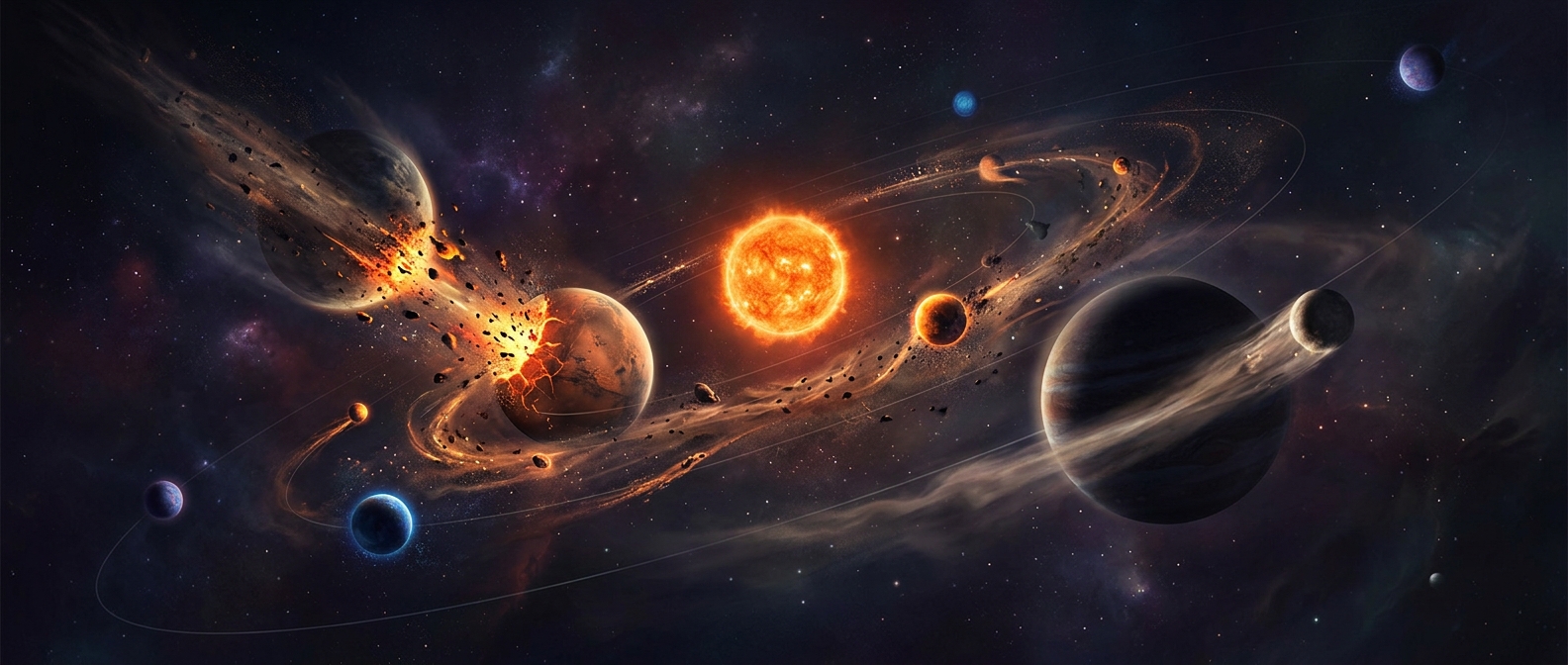
55 Cancri e circles its star at such close range that its orbital path is smaller than Mercury’s around the Sun. The star’s gravity keeps the planet moving rapidly, so it completes a circuit in roughly 18 hours. That is its “year”: the time needed to go once around its star, not the time it takes to rotate.
Astronomers can measure that orbit by watching the star wobble slightly as the planet’s gravity tugs on it. When the planet passes in front of the star, the dip in starlight also helps reveal its size. Together, those measurements show a dense, rocky world in an extreme environment—not what its interior is made of.
Why “diamond planet” is still a hypothesis
A planet’s mass and size can constrain its average density, but they cannot uniquely identify its ingredients. Different mixtures of rock, metal, and carbon can produce similar measurements. The diamond idea arose from a proposed carbon-rich composition: under the immense pressure deep inside a planet, carbon can crystallize into diamond. But the available measurements do not establish that 55 Cancri e contains enough carbon for a planet-wide diamond interior.
Its close orbit makes the better-supported story dramatic enough: intense stellar heating likely leaves the surface scorching hot, with conditions unlike any stable landscape on Earth. The remarkable part is not a proven diamond crust, but a rocky world racing around its star so quickly that its entire year ends before an Earth day does.