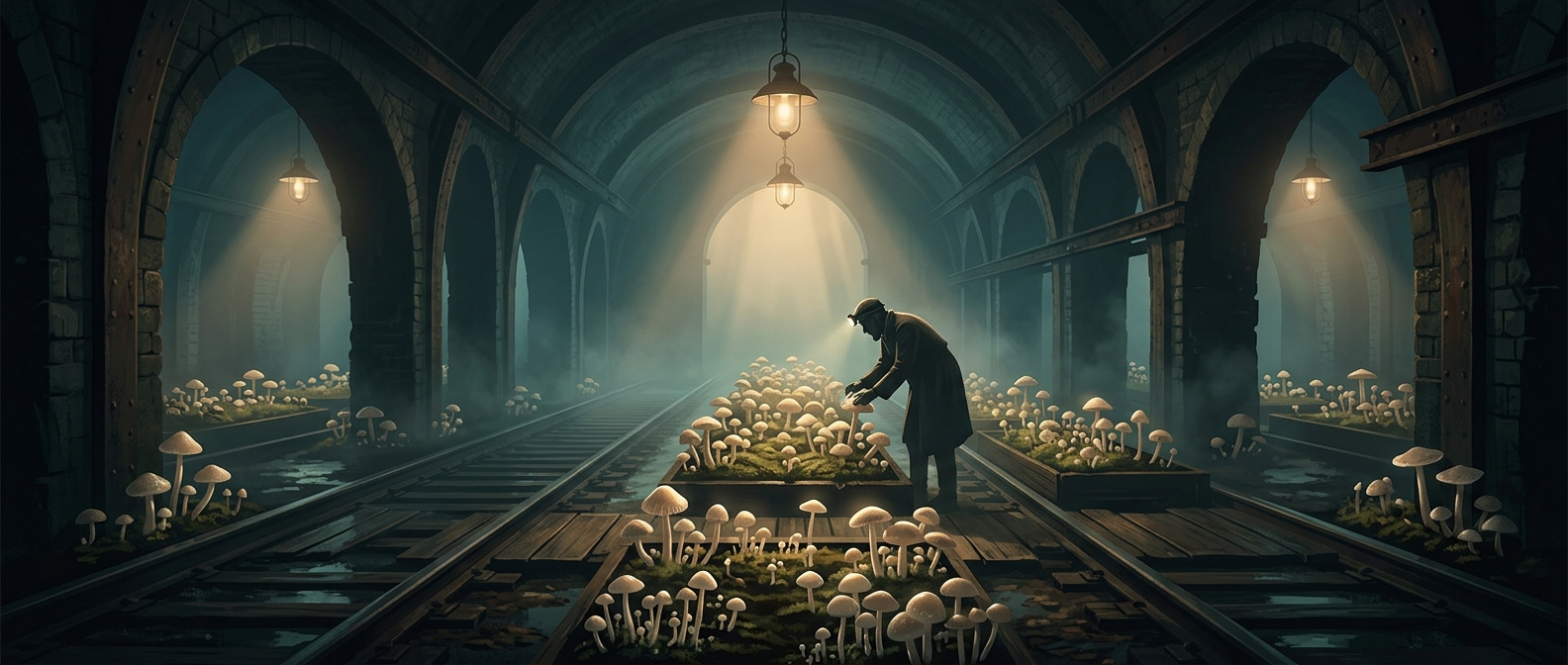
How Underground Tunnels Became Mushroom Farms
An empty tunnel offered growers something valuable: a sheltered place with relatively steady conditions. Underground stone spaces stayed cooler and more humid than the surface, helping reduce the sharp swings in temperature and moisture that can hinder mushroom production. Darkness suited the work, though mushrooms do not need darkness in the way green plants need light; they grow by drawing nutrients from decaying organic material, not by photosynthesis.
The challenge was to turn a cavern into a productive growing space. Growers used horse manure as part of the growing medium—the nutrient-rich material mushrooms grow through—and prepared it so it could support cultivation. In that setting, a former transport or quarry space became useful without the expense of constructing a purpose-built farm.
A Farm Built from Urban Leftovers
The arrangement linked two kinds of surplus. Tunnels that had lost their original purpose supplied shelter, while manure from the city’s horses supplied material for growing. Instead of treating both as waste, cultivators made them parts of a working food system.
This also made the farm unusually dependent on its surroundings. The underground space was not just a backdrop: its dampness and buffered temperatures helped create a workable environment, while its layout offered room to organize growing areas away from weather and direct sun. The tradeoff was that growers had to manage conditions in a confined space and bring in the materials and labor needed to keep cultivation going.
The striking result was a kind of urban recycling before the term became common: a city’s discarded infrastructure and animal waste could be assembled into a new source of food beneath its streets.