The invisible lanes of air traffic
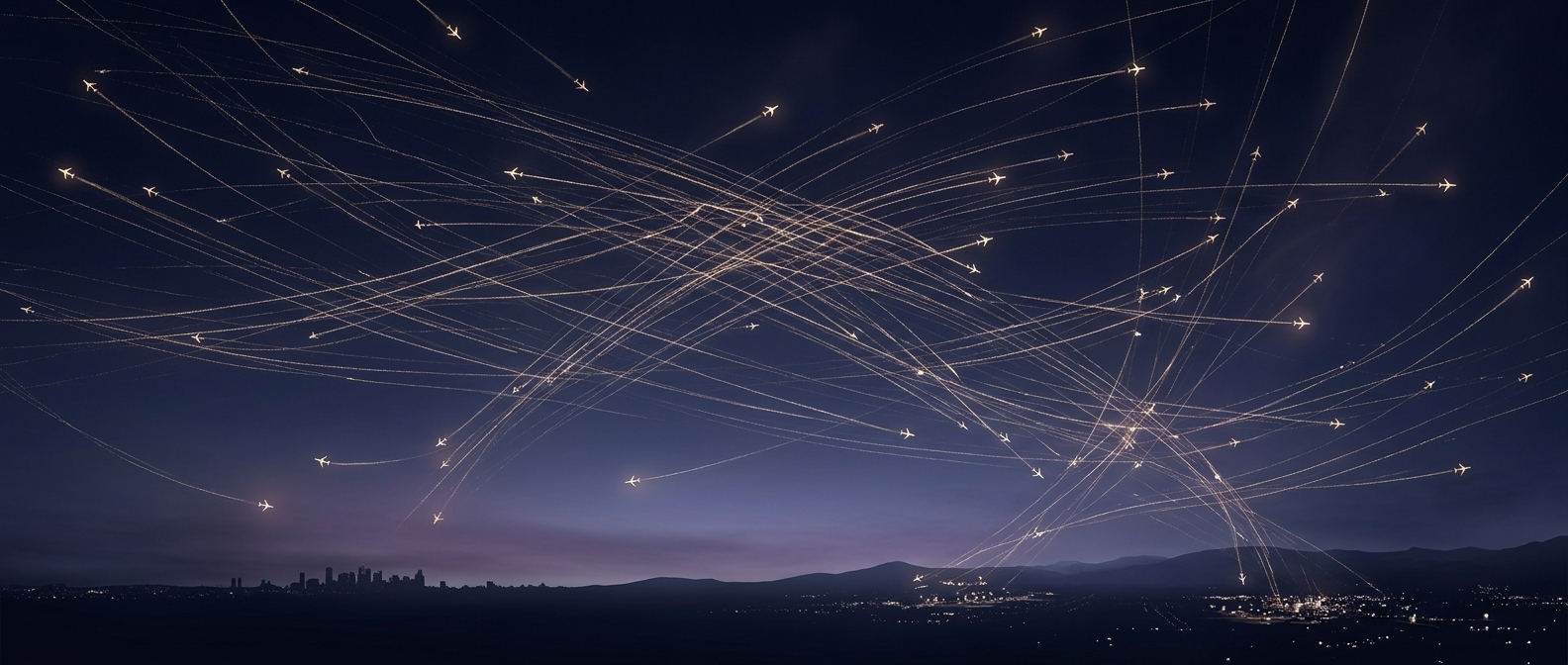
Aircraft do not follow painted corridors in the sky. Instead, flight plans guide them along routes defined by navigation points, while assigned altitudes help keep traffic moving in separate layers. A plane climbing after takeoff or descending toward an airport may pass through several of those layers, so its path must be coordinated with other flights nearby.
Controllers track aircraft using radar and, in many areas, signals from onboard transponders that report a plane’s identity and position. Newer satellite-based systems can help locate aircraft beyond the reach of conventional radar. The displays turn a vast, hard-to-see volume of airspace into a changing picture of position, direction and altitude.
A flight is handed from one controller to another
Airspace is divided into sectors, each managed by a controller or team. As a plane approaches a sector boundary, the next team receives its flight details and takes over communication. These handoffs let controllers focus on a manageable patch of sky while keeping each flight connected to the larger network.
Controllers and pilots maintain required separation by adjusting altitude, speed or direction when traffic converges. At busy airports, arrival and departure flows are especially tightly sequenced: one aircraft may be told to slow down or follow a different route so that another can land or climb safely. Weather can force similar changes, as storms make a planned route unusable and traffic must be reorganized around them.
The system changes where radar cannot reach
Over oceans and other remote areas, aircraft may be outside conventional radar coverage. There, crews and controllers rely on other tracking and communication methods, along with planned routes and separation procedures. The tools differ, but the aim is the same: know where aircraft are expected to be and make changes before their paths become too close.
The coordination is most visible when it changes a flight—an altered altitude, a longer route, or a wait before landing. Those small instructions are how a crowded global network remains orderly even when, from below, the sky gives no sign of its traffic.