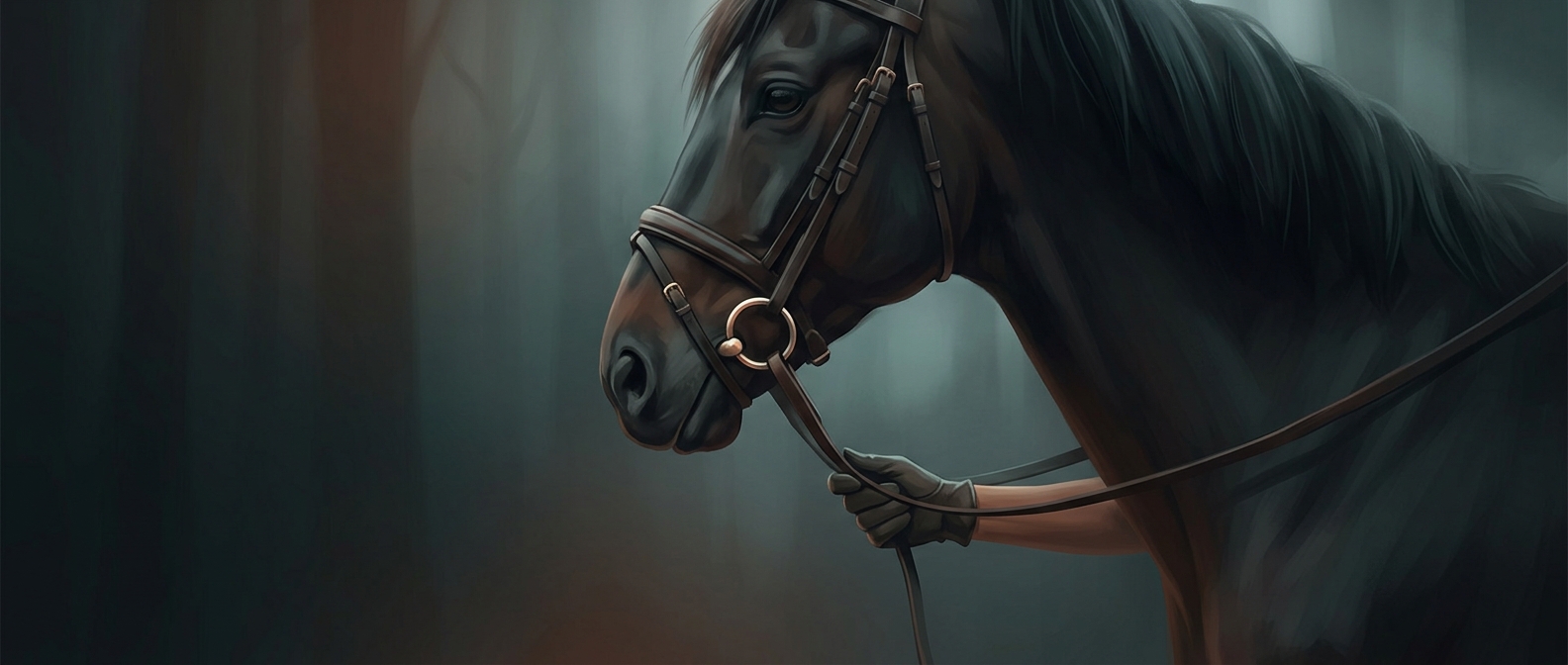
How a rein becomes a signal
A horse bit is the piece of tack that rests in the mouth and connects to the reins. When a rider takes up one rein, tension travels along it to the bit. Depending on the bit’s design and how it sits, that tension can create pressure on the lips, tongue, or bars—the toothless spaces between the front and back teeth.
The signal is small, but its meaning is learned. Through training, a horse can come to associate a light feel on one side with yielding or turning that way, and pressure from both reins with slowing or stopping. The rider’s hands do not mechanically point the horse like a wheel; they offer cues the horse has learned to interpret.
Why subtlety matters
A bit works as part of a larger set of cues. Riders also use their seat, legs, posture, and voice, while the horse responds to the combination. A steady, timely touch can clarify what is being asked; pulling harder is not automatically clearer. Because the mouth is sensitive, rough or prolonged pressure can cause pain and make communication less reliable.
The practical consequence is that steering depends as much on training and the rider’s feel as on the hardware. The bit transmits a request; the horse supplies the movement. A turn begins not when the reins force the head around, but when the horse recognizes the cue and chooses the trained response.