How a borrowed past can feel personal
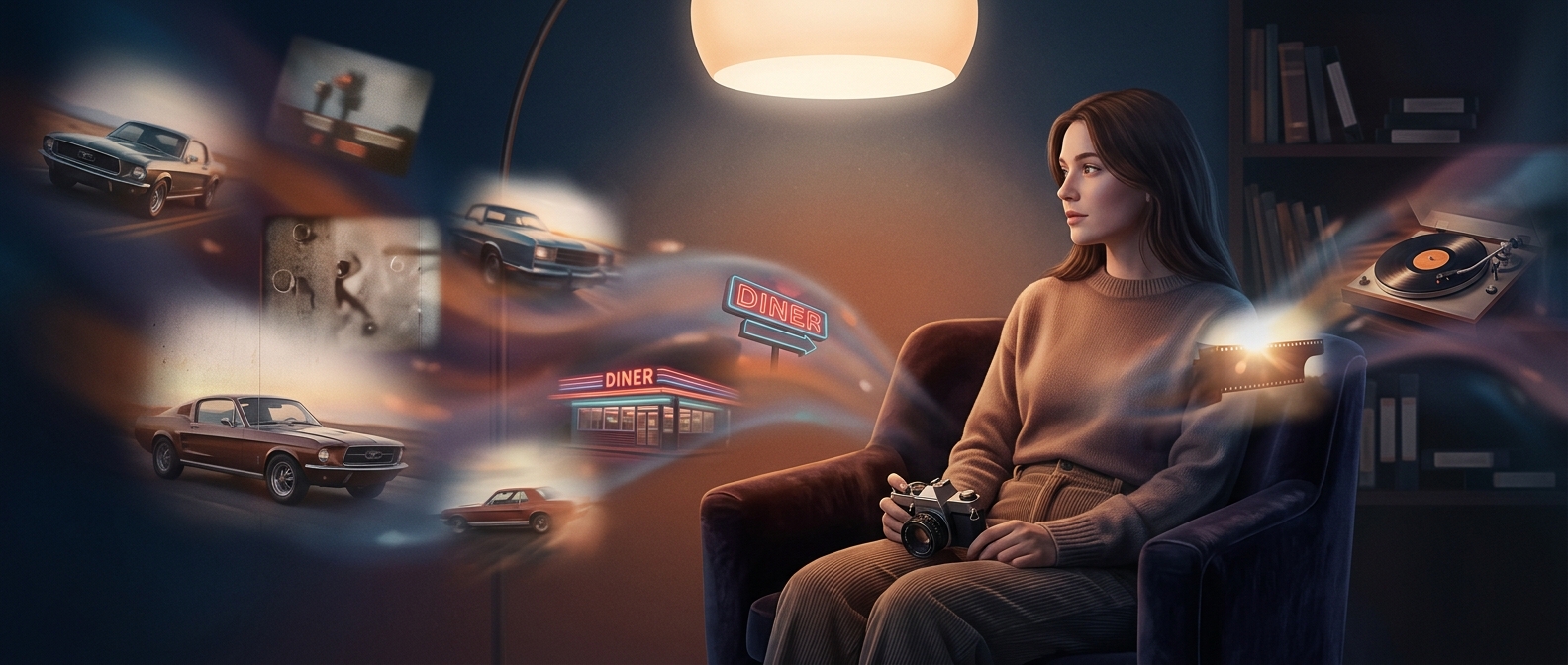
Nostalgia is often described as longing for one’s own past, but the feeling can also attach to an imagined one. A person may feel wistful about a decade they never experienced because the mind can build a convincing scene from fragments: family stories, old photographs, films, and music. The scene is secondhand; the emotional response is happening now.
The mind fills in the gaps
A photograph shows a room, a hairstyle, or a street, but not what it felt like to live there. Stories and media supply some of that missing context, while imagination connects the pieces into a continuous world. Because the details are incomplete, the imagined past can become less a record of a real era than a personal setting shaped by what the viewer finds appealing or meaningful.
Music can make that setting especially vivid. Its sound carries mood directly, so a song associated with an older period can suggest warmth, romance, or melancholy even without memories of hearing it at the time. Images then give that mood somewhere to land: a crowded dance floor, a family kitchen, a city at night.
Longing without a memory
This feeling differs from remembering an event. Someone may know, intellectually, that they were not there, yet still feel attached to the version of the past they have assembled. The longing may be for more than a historical period: it can stand in for a sense of belonging, simplicity, or possibility that the person wants in the present.
That is why an old song or photograph can feel oddly familiar without being part of one’s own history. The mind has made the era emotionally inhabitable—even if the life it evokes was never yours.