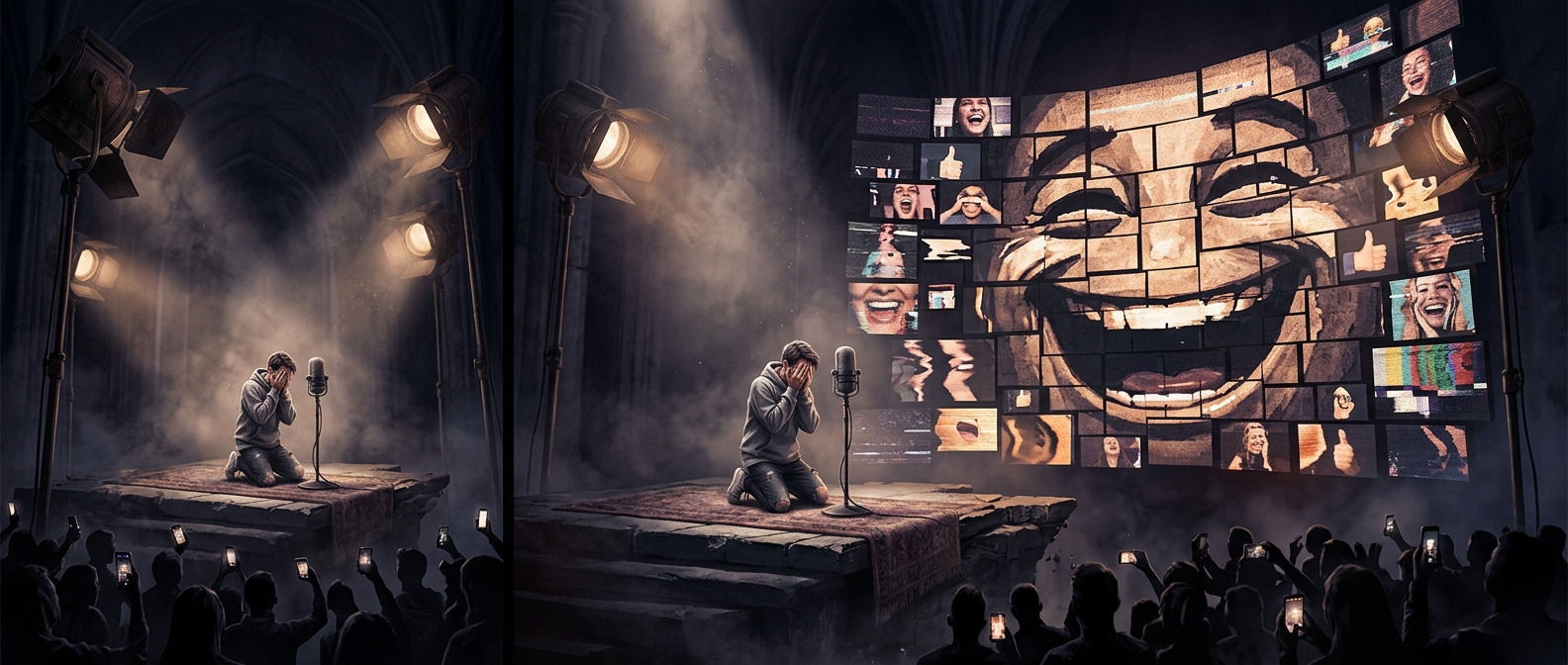
Why the past can feel socially present
Embarrassment is more than an unpleasant thought: it is a response to the possibility that other people have judged us or that we have broken a social rule. When a memory brings that possibility to mind, the brain can react to the imagined evaluation even though the event is over. It does not need to confuse the memory with the present; recalling the scene is enough to make its social stakes feel relevant again.
That response can recruit the body’s stress systems. Muscles may tense, the face may flush, and breathing or heart rate may shift. A shudder or shoulder jerk can accompany the surge of discomfort, much as the body sometimes reacts physically to something it finds aversive. There is no single “embarrassment shudder” mechanism required to explain every person’s reaction.
Why the memory keeps its sting
Remembering is not like watching a fixed recording. The mind reconstructs an event, often bringing back the moment that seemed most exposing: the awkward silence, the mistaken name, the joke that fell flat. Attention can then lock onto what others might have thought, even when their actual reaction is unknown. That imagined audience helps explain why a private recollection can provoke a public-feeling blush.
Embarrassment also has a useful social function. The discomfort can make a misstep hard to forget, encouraging someone to repair a relationship or avoid repeating it. But the body’s alarm is not a reliable measure of how important the incident was to everyone else. A moment that barely registered with other people can still feel vivid to the person replaying it—and make their shoulders tighten years later.