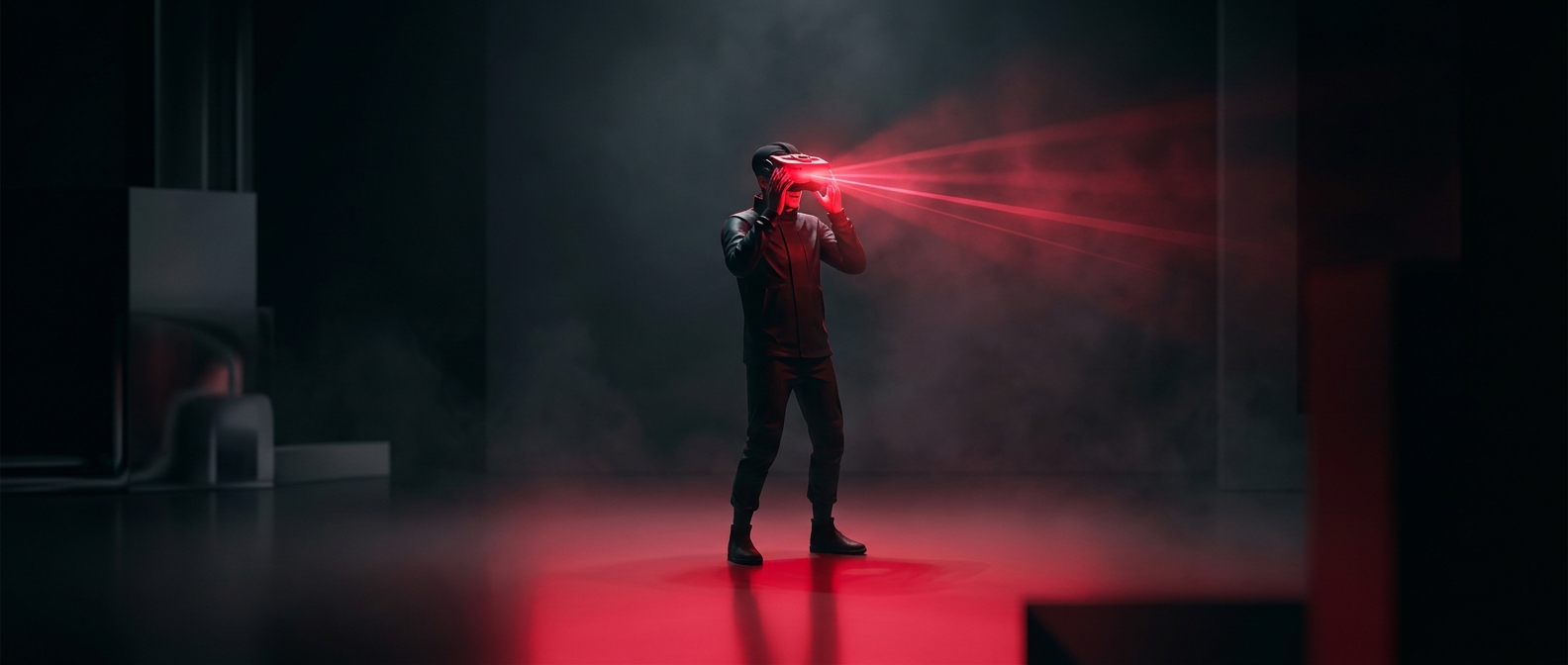
A display built from two narrow beams
The Virtual Boy did not use a conventional color screen. Inside the headset, each eye had its own row of red light-emitting diodes, or LEDs. A small oscillating mirror swept that light across the view, line by line; the image appeared continuous because the eye retains a brief impression of what it has just seen. Turning the LEDs off left the rest of the view black.
The separate images gave the console its 3D effect. Nintendo could shift the picture shown to each eye slightly, making objects seem nearer or farther away. But the hardware had to produce that illusion with a compact display, limited power, and technology available at the time. Red LEDs offered a practical way to make a bright image; adding full color would have made the system more costly and technically demanding.
The tradeoff behind the red
That choice made the Virtual Boy’s games unmistakable, but it also narrowed what designers could do. They could vary brightness and use black as empty space, yet they could not rely on color to distinguish characters, scenery, or hazards. Every game had to communicate through shapes, contrast, and motion in the same red palette.
The headset’s 3D effect brought another compromise: the two eye images suggested depth, while the display itself remained at a fixed viewing distance. For some players, that combination was uncomfortable, especially during extended play. The red screen was therefore more than an aesthetic signature—it was the visible result of a hardware solution that made stereoscopic gaming possible in a compact device, while placing firm limits on both its imagery and comfort.