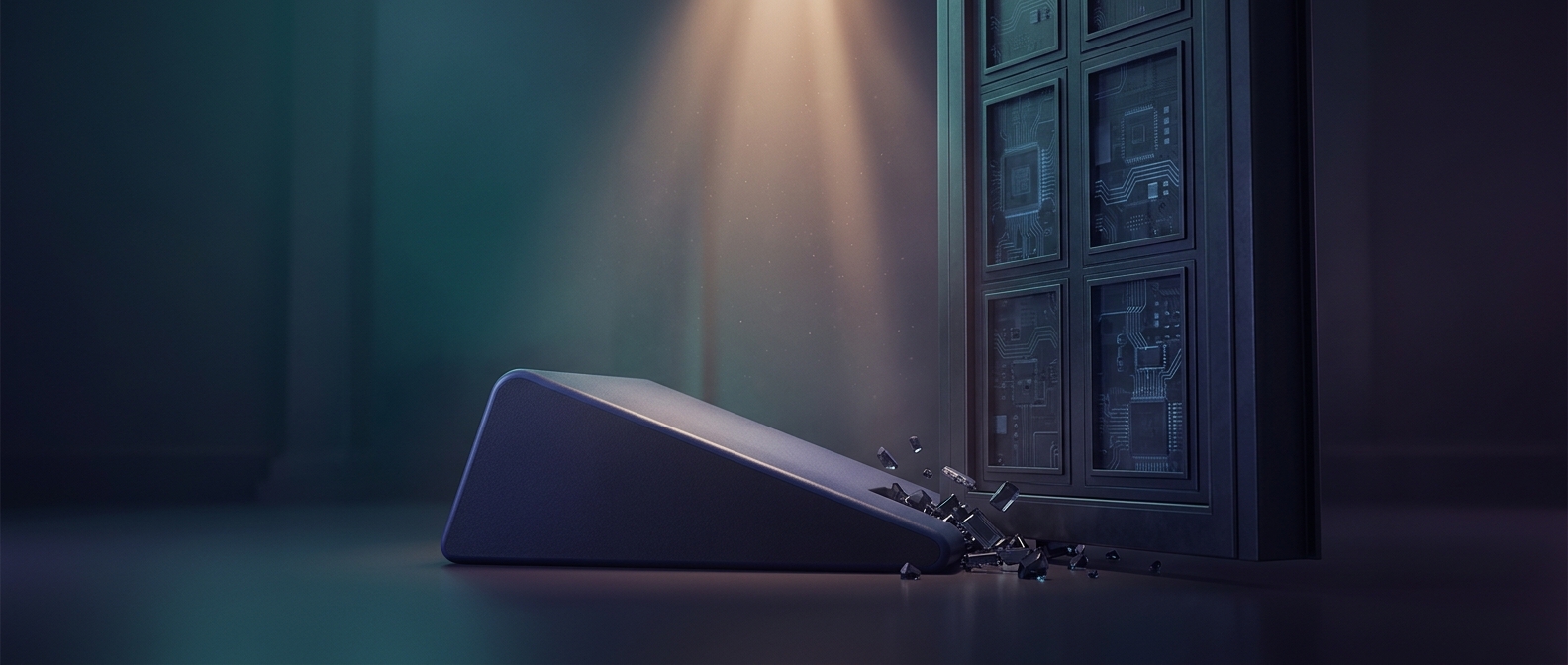
A handheld built around one fixed shape
The 2DS was not a 3DS with its lid merely left open. Nintendo redesigned the body as a single rigid shell, keeping the two screens stacked vertically but fixing them in place. The upper display showed the game; the lower remained a touchscreen for maps, menus, and other controls. The wedge-shaped case gave players a stable grip around that layout without needing a hinge to fold the system shut.
That change also simplified the hardware. The 2DS omitted the 3DS’s glasses-free stereoscopic display—the feature that made some games appear to have depth—and the hinge mechanism that connected its two halves. Those omissions helped Nintendo offer a lower-cost model and removed a moving part that could break if a young child handled it roughly.
The tradeoff behind the wedge
A clamshell handheld protects its screens when closed; the 2DS could not. Its shape instead made the controls and screens accessible at all times, while the solid body avoided the familiar stress point where a lid repeatedly bends against its base. The compromise was practical rather than elegant: the system was less compact to carry and needed a case or other protection for its displays.
The unusual silhouette made the 2DS look almost like a doorstop, but it reflected a clear priority. Nintendo kept the essential two-screen gameplay while stripping away features and mechanical complexity that some families might not need. Its shape was the visible result of designing for a lower price and fewer fragile moving parts, not for pocketability.