What the Expansion Pak changed inside the N64
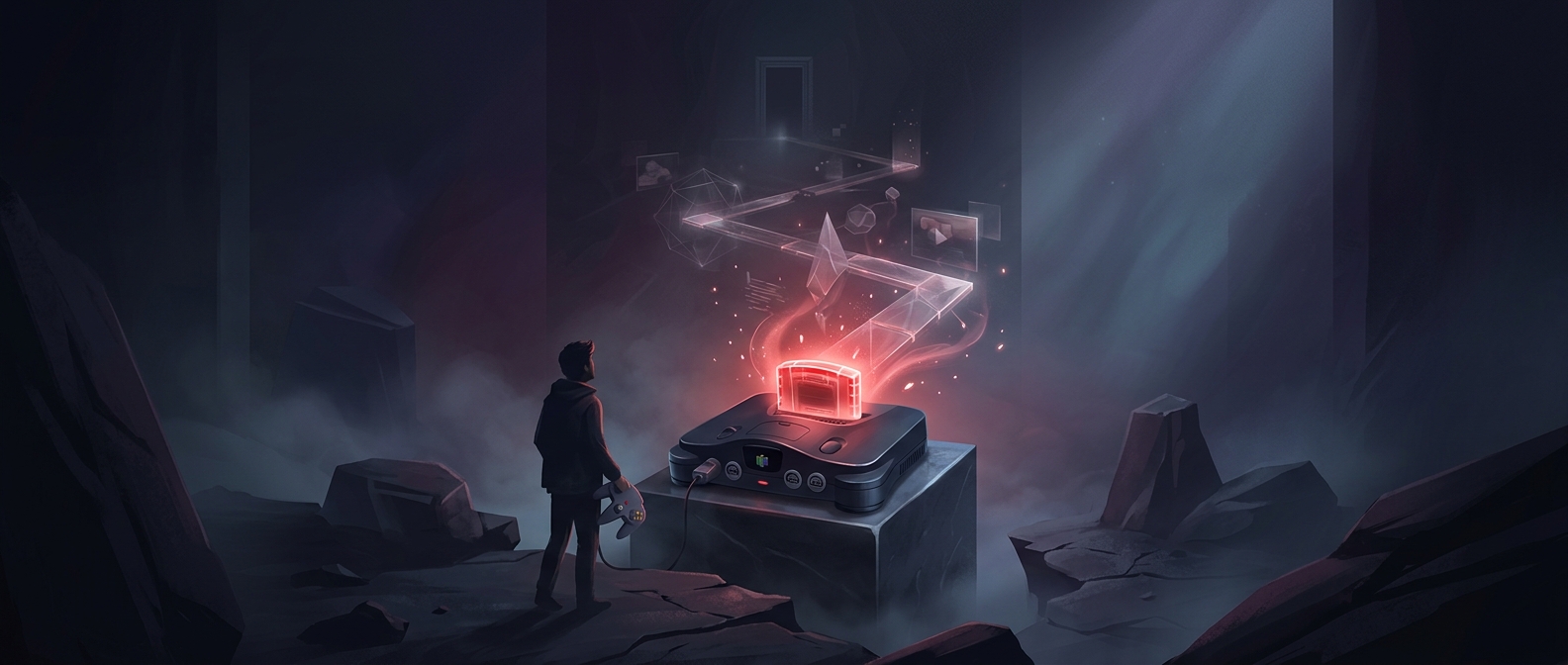
The Nintendo 64 came with 4 megabytes of RAM, the fast working memory a game uses while running. The red Expansion Pak added another 4 megabytes, doubling that capacity. It fit into a slot on top of the console, replacing the small insert already there.
That extra room mattered because a game has to keep the information it needs right now readily available: textures, character and object data, and parts of the environment. More RAM could let developers keep more of that material on hand, supporting richer scenes or larger areas without constantly squeezing everything into the console’s original limit. It did not make the N64’s processor faster or give players more space to save games; it eased a specific memory constraint.
Why some games made it mandatory
Developers could treat the extra memory as an optional improvement, or design a game that depended on it. In the latter case, the standard console simply did not have enough working memory to run the game as intended, so the Pak became a requirement rather than an upgrade. Donkey Kong 64 and The Legend of Zelda: Majora’s Mask are notable examples.
That created an unusual split in the N64 era: the console’s hardware could be expanded after purchase, but only if a player had the right accessory. A red module in the top slot could determine whether a cartridge would start at all.