Why footwear matters before an emergency
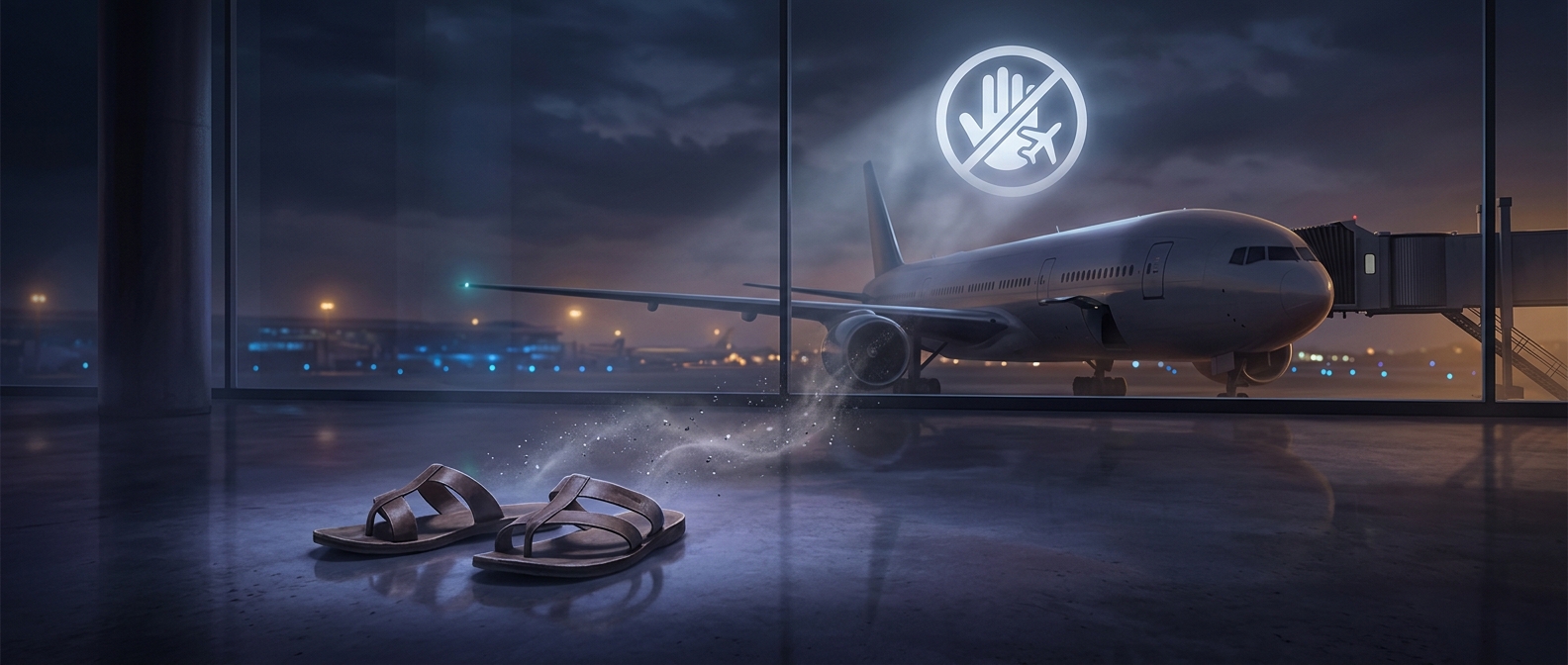
An evacuation turns an ordinary cabin into an obstacle course. Passengers may have to move quickly through a darkened aisle, step around dropped bags or broken materials, and cross a doorway onto a slide or uneven ground. Shoes can reduce cuts and burns and make it easier to keep moving over surfaces that would be painful or hazardous barefoot.
That protection is not just about the moment a passenger reaches the exit. A person who stops because the floor hurts—or loses a flimsy sandal while moving—can slow others behind them in a crowded aisle. Footwear cannot make an evacuation safe by itself, but it removes one avoidable vulnerability.
Why an airline can act before takeoff
Cabin crews cannot predict which passengers will need to evacuate or what conditions they will encounter. Dress rules let an airline set a basic standard before boarding, rather than trying to solve a footwear problem during an emergency. The rule also gives staff a practical basis to ask a passenger to put on shoes or, depending on the airline’s policy and circumstances, refuse boarding.
The distinction matters: being barefoot is not automatically a universal aviation violation. Dress policies vary, and a carrier’s decision depends on its own rules and how staff apply them. But a passenger who boards without shoes may be less prepared for the few seconds when the cabin stops being a place to sit and becomes a route to an exit.