One button made the game decide what “action” meant
A controller with a single button could not give players separate controls for jumping, firing, picking up an object, and confirming a choice. Instead, each game had to assign that button a job—or several jobs—and teach players the rule through play. The joystick handled direction; the button supplied an extra action when the game needed one.
That arrangement turned a hardware limit into a design constraint. In a game built around shooting, the button could fire. In another, it could make a character jump or start a round. Designers could also make an action depend on what was happening on screen, so one physical control served different purposes at different moments.
Simpler hardware, more work for game design
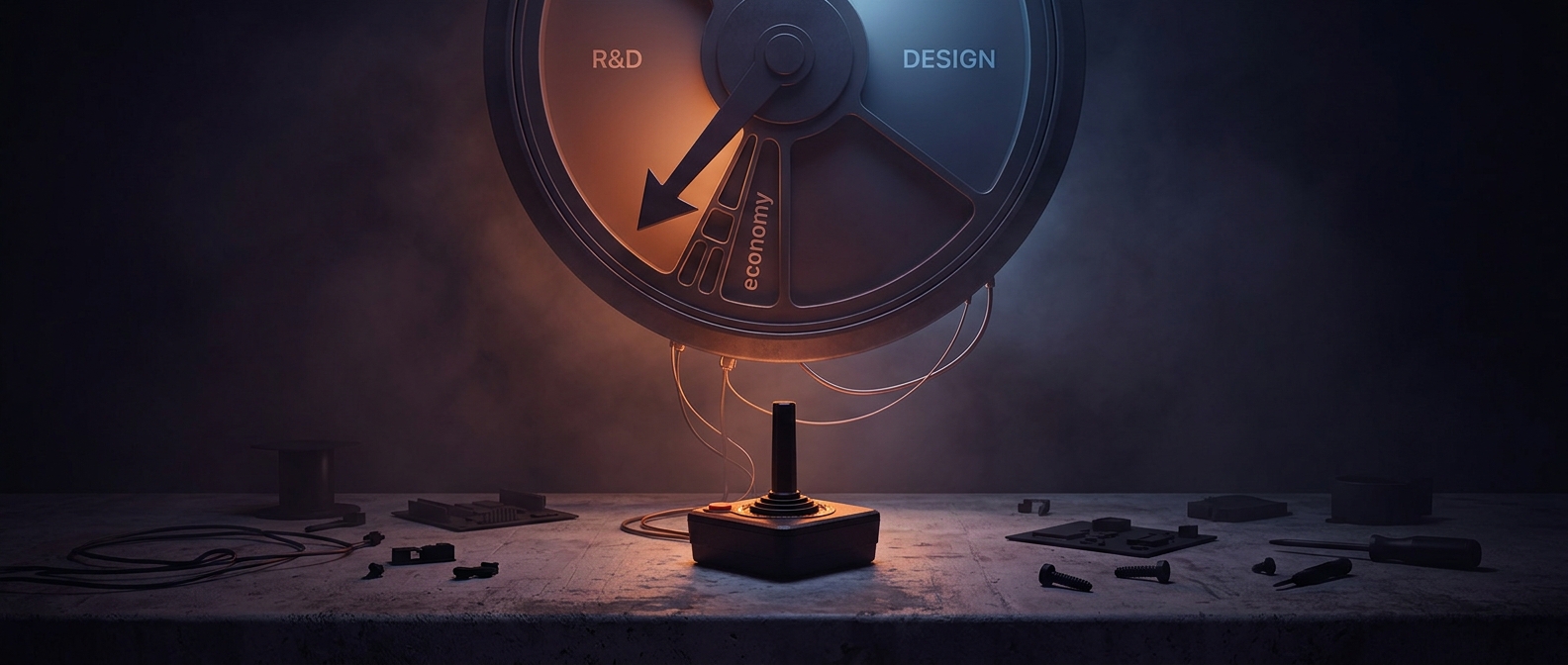
A second button would have offered more direct choices, but it also meant another physical control to build into every controller. Keeping the design spare helped contain manufacturing cost; the tradeoff was that game makers had to keep controls easy to understand despite having fewer inputs.
That simplicity shaped what players could do without looking away from the screen. Rather than choosing among several buttons, they could focus on direction and one familiar action. The red button was not a universal command, though: its meaning changed from game to game, making the on-screen situation part of the control system.