Why a beach can replace a dry dock
A retired ship is too large to haul onto land with ordinary equipment. In a dry dock, water is pumped away after the vessel enters, leaving it supported so crews can work on its hull. Beaching uses the tide to accomplish a similar change in support, without building a sealed basin or bringing in heavy lifting gear.
The tide does the hauling
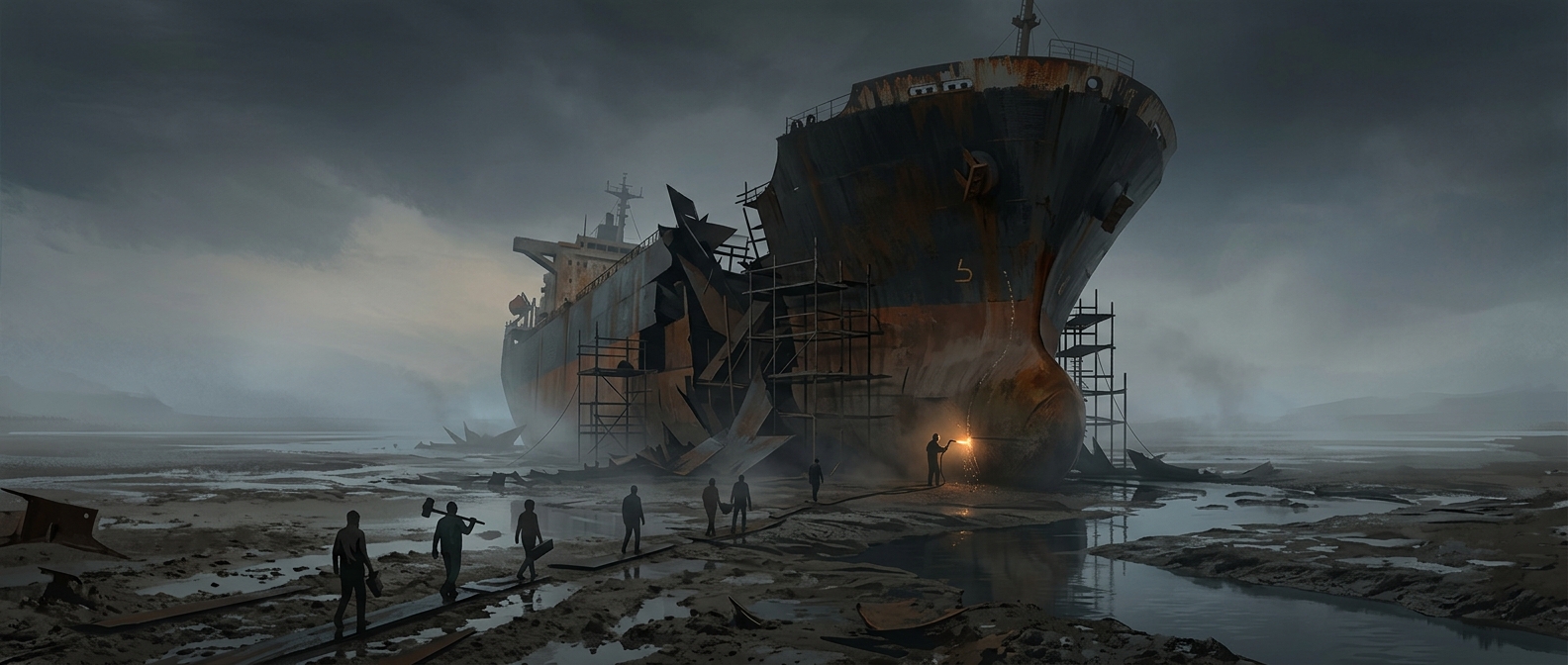
The ship is guided into a gently sloping, shallow shoreline at high tide. With enough water beneath it, the hull can move over the bottom rather than grind against it. As the tide ebbs, the vessel settles onto the beach, where sand supports its weight. The process is timed so the ship comes to rest in a position crews can reach and work on.
That landing is not simply a matter of steering toward shore. The beach’s slope and bottom conditions must suit the vessel, and the ship must be positioned so it will remain stable as the water recedes. A poor landing could leave it tilted or make sections of the hull difficult to access.
A work site that changes with the water
Once the ship is grounded, crews can cut it apart in stages and remove pieces from shore. They do not need to lift the entire vessel out of the water first. The shoreline effectively becomes a temporary work platform, while later tides may help float smaller sections or equipment.
The tradeoff is that the vessel is exposed to weather and the moving shoreline rather than held in a controlled dock. But for ships too big to move onto land intact, the tide provides a powerful, recurring lift—and the beach becomes the place where a floating machine can be dismantled piece by piece.