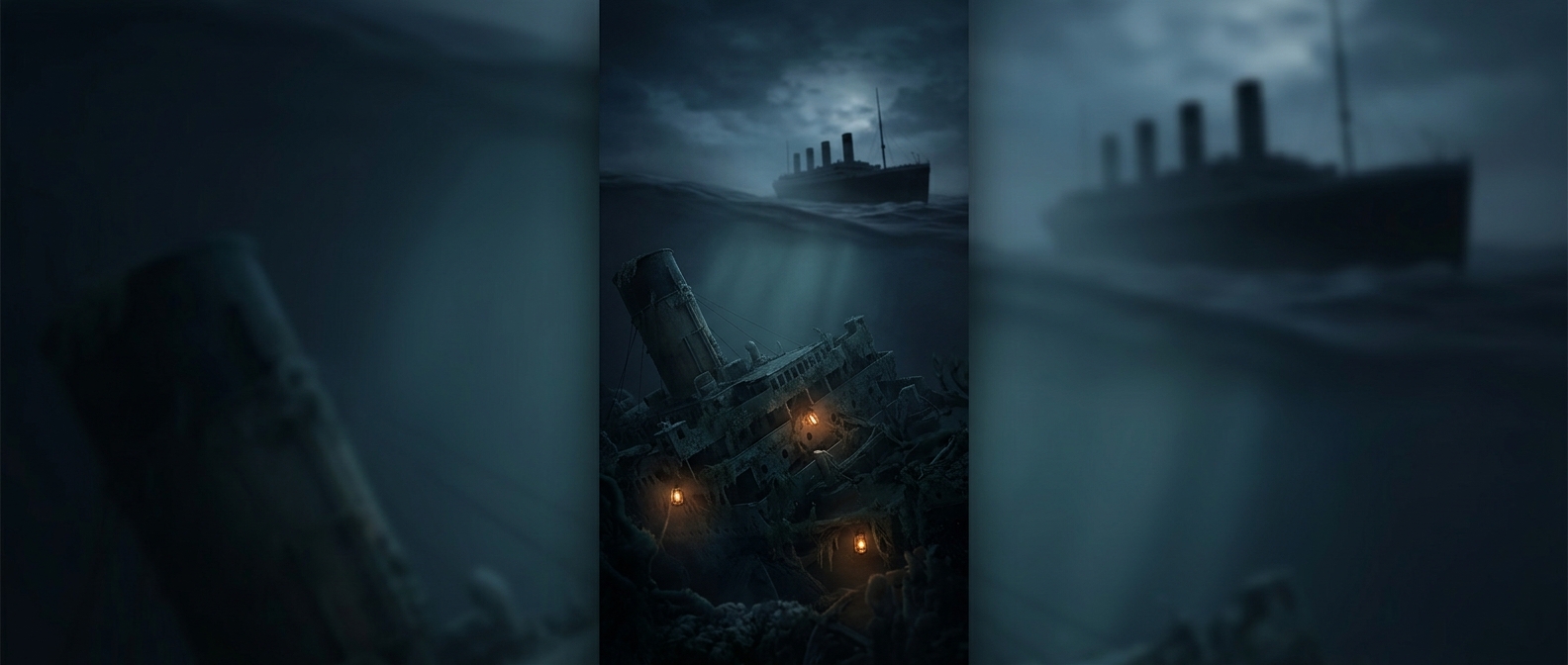
How an ocean liner became a system
A ship like White Star Line’s Oceanic mattered not simply because it was large or made of steel, but because it showed what a purpose-built passenger liner could be. Steel made it possible to build a stronger hull at a scale that would have been difficult with wood. Steam engines, meanwhile, let companies plan regular crossings around timetables rather than depend on the wind.
That reliability changed the business. A liner had to carry passengers, crew, fuel, food, and cargo across a long route while making the crossing commercially worthwhile. Its design therefore balanced competing demands: space and comfort for passengers, room for the machinery and supplies, and a hull capable of enduring the Atlantic. Each new vessel gave builders and operators another chance to refine that balance.
The step from Oceanic to Titanic
The advances accumulated. Shipbuilders learned how to combine larger steel hulls with powerful engines and elaborate passenger spaces; shipping companies learned how to sell the crossing as a scheduled experience, not just a difficult journey. Those changes depended on more than a single vessel: ports, crews, maintenance, and the company’s network all had to support ships operating on a regular route.
By the time Titanic was built, the ocean liner was already a mature commercial idea. Its scale and fittings drew attention, but they belonged to a longer progression in which ships were designed to move large numbers of people reliably—and to make the journey itself appealing. That progression is the less visible legacy of vessels such as Oceanic: they helped turn the Atlantic crossing into a service that could be planned, staffed, and sold again and again.