A ship’s hidden food chain
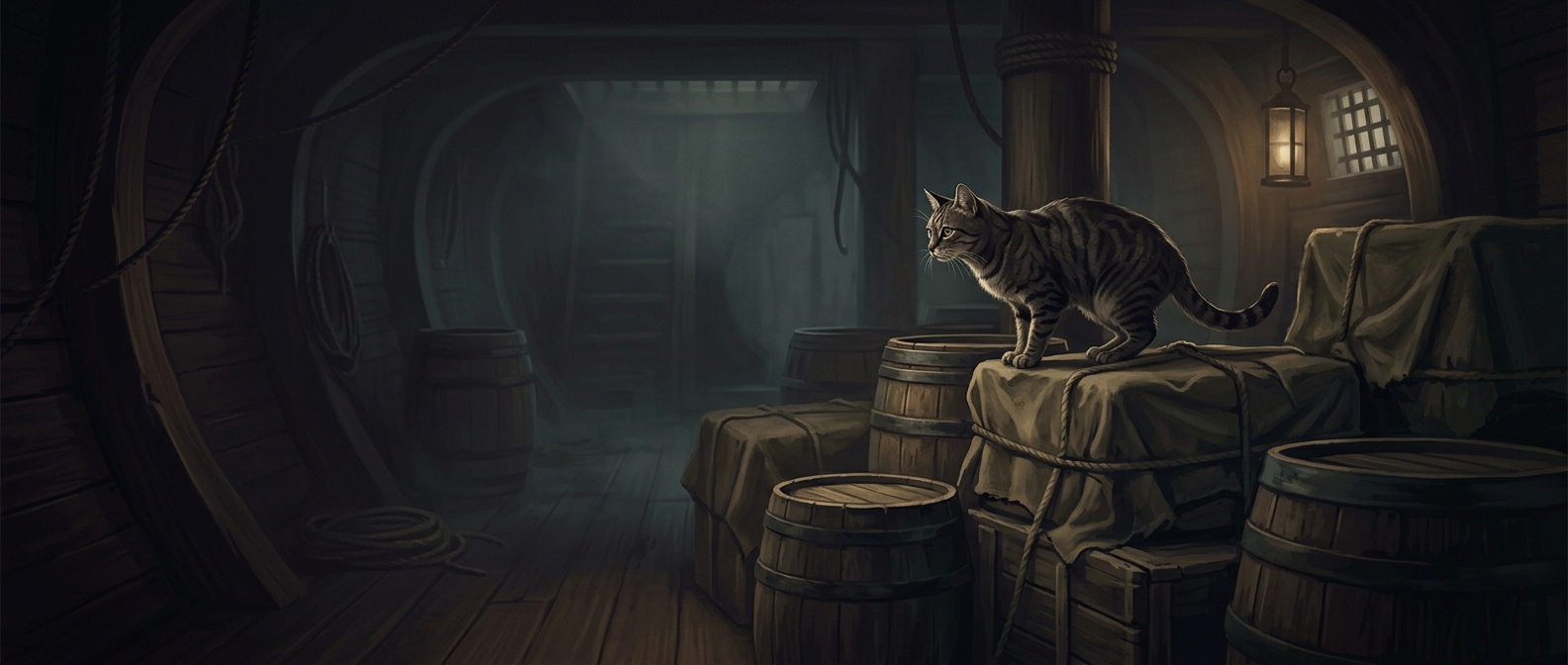
A sailing ship was a moving storehouse: provisions and cargo sat for long stretches in cramped holds, while rats and mice could hide among barrels, sacks, and fittings. Once aboard, rodents had both shelter and food. They could spoil provisions with droppings and urine, eat stored goods, and gnaw materials they encountered. A cat could patrol the spaces where people rarely worked and hunt small animals that were difficult to catch by hand.
Why a predator suited the job
Traps work only where someone places and checks them. A cat, by contrast, could move through a hold and respond when prey stirred in a new hiding place. Hunting also put pressure on rodents before a small number of stowaways had time to produce more. The cat did not make a ship rodent-proof, but it offered a continuing form of control in an environment where food and hiding places were plentiful.
Keeping a cat aboard had its own practical cost: the crew had to provide food, water, and care. That tradeoff made sense when the animal could help protect stores throughout a voyage. Its presence also offered company during long periods at sea, but the useful work began in the dark corners below deck, where a mouse could quietly turn valuable provisions into waste.