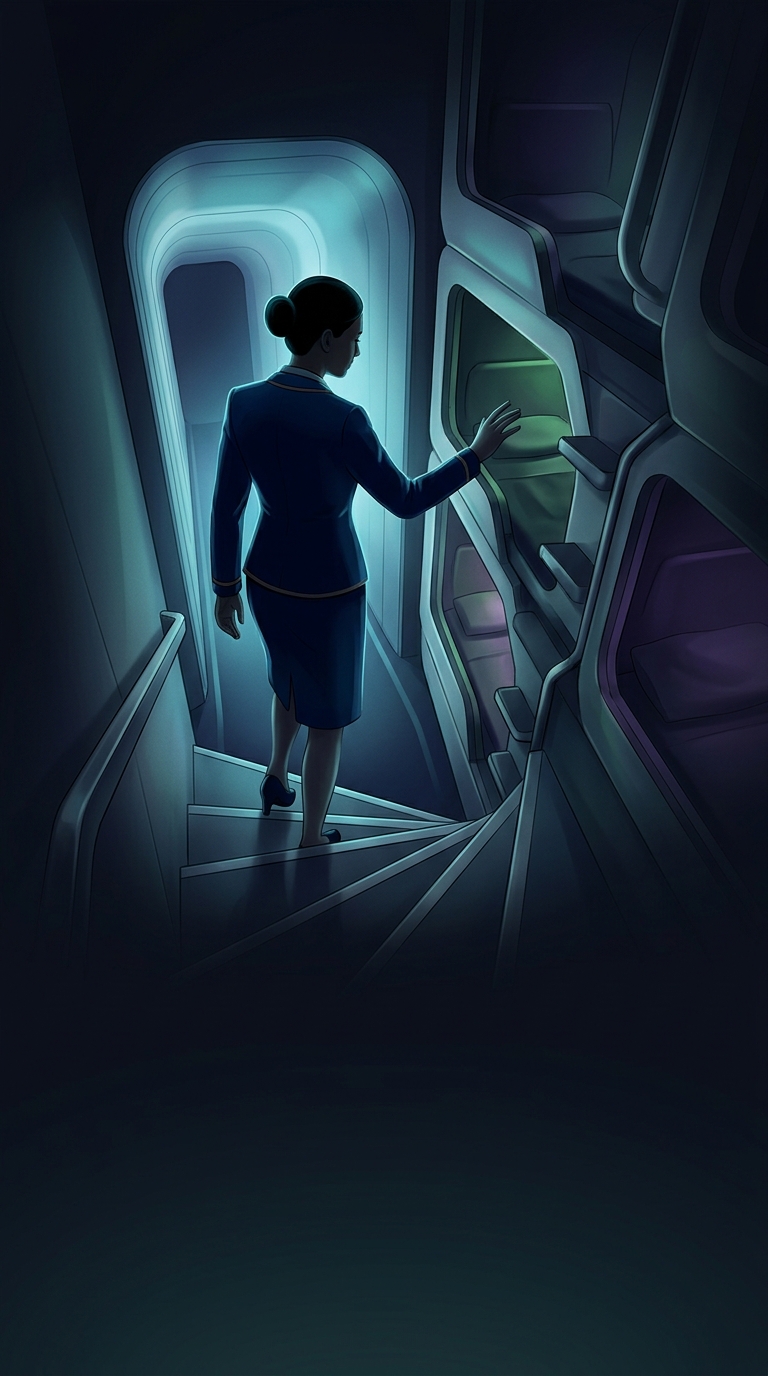
A hidden room above—or below—the cabin
On many long-haul aircraft, flight attendants sleep in a dedicated crew-rest compartment, separate from passenger seating. Depending on the airplane’s design, it may sit above the main cabin, behind the cockpit, or below the passenger deck. Passengers may never notice it: access is often through a small, discreet door and a steep ladder or narrow stairway.
Inside, the space is built for resting rather than comfort in the hotel-room sense. It usually contains individual bunks, with curtains or partitions for privacy, reading lights, and air vents. The compartment is designed to limit light and noise, but it remains a compact space inside a working aircraft—not a full bedroom. Some planes instead use designated passenger seats for crew rest, so the arrangement varies by aircraft and airline.
Rest happens in shifts
A crew-rest area lets attendants take turns sleeping while other crew members remain on duty. The schedule depends on the flight and the size of the crew; not everyone can leave the cabin at once. Attendants returning from a break may need time to get ready before resuming service, so rest periods are coordinated around the flight’s workload.
The compartment’s location reflects a practical tradeoff. Space aboard an aircraft is limited, and every dedicated bunk takes room that could otherwise serve passengers or equipment. On especially long routes, however, a place to lie down can help the airline provide enough crew rest without blocking passenger seats. That tiny door near the ceiling or at the end of a cabin may lead to a complete, hidden sleeping area.