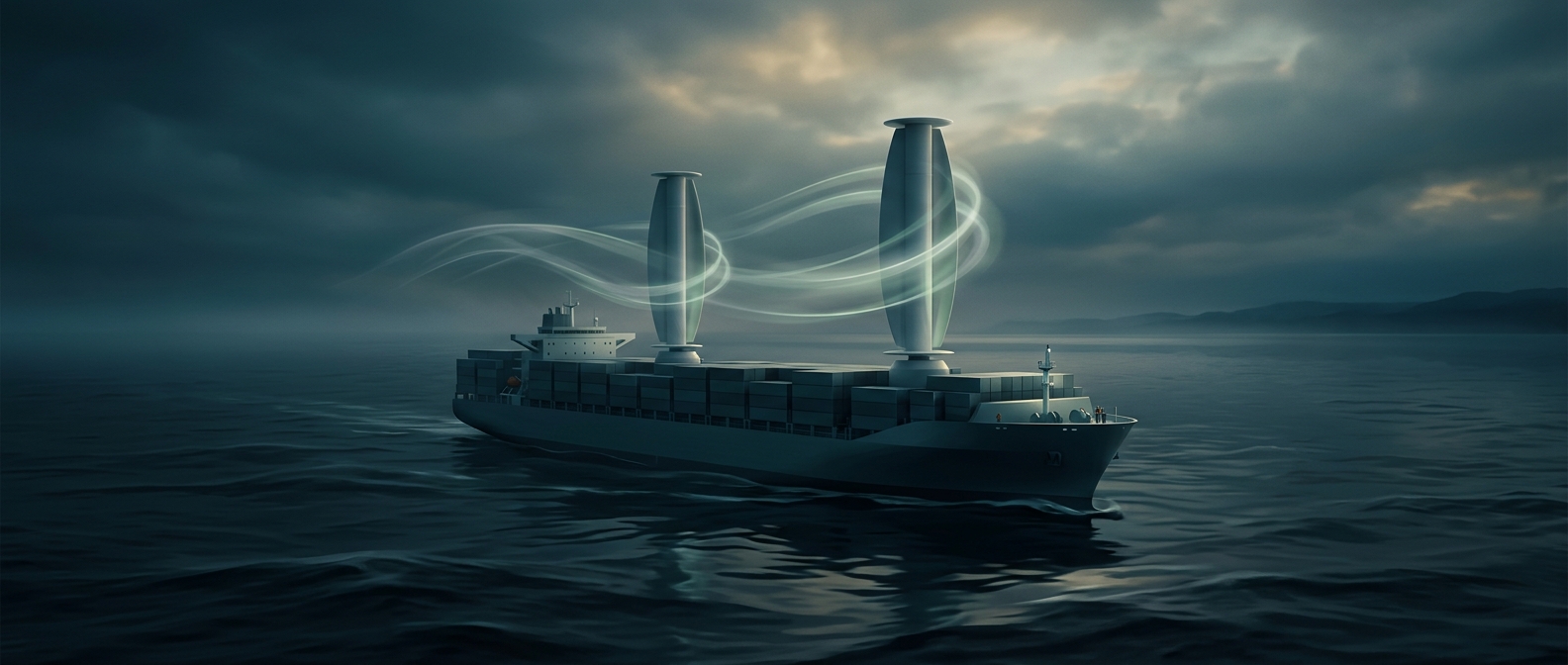
Two different ways to turn wind into thrust
A rigid sail works much like an airplane wing stood upright. As air flows around its shaped surface, pressure differs across the two sides, creating a force. The ship’s navigation system can angle the sail so part of that force pushes the vessel forward rather than sideways.
A rotor sail uses a different trick. Its tall cylinder spins as wind passes it; the interaction between rotation and airflow creates a sideways force, which can be aimed to help move the ship ahead. It is not a conventional sail catching wind in a sheet, but a powered device that makes the wind more useful.
The engine remains in charge
Wind is variable: its direction and strength change along a route, and a calm patch cannot keep a delivery on schedule. Ships therefore use wind assistance alongside their engines. Sensors and control systems can adjust the sails or rotors to changing conditions, while the crew and ship’s operating systems retain control of speed and course.
When the wind provides some of the forward force, the engine can do less work to maintain the desired speed. That can reduce fuel use and the exhaust produced from burning it. The benefit depends on the route, weather, vessel, and operating choices; wind assistance supplements propulsion rather than guaranteeing a fixed saving on every voyage.
Why the equipment must fit the ship
These devices occupy valuable deck space and rise high above it. Designers must account for their weight, attachment points, visibility, and the ship’s stability, as well as clearance beneath bridges and around port equipment. A system that helps at sea must also be manageable during loading, maintenance, and other operations.
That makes wind assistance a practical engineering trade: give the wind a larger role without letting its equipment interfere with the ship’s main job. The striking change is not that cargo ships can sail without engines, but that a vessel designed around engines can now use its route and weather to make each engine-powered mile require less fuel.