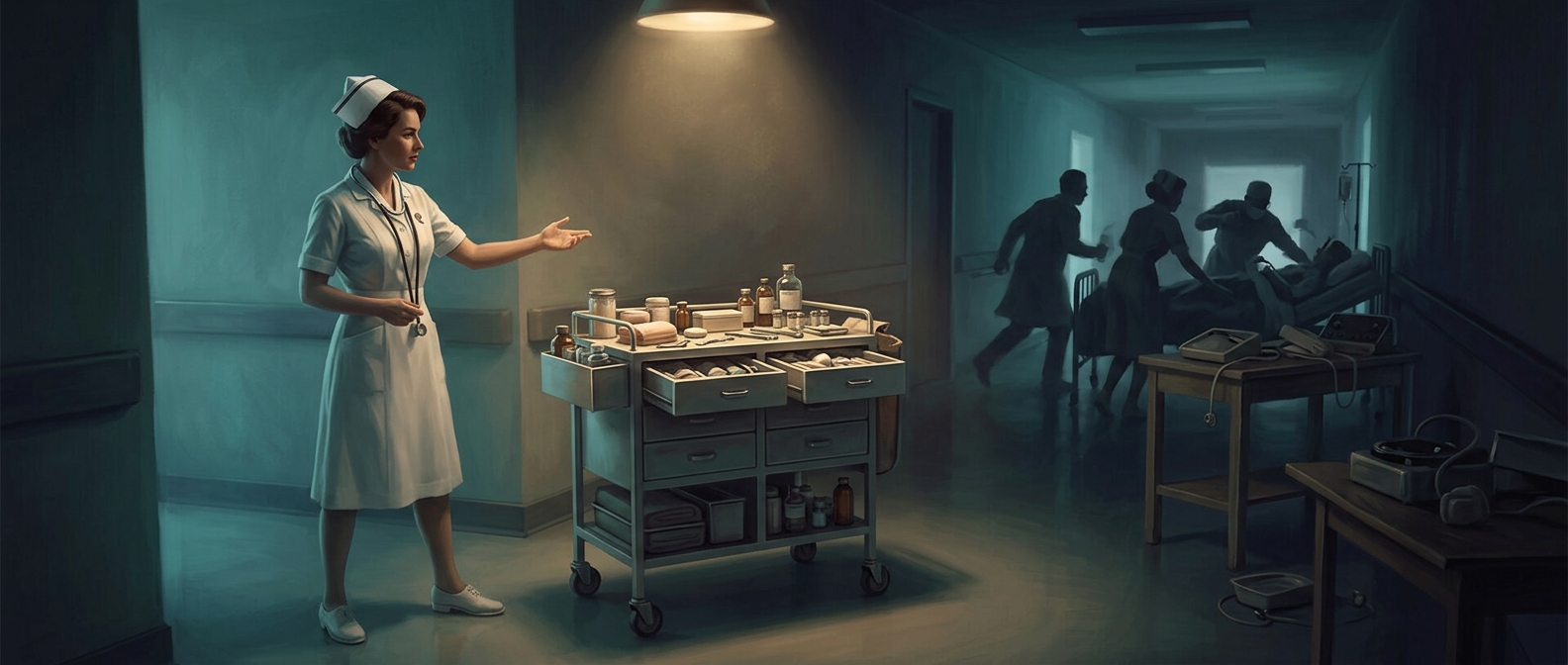
Why emergency equipment needed a home
During a cardiac arrest, seconds matter—but before crash carts became standard, the equipment needed to respond could be spread across a hospital. Staff might have to leave the patient to find a defibrillator, medications, or supplies for keeping the airway open. The delay was not just a matter of distance: responders also had to know where each item was kept and whether it was ready to use.
A trolley changed the sequence
The nurse credited with creating the modern crash cart brought emergency tools together on a red, mobile trolley. Instead of sending people around the hospital to assemble what they needed, the team could bring a prepared set of equipment to the patient. The cart made the response more organized: one trip could deliver supplies for several urgent tasks, while staff stayed focused on care.
That shift depended on more than putting items on wheels. A useful cart had to keep equipment accessible and arranged so responders could find it quickly under pressure. Hospitals also needed a routine for checking and replenishing supplies after use; otherwise, a cart that looked ready could be missing something essential when the next emergency came.
A small design with a system-wide effect
The cart changed emergency care by making readiness tangible. Instead of relying on memory and a scramble through separate rooms, a hospital could prepare a mobile collection of tools and bring it to the crisis. Its red color helped make the cart recognizable, but its deeper contribution was logistical: it reduced the search between recognizing an emergency and beginning treatment.
The practical test is simple: when a patient suddenly needs help, the equipment should arrive with the team—not after someone has gone looking for it.