Why the Athame Has a Blade but Does Not Cut
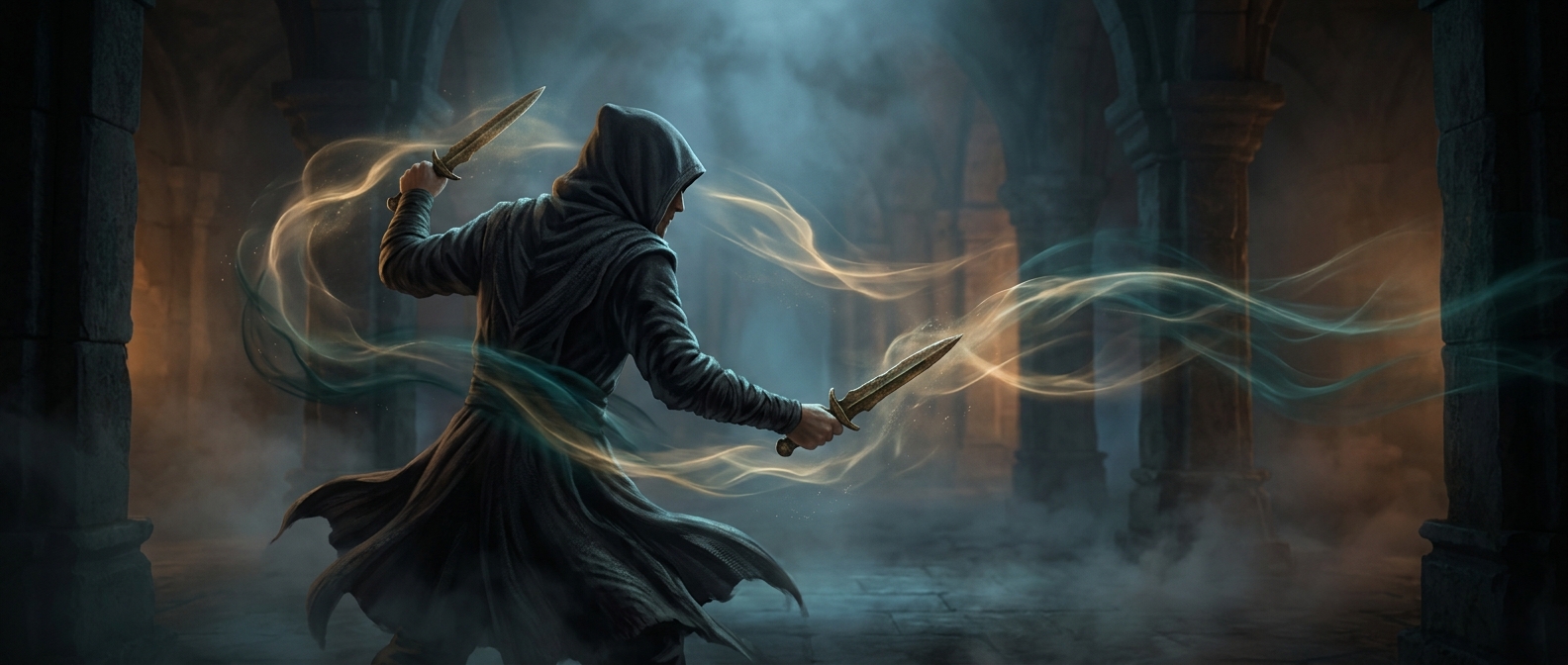
In Wiccan ritual, an athame is a ceremonial knife whose purpose is symbolic and directional, not practical. Its blade gives the tool the recognizable form of a knife, but the act of cutting belongs to a different kind of work. Practitioners use the athame to indicate where attention or ritual action should go, rather than to slice material objects.
Drawing a Boundary in Ritual Space
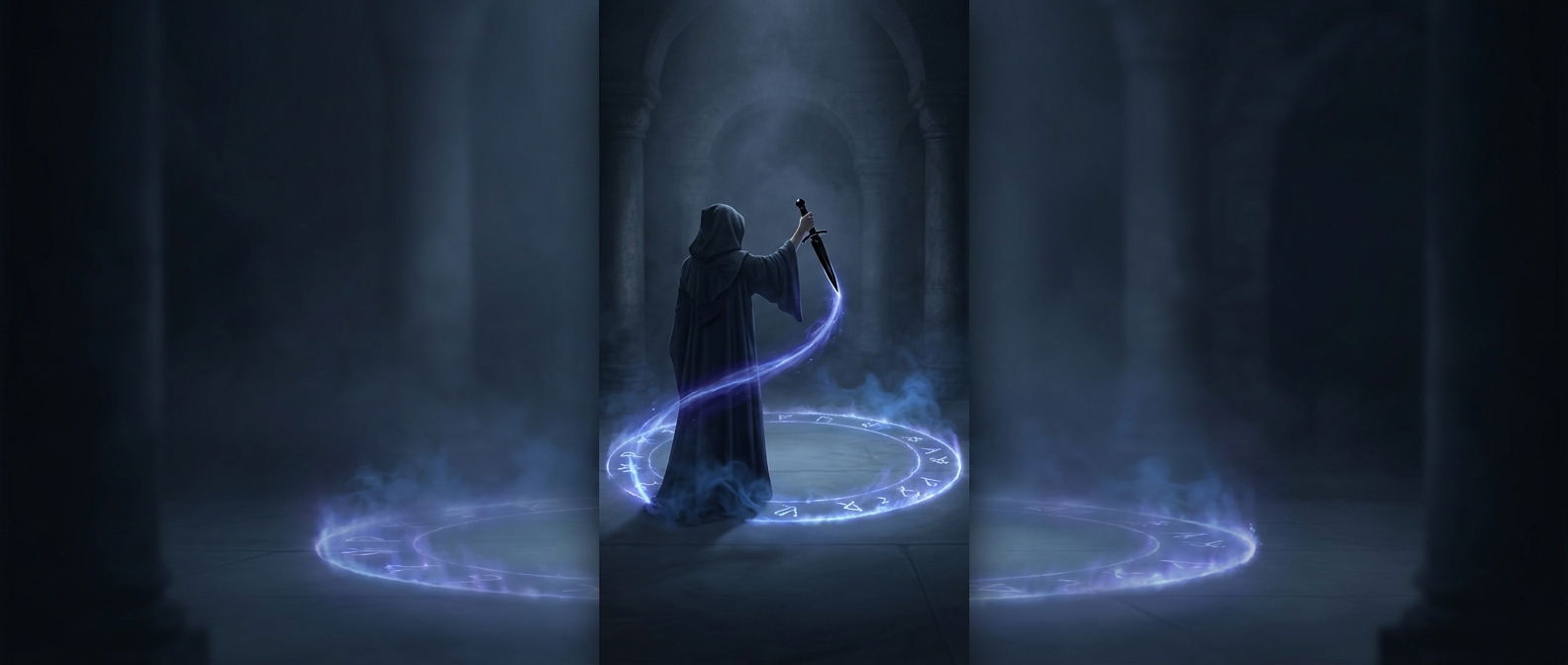
A ritual circle is a marked-off area in which participants conduct a ceremony. The athame may be moved around its perimeter as a way of establishing that boundary and focusing the participants’ intent. The circle is not a physical wall; its significance comes from the shared ritual meaning assigned to it.
The gesture makes an invisible boundary legible: the practitioner traces a line with the tool, and the group can recognize where the ritual space begins and ends. In this sense, the athame is less like a kitchen knife than a pointer used to direct a meaningful action.
A Tool Kept Separate from Physical Cutting
Keeping the athame from cutting physical objects preserves that distinction. It is reserved for directing energy and marking ritual space, while other tools can handle tasks that require an actual cut. Its blade is part of its ritual identity, not a license to use it as an ordinary knife.