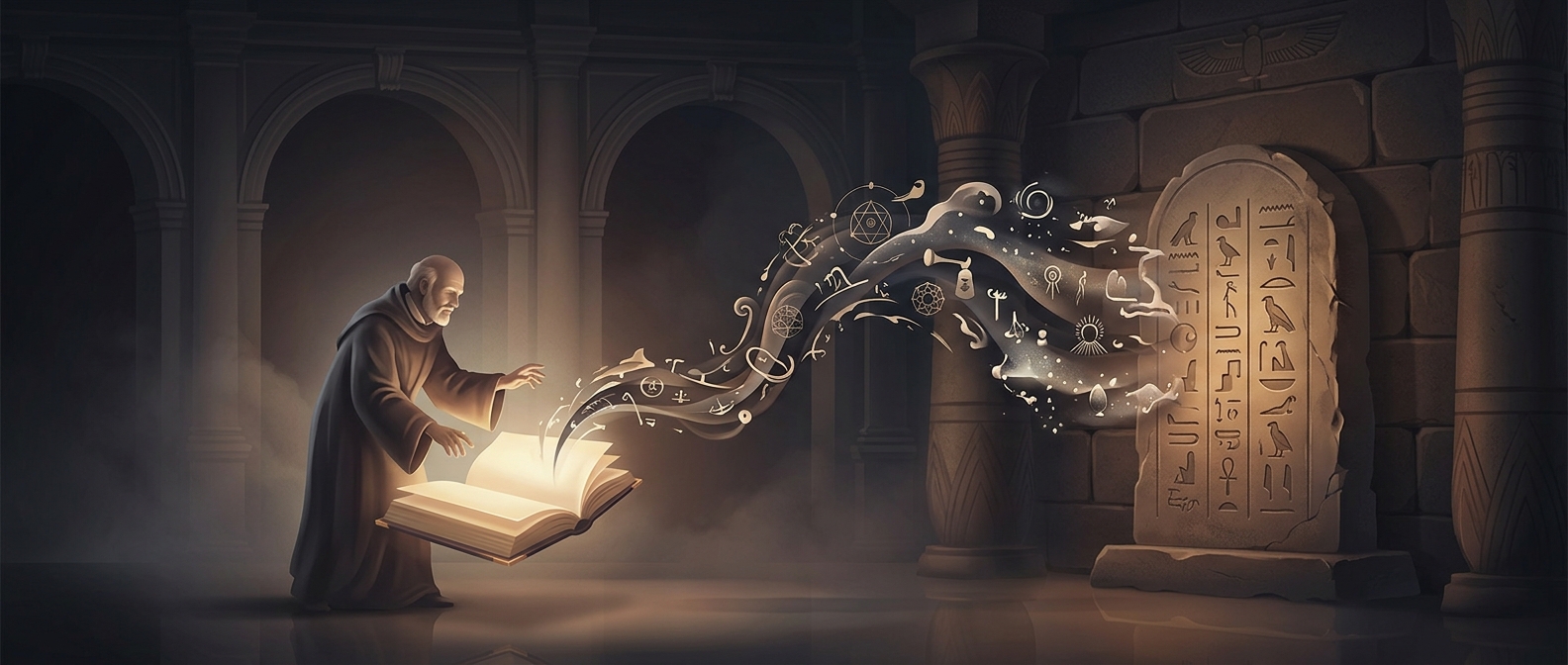
Why a Name Could Reach Beyond the Room
In many traditions, a name was more than a label. It identified a being precisely, and precision could imply a connection: if you knew what to call a spirit, you might be able to address it, attract its notice, or exert some influence over it. A hidden or forbidden name therefore carried a risk that an ordinary description did not.
This idea also made names a practical boundary. People could avoid saying a dangerous being’s name directly, using a title or euphemism instead. The substitute let them discuss the threat without treating it as an invitation. Such customs varied across communities; there was no single folklore rule about names.
The Name as a Story’s Turning Point
The belief gives speech consequences. A character may think they are merely naming a danger, only to discover that the act has changed their relationship to it: the entity now knows who called, or the speaker has crossed a line they were warned not to cross. The name works like a beacon in the story because it turns private knowledge into contact.
That logic helps explain why exact names recur in tales about spirits and other malicious beings. Knowing the name makes the threat feel reachable—and saying it makes the danger feel self-inflicted.