The Bug Collector Behind Pokémon
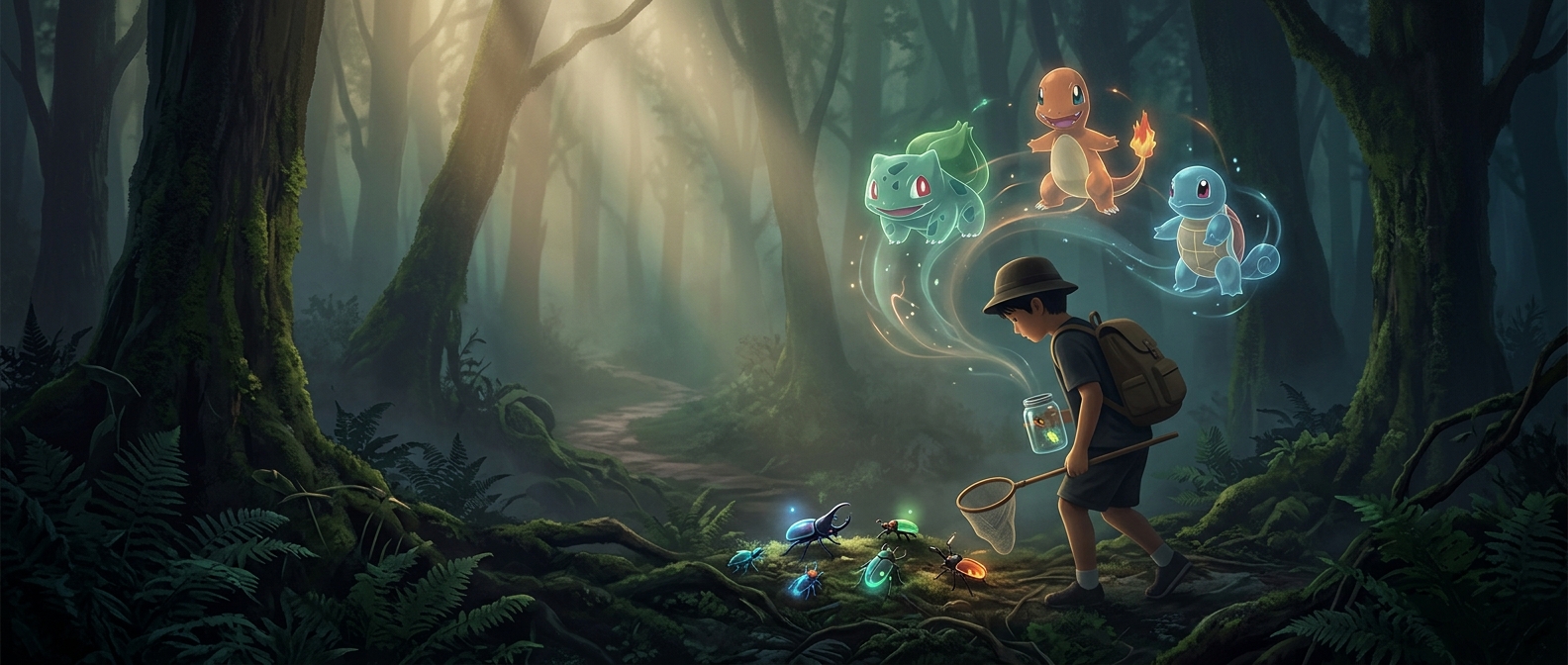
As a child, Satoshi Tajiri spent hours catching and collecting insects. He watched where they lived and how they behaved, then searched for new kinds—an experience that gave him a firsthand feel for the thrill of discovery. The hobby was so central to his childhood that friends reportedly nicknamed him “Dr. Bug.”
That pastime supplied more than a theme. It offered a simple activity with a satisfying rhythm: find a creature, catch it, learn about it, and keep looking. Tajiri drew on that rhythm when imagining a game in which players could encounter many different creatures and build collections of their own.
From the Field to the Game Boy
Pokémon also turned collecting into something social. Players could connect two Game Boy systems with a link cable and trade creatures, giving each person a reason to seek out Pokémon the other did not have. The design made collection feel less like filling a private cabinet and more like swapping discoveries with another enthusiast.
The connection was especially apt for a creator whose childhood world of insect hunting was changing as development began: expanding cities left fewer places for children to explore and catch bugs. Pokémon translated the excitement of that fading outdoor pastime into a portable, shared adventure. Its central loop—search, catch, collect, and trade—was a digital version of the pleasure Tajiri found in bug collecting.