Pac-Man made the arcade feel less like a combat zone
In many arcade games, the player’s job was to shoot, fight, or destroy. Toru Iwatani took a different route: Pac-Man moves through a maze, eating dots while avoiding ghosts. The danger is real, but the central action is pursuit and evasion rather than combat.
That change mattered to the game’s tone. A maze and a hungry, rounded character could feel playful at a glance; there were no guns or realistic battle scenes to learn before starting. The rules were also easy to grasp from the screen: move through the corridors, collect what you can, and keep away from the ghosts.
Approachability was part of the design, not an afterthought
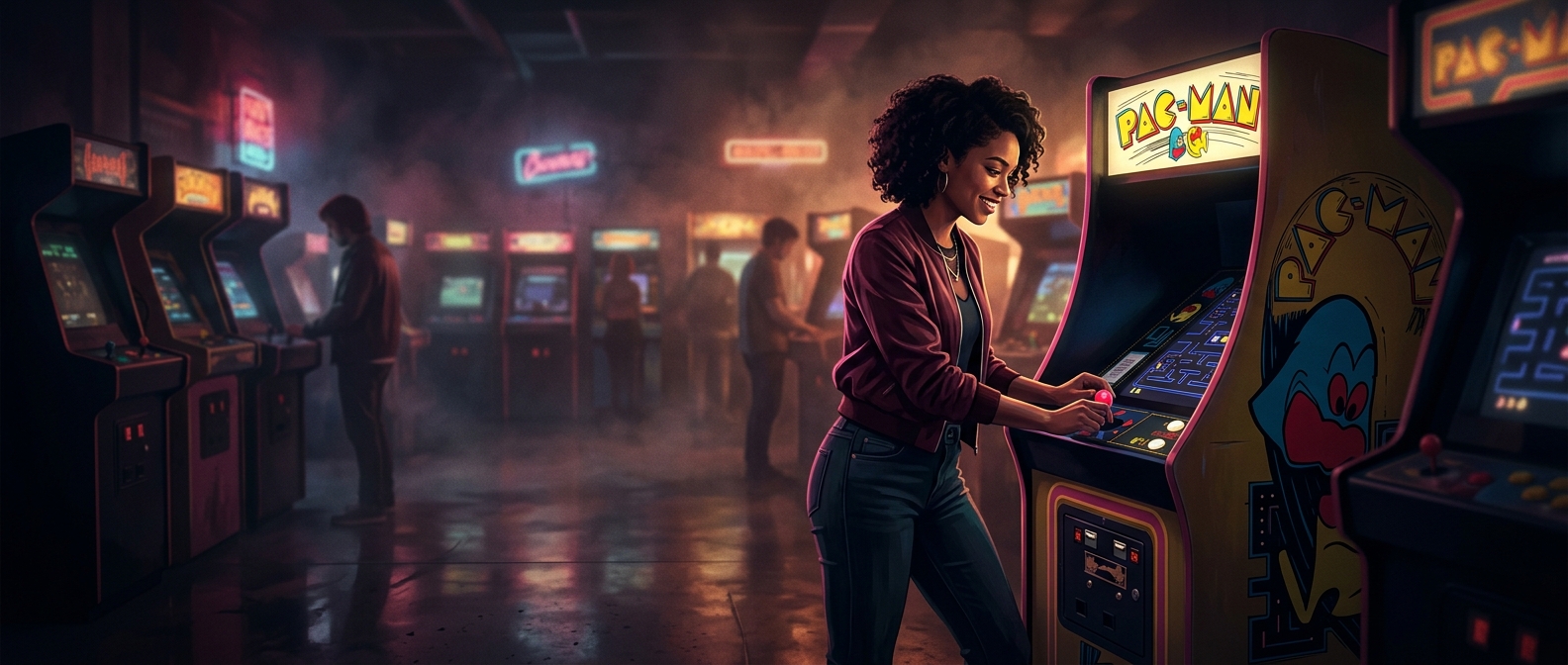
Iwatani’s aim was to make arcades more inviting to women, whom he believed were put off by their dark, male-dominated atmosphere. Pac-Man’s bright visuals and cute characters offered a contrast to that setting. Its nonviolent premise also gave newcomers a different kind of game to approach—one built around navigating a maze instead of mastering a weapon.
The design did not remove the arcade’s challenge. Ghosts still pressure the player, and the maze turns simple movement into a tense decision about which corridor to take next. Pac-Man paired an easy-to-read premise with a demanding chase, making the game approachable without making it passive.
Iwatani’s intention was to broaden who might feel welcome at an arcade; it does not, by itself, establish who ultimately played the game. But it shows how a game’s look, actions, and emotional tone can shape the audience its creator hopes to reach.