A price list can shape a whole game economy
In Assassin’s Creed II, a sword and a painting ask the player to spend money for very different reasons. A sword can affect how prepared the player feels for danger; a painting is a more optional purchase. Set their prices too close together, and one choice may crowd out the other. Make everything cheap, and money stops feeling like a reward. Make useful gear too costly, and progress can feel like a grind.
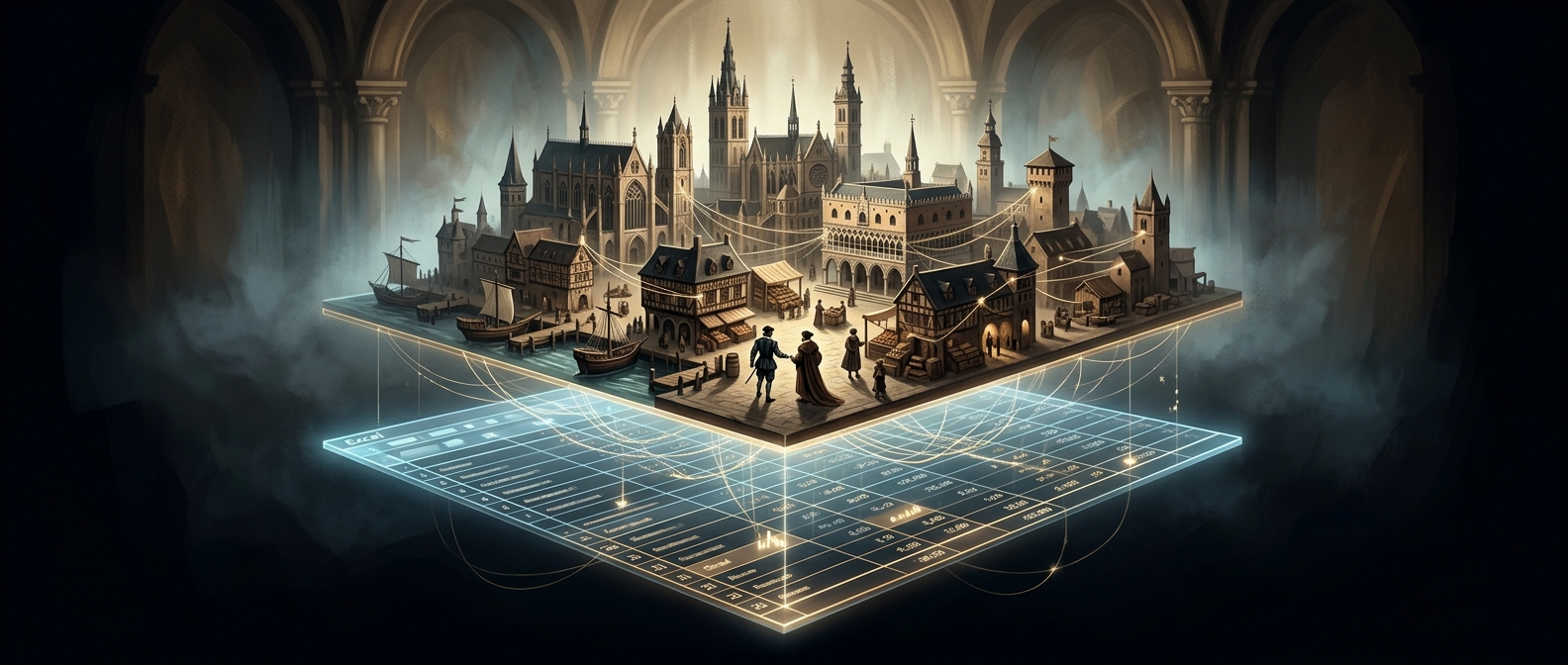
That is the balancing problem behind the spreadsheet. The developer was not just assigning numbers to objects. They were tuning how quickly players could afford things, which purchases seemed worthwhile, and how valuable a reward felt when it arrived. Prices across multiple cities added another layer: an item’s cost had to make sense not only on its own, but alongside the other opportunities the player encountered.
Why Excel helps—and why it takes months
A large spreadsheet makes those relationships visible. The developer can compare prices across many items and locations, change a value, and see where the new number sits among the rest. It also gives the team a practical way to keep a sprawling set of decisions organized while the game changes during development.
But a neat table cannot tell you whether a price feels fair while playing. That takes iteration: adjust the numbers, try the economy in context, and revise when players earn or spend money at an unexpected pace. The months of work reflect that gap between a price that looks balanced on a sheet and one that supports the intended rhythm of play. Every sword or painting on sale is a small decision; together, their prices help determine whether the game’s money feels meaningful.