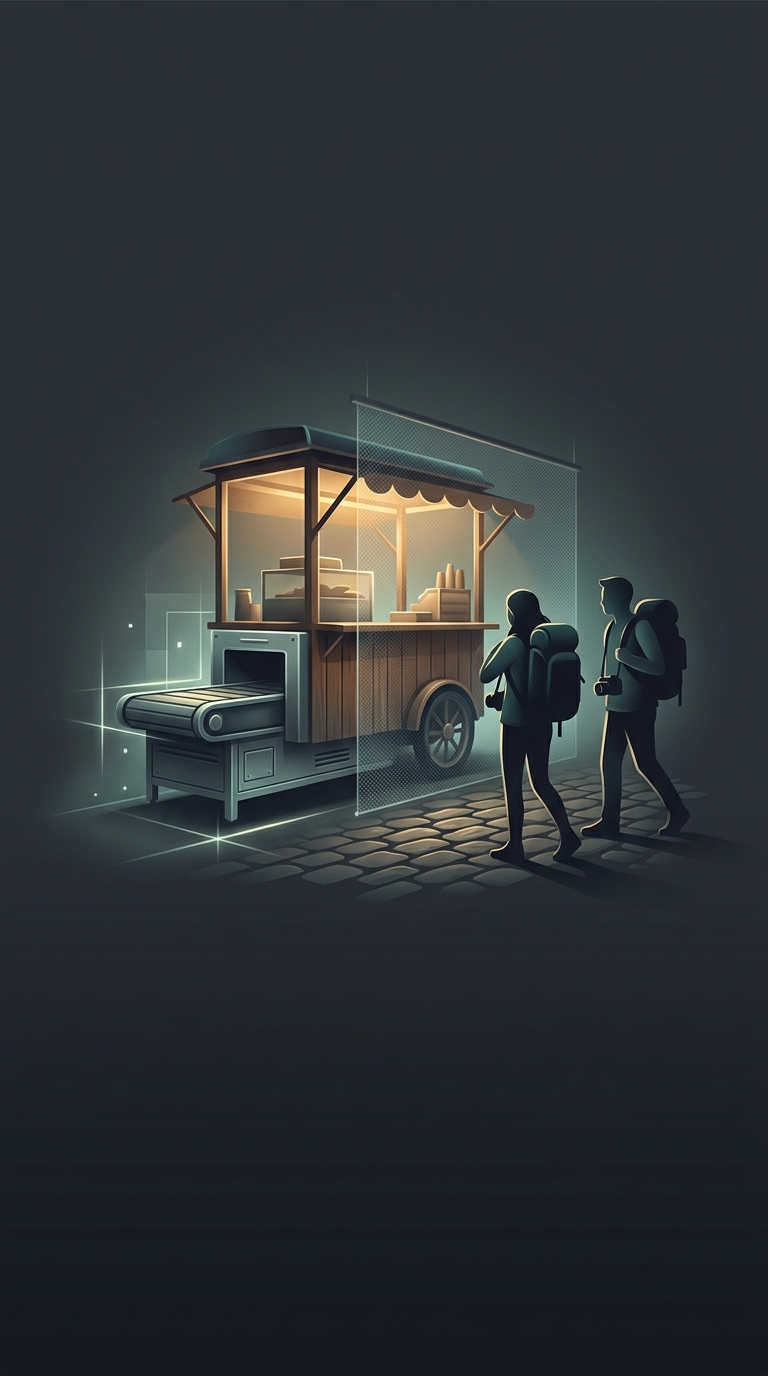
How a Street Cart Makes a Little Grill Count
A metal cart is a compact kitchen built around one job. With limited room for burners, ingredients, and storage, vendors often keep the menu focused and place the busiest tools within arm’s reach. That narrow setup can make service quick: food is assembled or cooked in a short sequence rather than passed through a large restaurant kitchen.
The grill also puts the cooking in view. Heat, smoke, and the sound of food hitting a hot surface make the meal feel immediate, while customers can see what is being prepared. When a cart has a steady stream of orders, ingredients may be used and replenished quickly; the pace can help keep the operation lively, though it varies from vendor to vendor.
A Meal Shaped by the Hour
Late at night, a cart can serve people who are leaving work, heading home, or looking for food after other kitchens have closed. Its small footprint matters: the vendor can work near the flow of people without needing a dining room, and customers can eat nearby or carry their food away.
The appeal is not simply that the food is cooked outdoors. It is the combination of a concentrated menu, visible preparation, and a stop that fits naturally into the street around it. A cart’s modest setup can turn a passing crowd into a shared, temporary dining room—one that disappears when the grill is packed away.