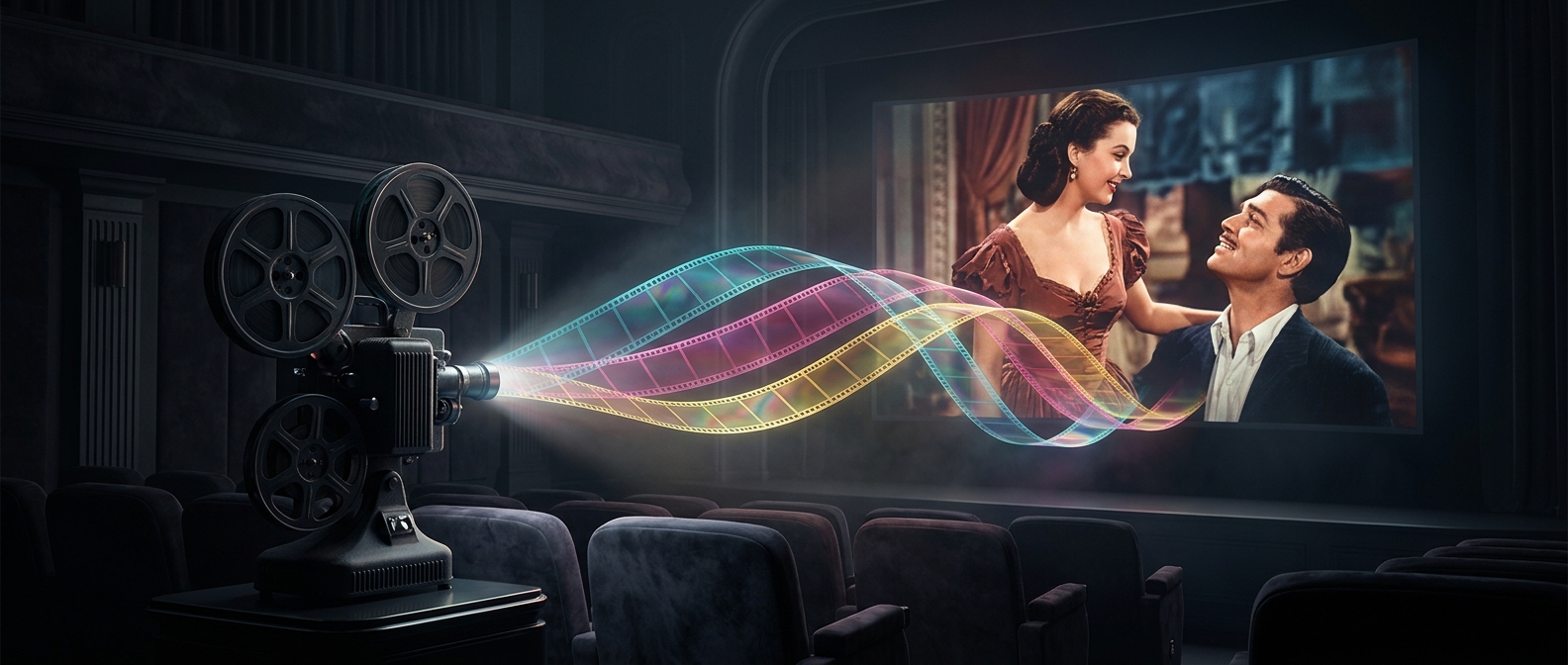
How Technicolor separated a scene into three records
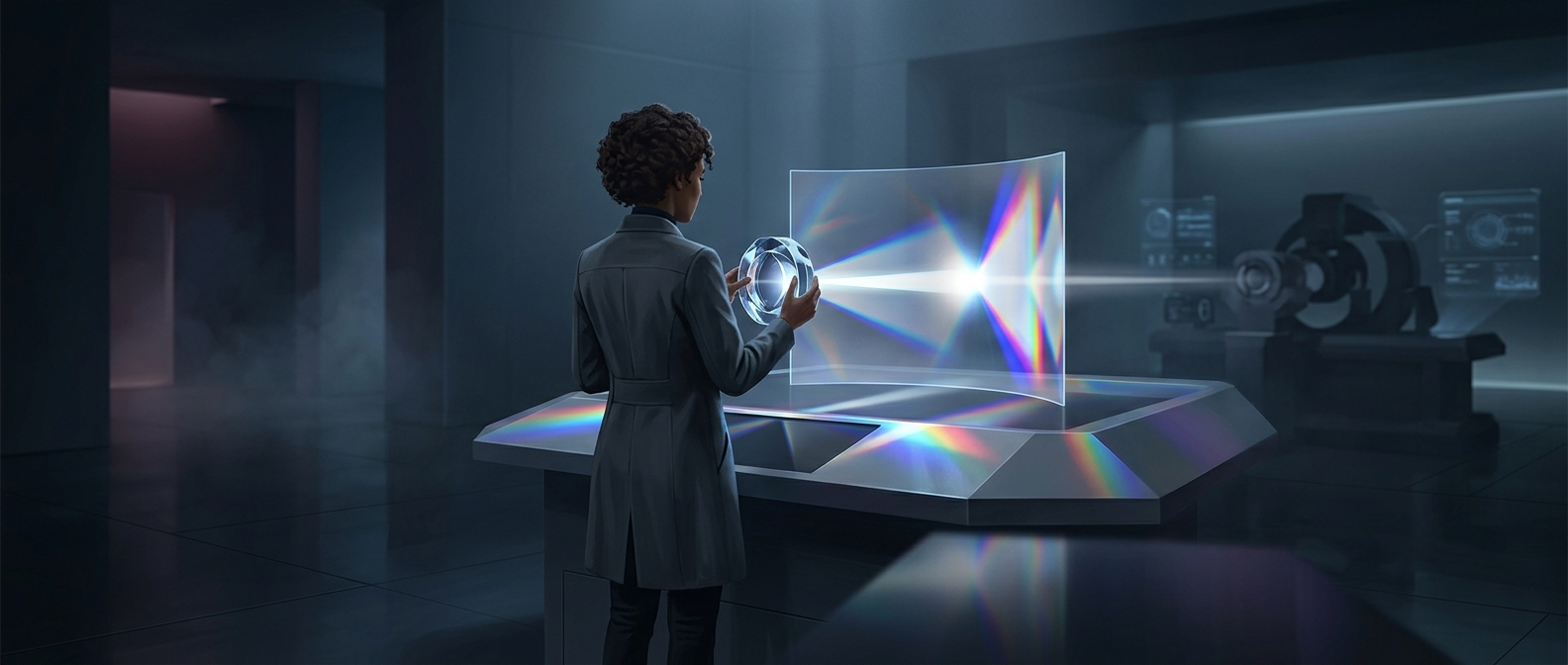
A three-strip Technicolor camera did not capture a color picture on each strip. Instead, a prism-and-filter assembly divided incoming light into three exposures: one recorded mostly red information, another green, and another blue. Each exposure landed on its own black-and-white film strip, where brightness—not color—formed the image. Together, the three negatives preserved the scene’s color information as three separate patterns of light and dark.
Turning those records back into color
The negatives were used to make relief images on printing plates, one for each color record. In dye transfer, each plate picked up a different colored dye and pressed it onto the same blank film in precise alignment. The dyes were complementary colors—cyan, magenta, and yellow—whose overlapping layers recreated a broad range of hues. This was a printing process, not simply a matter of dyeing the original black-and-white strips red, green, and blue.
The method made color through layers: each record controlled how much of its dye reached the final image. If the layers registered correctly, a face, costume, or landscape could emerge in color from three monochrome records.
The tradeoff behind the vivid image
Separating the image this way helped produce rich, stable color, but it demanded specialized equipment and careful processing. The camera had to split and direct light onto multiple strips at once, and the resulting records had to be aligned during printing. Technicolor’s color was assembled from three coordinated images, not captured by a single strip of color film.