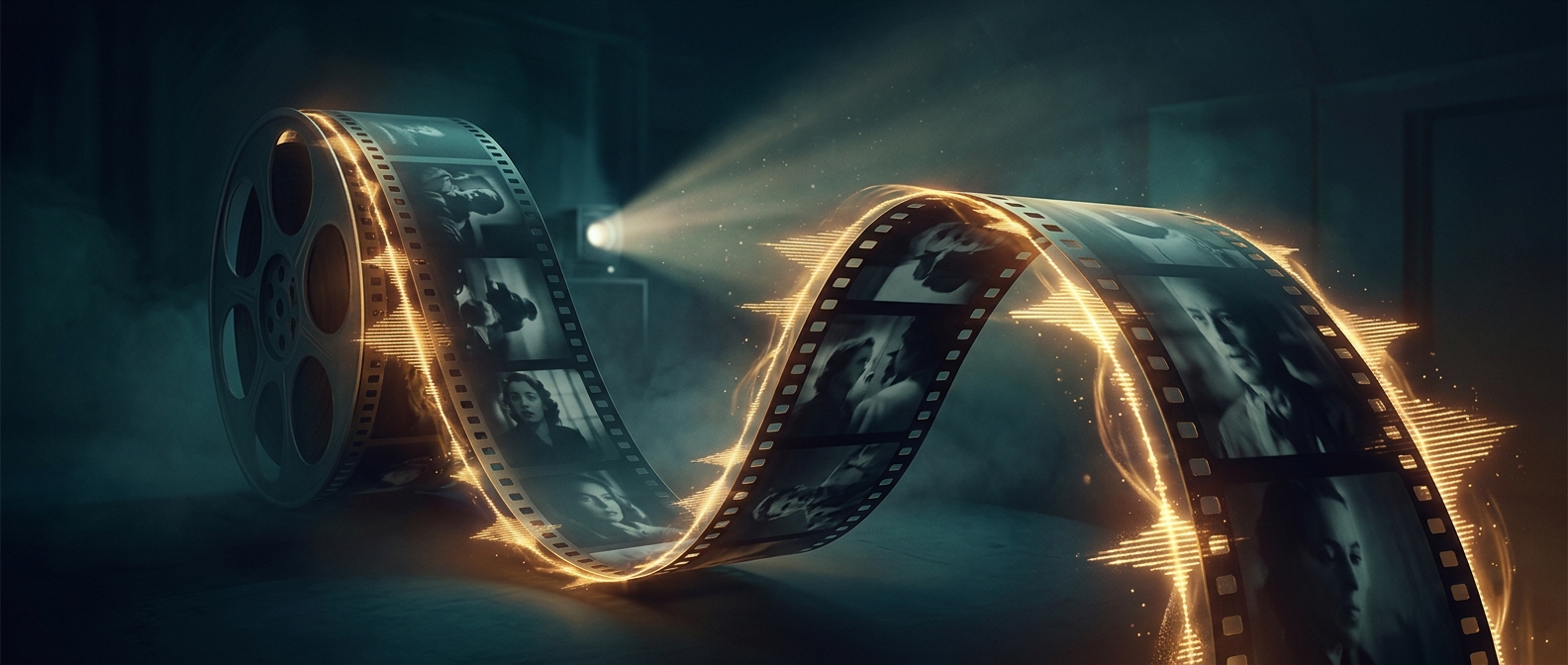
A second picture strip carried the sound
On a film print, the soundtrack occupied a narrow band beside the picture frames. It was not a row of tiny illustrations of voices or music. Instead, the band’s changing light-and-dark pattern encoded the shape of the sound wave: loudness and pitch were represented by variations in how much light could pass through.
As the film moved through a projector, a steady beam crossed the track. In one common design, the track’s transparent width varied; in another, its density varied. Either way, the amount of light reaching a photoelectric cell changed from instant to instant. The cell turned those changes into a fluctuating electrical signal, which the projector’s sound system amplified and sent to speakers.
Why the picture and sound stayed together
Because the image and soundtrack were printed on the same moving strip, the projector advanced them at the same rate. That physical link helped keep a spoken line aligned with the movement of a character’s mouth, without requiring a separate sound disc to remain synchronized with the film.
The arrangement also made the soundtrack part of the film print itself. Scratches, dirt, or wear in that narrow band could interfere with the light pattern and introduce noise or distortion. The edge of the film was therefore doing two jobs at once: carrying the next frame toward the screen and carrying the signal that made the scene audible.
That is the compact engineering trick behind optical film sound: a projector read a visual pattern as changing light, then converted that light into the electrical vibrations a speaker could turn back into sound.