A carnival costume gave the game its name
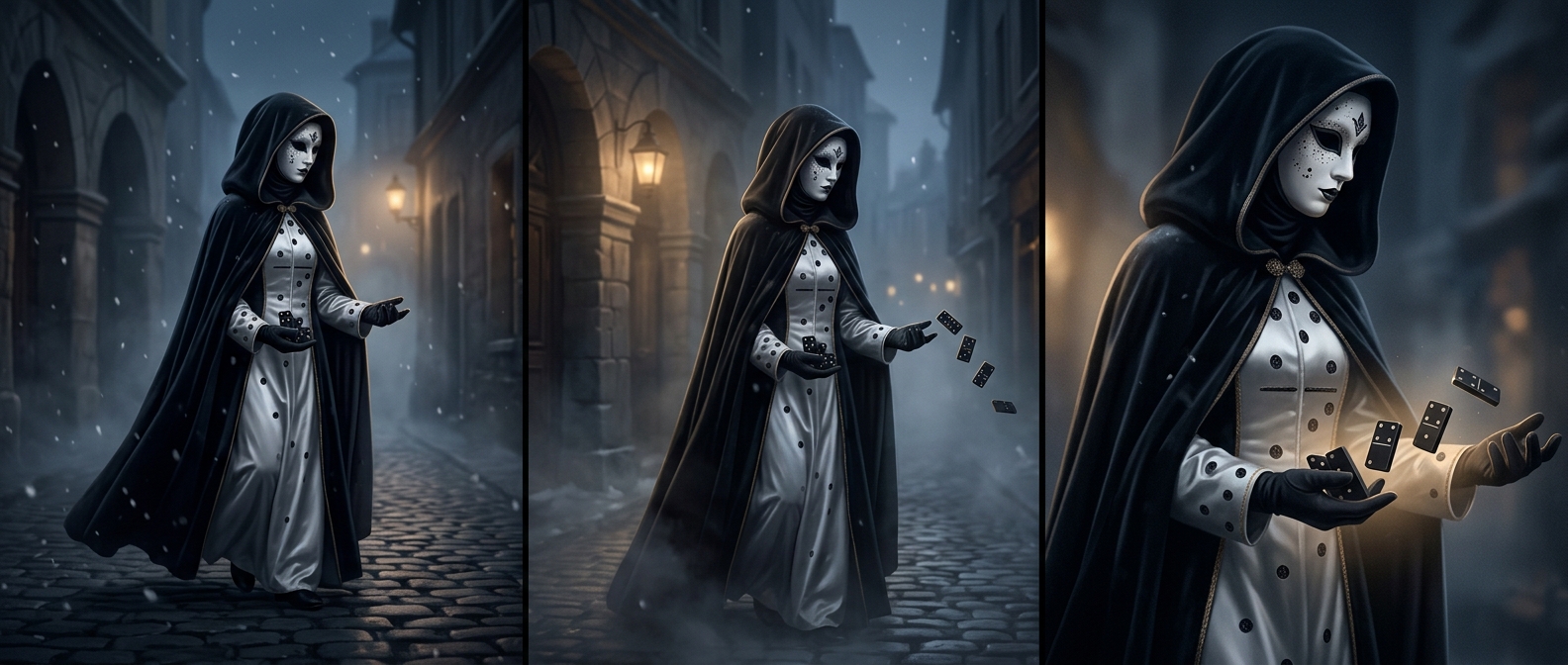
The word domino first referred to a winter costume: a dark robe worn with a pale mask. Its sharp contrast offered a memorable visual comparison for the game’s pieces, whose marked halves create a pattern of light and dark.
That is the link behind the name—not a reference to a particular player, inventor, or move. The costume’s name transferred to the tiles, and then to the game played with them.
A visual name that fits the play
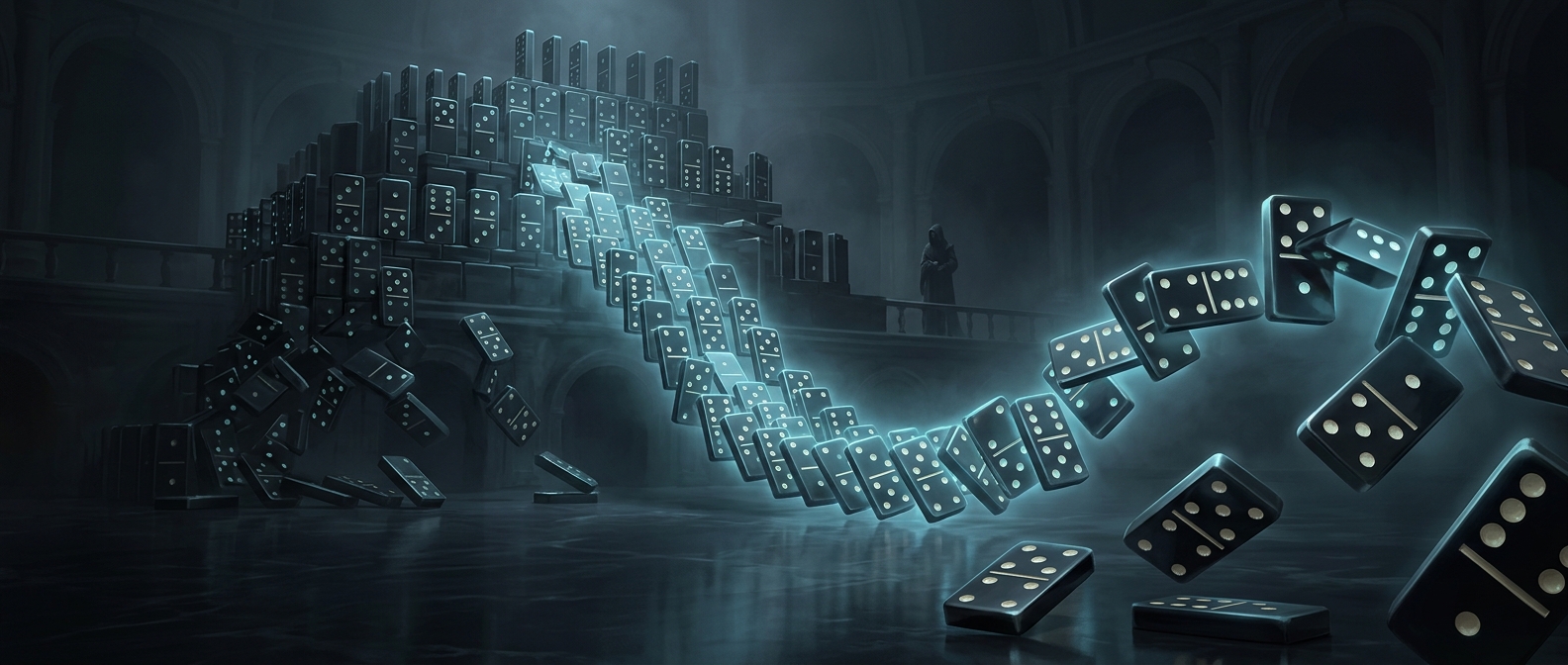
A domino tile is divided into two ends, each showing a number through a pattern of dots, or pips. Players connect tiles by matching the numbers at their ends, extending a chain across the table. The name’s costume echo captures the pieces’ contrasting appearance; the game itself turns that contrast into a simple rule for building a shared line.