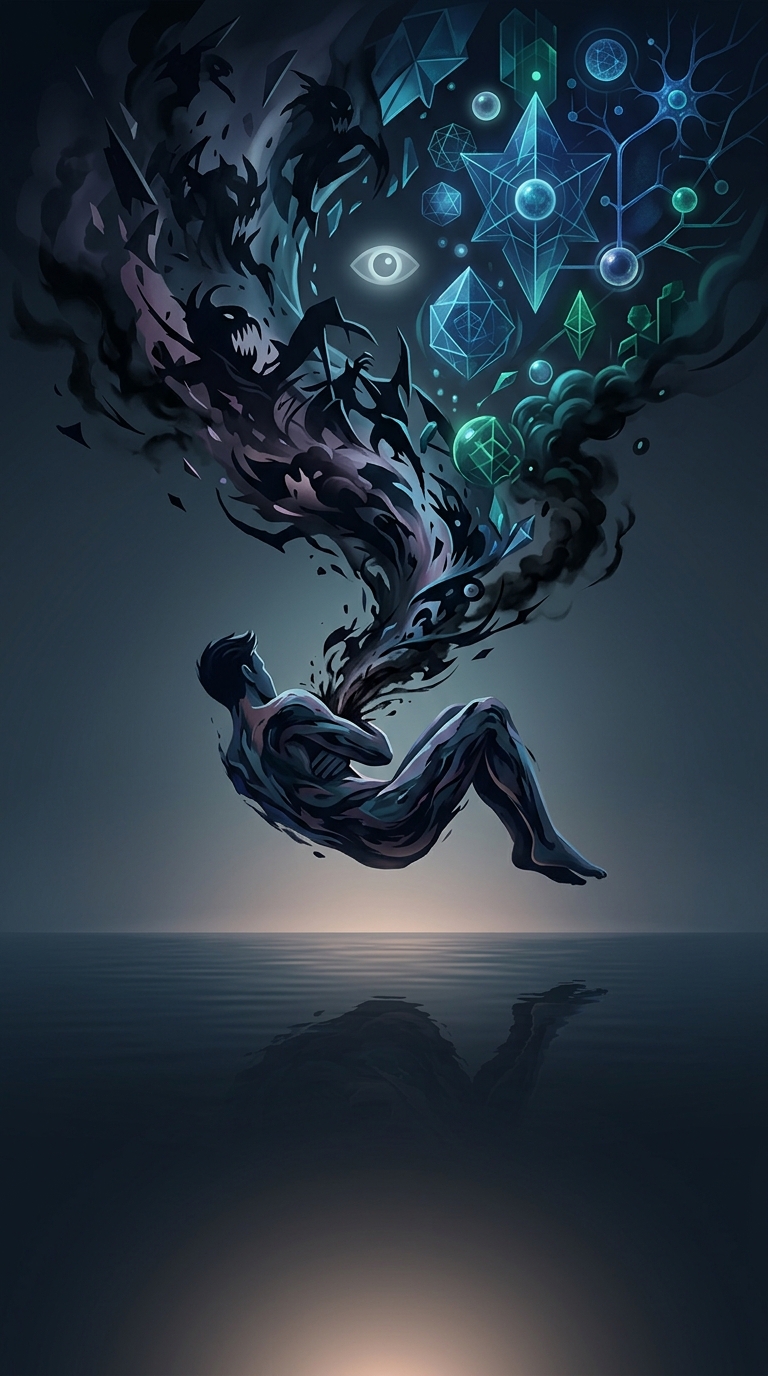
Why a Made-Up Threat Can Feel Good
A horror film gives the brain two kinds of information at once. The images and sounds resemble danger—someone is pursued, a door creaks, a sudden noise erupts—so attention tightens and the body may become more alert. At the same time, the viewer knows the scene is on a screen and can pause, look away, or leave. That knowledge does not necessarily prevent a jolt of fear; it changes how the fear is interpreted.
Psychologists use benign masochism for the enjoyment people can find in unpleasant sensations when they understand those sensations to be safe. The key is not that the brain mistakes fiction for a real murder and then mechanically turns fear into pleasure. Rather, the viewer can experience a convincing threat while retaining a sense of distance and control.
The Ride Has a Beginning and an Exit
A scary scene builds uncertainty: Is the sound harmless, or is something about to appear? The reveal releases some of that uncertainty, while the viewer’s awareness of the real setting remains in the background. That contrast—intense emotion inside the story, safety outside it—can make fear feel like a challenge willingly taken on rather than a danger that must be escaped.
Bodily arousal may linger after a frightening moment, and that heightened state can color what follows. But there is no single chemical switch that transforms adrenaline into dopamine and guarantees euphoria. People differ: one viewer may feel exhilarated, another may feel tense or simply want the lights on. The setting, the person’s expectations, and whether the fear feels manageable all matter.
The Pleasure Depends on Knowing When It Ends
Control helps explain why the same frightening material can be entertaining in a theater yet distressing in a real emergency. In a film, the viewer has chosen the experience and can usually stop it; the apparent threat has boundaries. Horror’s peculiar reward comes from approaching those boundaries without actually crossing them: the body reacts, but the person can ultimately step back into an ordinary room and recognize that the danger belonged to the story.