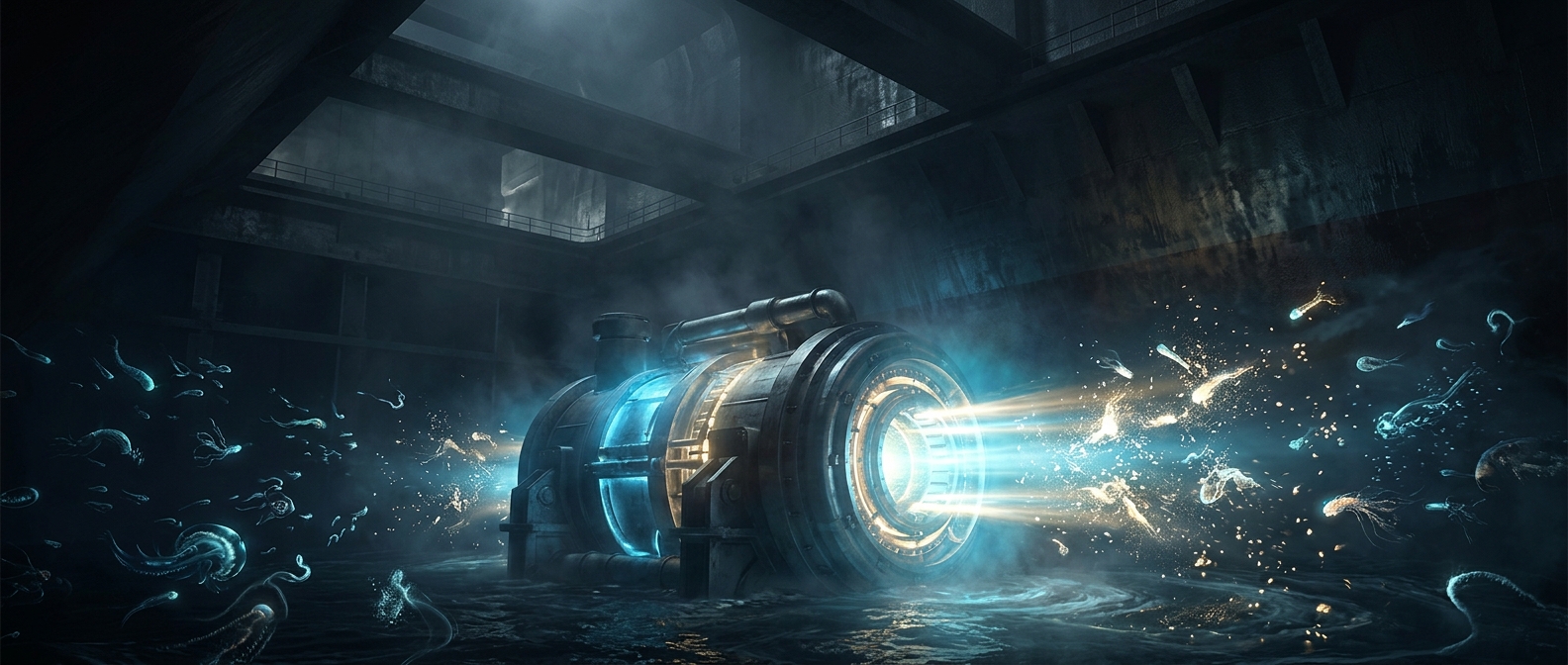
Why ballast water needs managing
A ship’s weight changes as it unloads and takes on cargo. To keep it stable and deep enough in the water, crews pump seawater into ballast tanks, then release some of it as the ship loads up elsewhere. The water can contain tiny life—such as plankton, larvae and microbes—that is hard to see but capable of surviving the trip.
The risk comes at the destination: organisms released into a new coastal habitat may find food and conditions that let them establish themselves. Some can compete with native species or disrupt local ecosystems. A ship’s ballast system can therefore connect distant waters in a way that natural currents rarely do.
Treatment is a shipboard engineering problem
Ballast water is held in large tanks built into a working vessel, not in a clean laboratory vessel. A treatment system has to process substantial flows while the ship is taking on or pumping out water, and it must fit the ship’s existing plumbing and operating schedule.
Systems may combine filtration—which physically removes some organisms and particles—with methods such as ultraviolet light or chemical treatment that disable or kill organisms that pass through. The exact approach varies by system. Treatment must work in real seawater, where suspended material can interfere with the process, and crews need to operate and maintain the equipment at sea.
Exchange and treatment solve the problem differently
When ships exchange ballast water at sea, they replace water taken up near shore with water from the open ocean. That can reduce the number of coastal organisms carried to another coast, but it is not the same as making the water sterile. Treatment instead aims to control organisms in the water before it is discharged.
Either way, the goal is to interrupt the journey before the ship empties its tanks. That makes ballast management a small but consequential part of a voyage: the ship must remain stable, while its water system is prevented from becoming a route for unwanted life.