A banister is a rail, not a slide
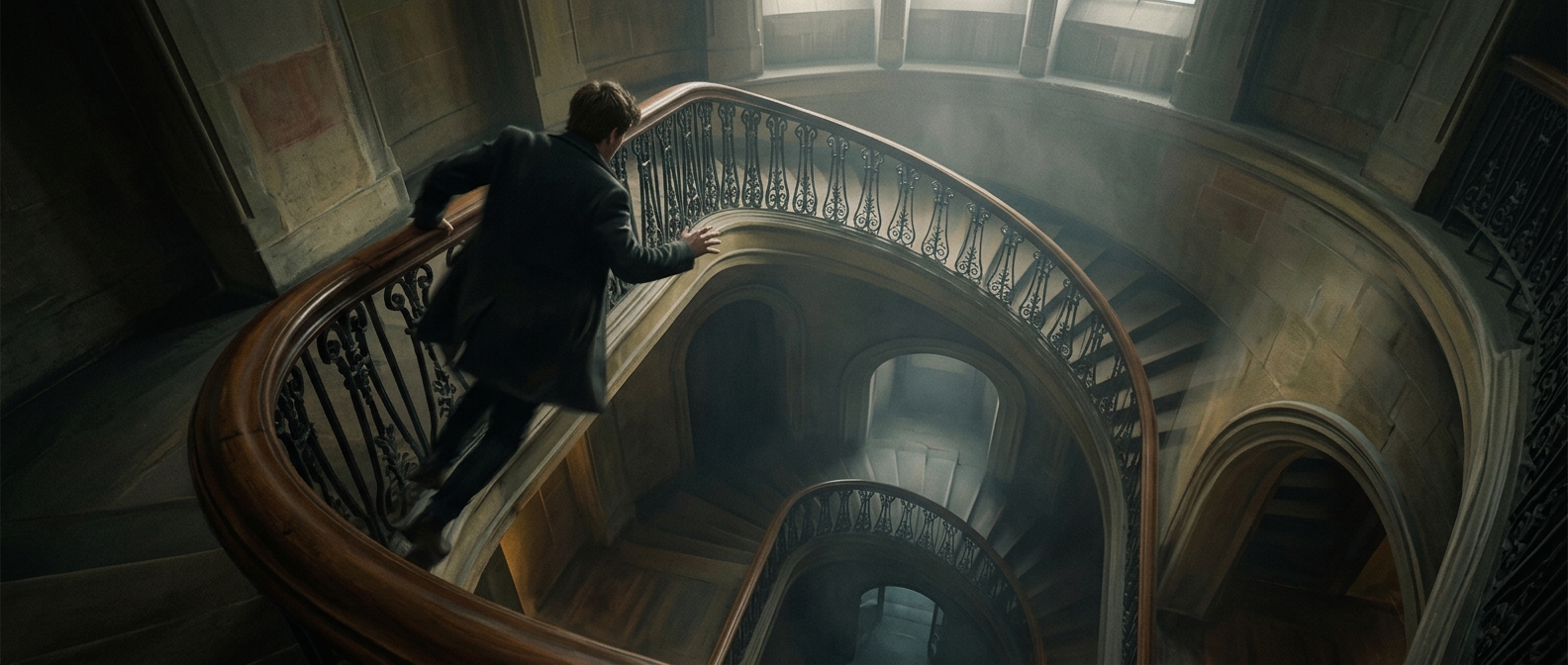
A handrail is shaped and positioned to give someone a steady grip while they walk. It is not built as a controlled sliding surface: its slope, width, and finish can vary, and it offers no seat or side walls to keep a rider aligned. A small shift in body position can turn a straight descent into a sideways slip.
Why the landing is the dangerous part
Sliding downhill converts height into motion. The faster the rider is moving, the more distance—or force—it takes to bring that motion to a stop. At the bottom, the body may meet a new surface at a different angle: a floor, a post, or the end of the rail. That abrupt change can twist the body or throw the rider forward rather than slowing them gradually.
The rail can also end before the stairs do. A rider who loses contact near the bottom may fall from above floor level, while a foot or hand catching on a bracket or rail end can suddenly stop one part of the body while the rest keeps moving.
The safer route is the one the stairs were designed for
Stairs spread the descent across separate steps, giving each foot a place to land and allowing the body to adjust its balance. A banister slide removes those pauses and offers no reliable way to control speed or choose a safe stopping point. The risky surprise is not simply that the rail is slick; it is that the architecture provides no gradual transition from sliding to stopping.