The turntable made a tight railway yard possible
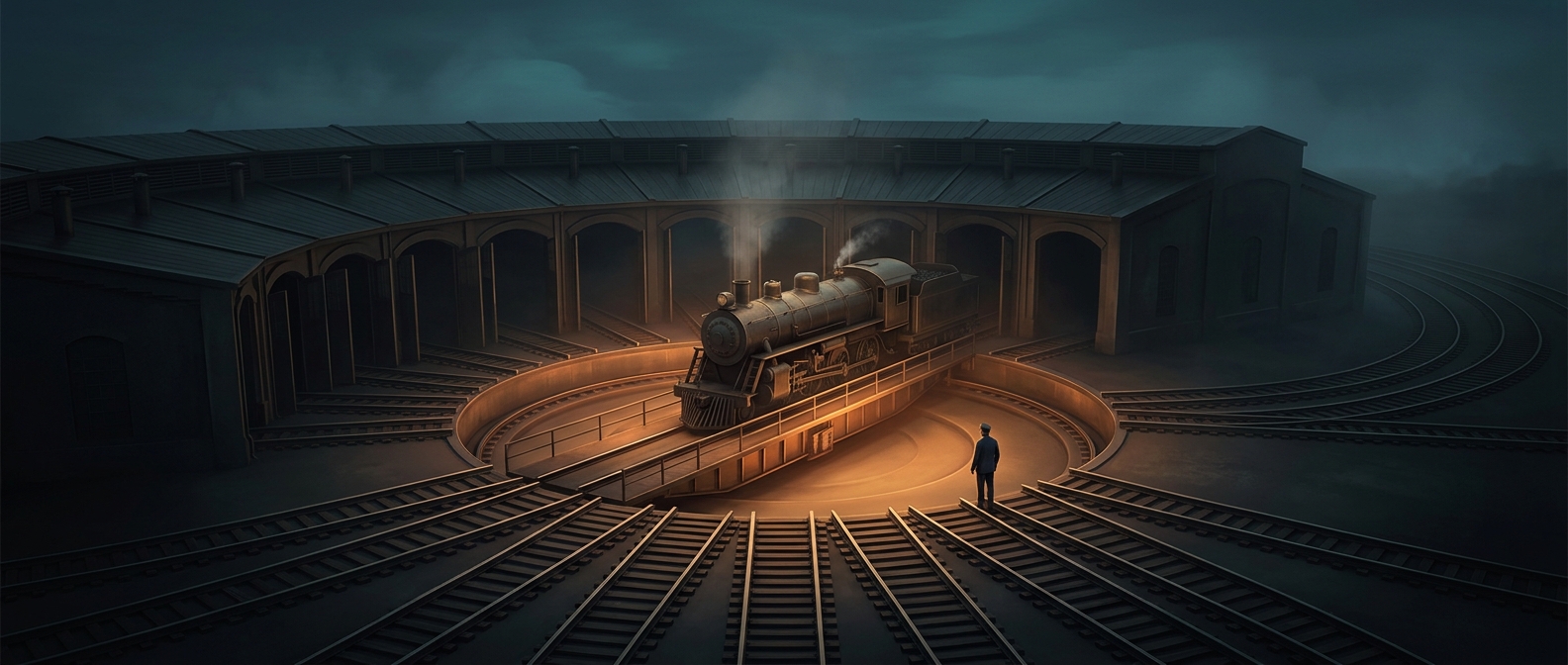
A locomotive could not simply swing around on its tracks: rails offer no room for a broad turn, and building a loop of track takes considerable space. A turntable solved the problem in a compact footprint. The engine rolled onto a short track set across a rotating bridge; once the bridge turned, its rails could line up with any track leading away from the center.
The turntable had to do more than spin. It needed to support the locomotive’s weight, stay level as it moved, and stop with its rails precisely aligned to a stall track. The engine could then roll off under its own power. That alignment turned one central platform into a junction serving many bays.
The roundhouse was the workshop around it
Each bay, or stall, offered a sheltered place to inspect and service an engine. Workers could reach the locomotive for routine maintenance and repairs, while the radial arrangement let many engines share one turntable instead of requiring a separate turning loop for each track. The curved building also used the available yard space efficiently.
Turning mattered especially for steam-era operations. Many locomotives were easier to operate, and crews had better visibility, when the engine faced forward rather than running tender-first. A turntable let railway staff point an engine in the direction needed for its next trip without hauling it through a long detour.
The result was a building organized around a single piece of moving track: the turntable handled the awkward change of direction, and the roundhouse made the surrounding stalls useful for keeping locomotives ready to run.