How Broken Stone Turned Muddy Roads into All-Weather Routes
A road made from loose earth could become a trap after rain: wheels churned the surface into ruts, and passing traffic deepened them. Stone offered a different solution. Road builders broke rock into pieces and compacted it into a firm, interlocking layer. The smaller pieces filled gaps between larger ones, helping the surface resist the repeated impact of wheels and hooves.
The shape and arrangement mattered as much as the material. A compacted stone road was typically built with a slight crown—a raised center that let water run toward the sides—instead of pooling where vehicles traveled. Keeping water out of the roadbed helped preserve its strength and made travel more dependable in wet weather.
Why Tar Made the Surface More Cohesive
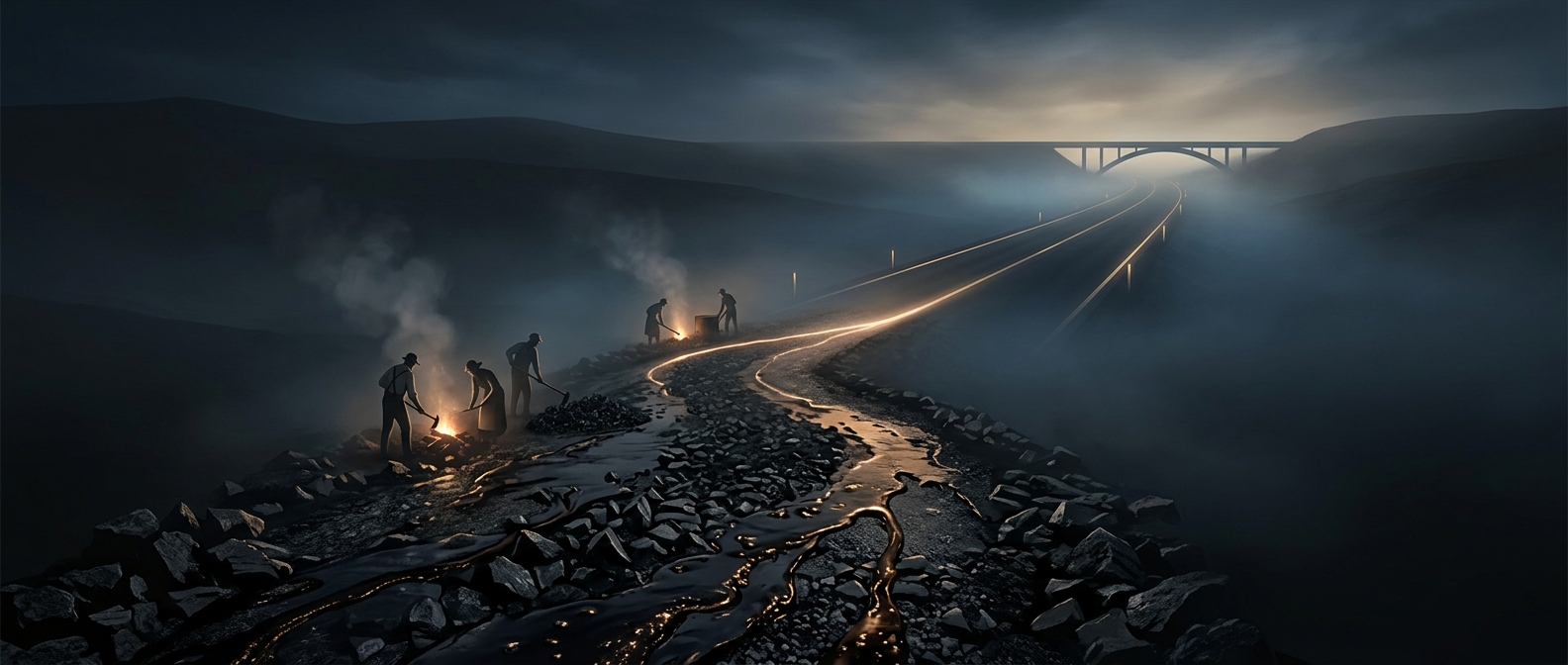
Tar-bound stone was a later improvement on stone-road construction, not a feature of every early paved road. When tar was added to crushed stone, it helped bind the fragments and reduce the amount of water seeping through the surface. The result was smoother and less prone to loose stones scattering under traffic.
This approach became known as tar macadam, or tarmac. It retained the basic idea of a carefully compacted stone foundation while adding a binding layer. The tradeoff was that the surface still depended on good drainage and a solid base: tar could help seal the top, but it could not make a weak or waterlogged roadbed durable.
The important shift was from treating a road as packed soil to building it as a layered structure. That made routes more usable after rain—and let travelers rely less on the weather to decide whether a journey was possible.