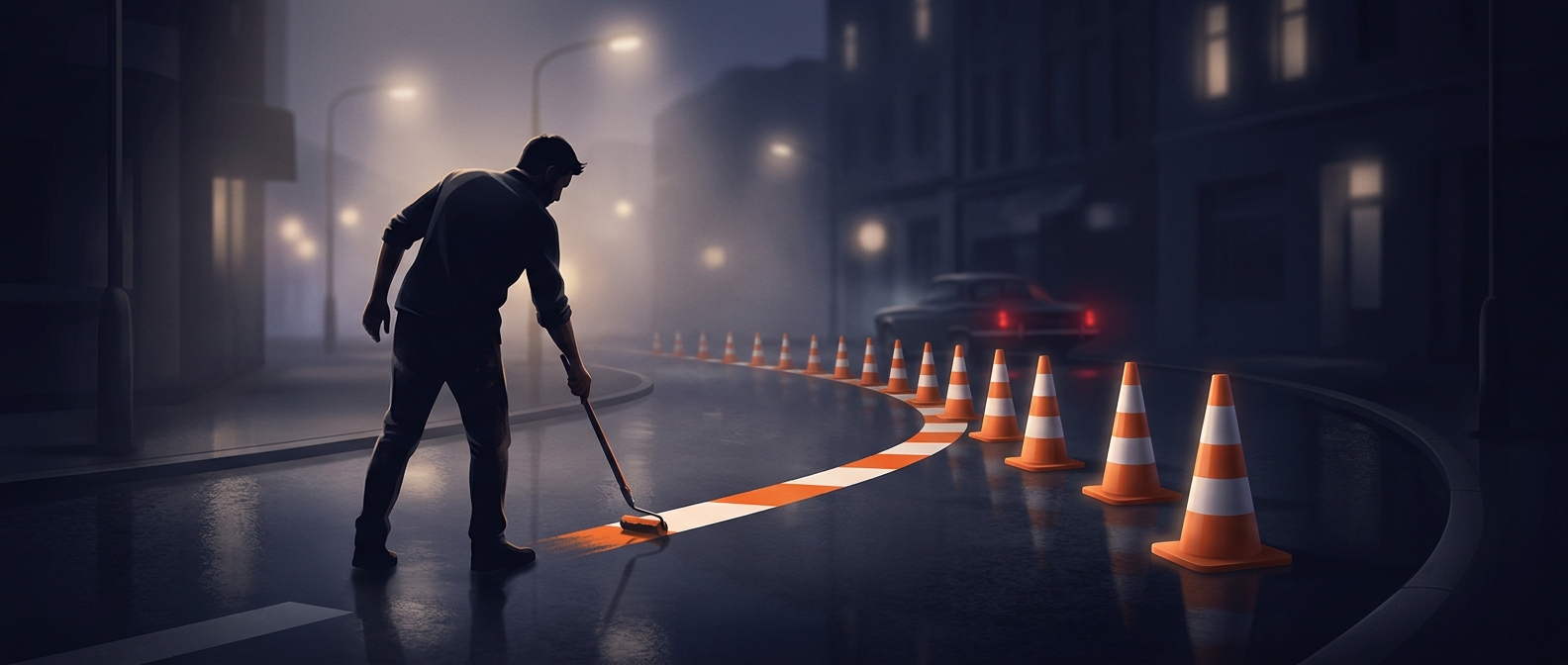
From a barricade to a warning
Freshly painted road lines created a practical problem: traffic had to be kept away until the paint was safe to cross. Wooden barricades could block the route, but they were heavy, rigid objects standing in the path of a moving vehicle. A strike could damage the vehicle as well as the barricade.
A line painter’s alternative was made from scraps of heavy canvas. Formed as a light, hollow marker, it could signal where drivers should stay clear without acting like a solid wall. The key change was not simply a new shape; it was a different way to manage traffic. The marker made the hazard visible while offering less resistance if hit.
A marker that could give way
The hollow construction mattered because it used less material and kept the marker light. Canvas also made it less likely than a wooden barrier to damage a vehicle on impact. In other words, the design treated a collision as something to reduce harm from—not as a force the marker should stop.
That tradeoff suited road painting: crews needed to mark a temporary boundary, not build a permanent obstacle. The traffic cone’s early purpose was therefore as much about what it would not do as what it would do: protect wet paint without turning a minor driver’s mistake into a harder crash.