A brief radio exchange replaces the cash stop
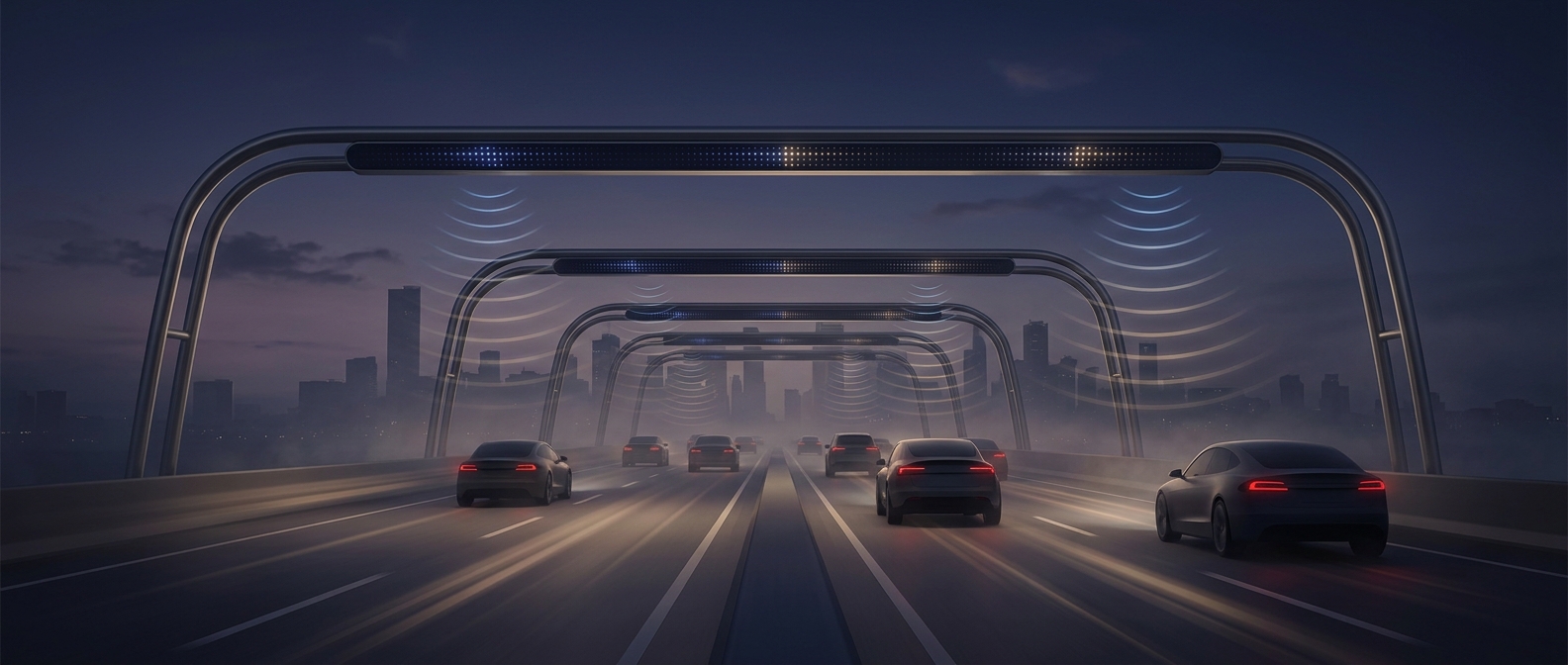
As a vehicle enters a toll lane, roadside equipment sends out a radio signal. In many systems, that signal powers a small, passive transponder in the windshield; the transponder then sends back identifying information. “Passive” means the tag does not need its own battery to send the reply—it draws the energy it needs from the reader’s signal.
The exchange takes place in a fraction of the time it would take to stop, hand over payment, and move away. The reader links the tag’s identity to an account, so the toll can be recorded without a driver handling cash at the booth.
The signal must reach the right car
The roadside reader and the vehicle tag need to communicate while the car is moving, so their antennas are positioned to create a brief reading zone. The tag’s location on the windshield helps keep it in that zone. If the equipment cannot read a tag, some toll systems use other ways to identify the vehicle, such as an image of its license plate; the exact fallback depends on the system.
Electronic collection does not make the toll disappear—it changes how payment is recognized and recorded. By moving that transaction into a radio exchange, the lane can process vehicles with less interruption, turning a stop at a booth into a quick passage through the reader’s range.