A village biography carved into wood
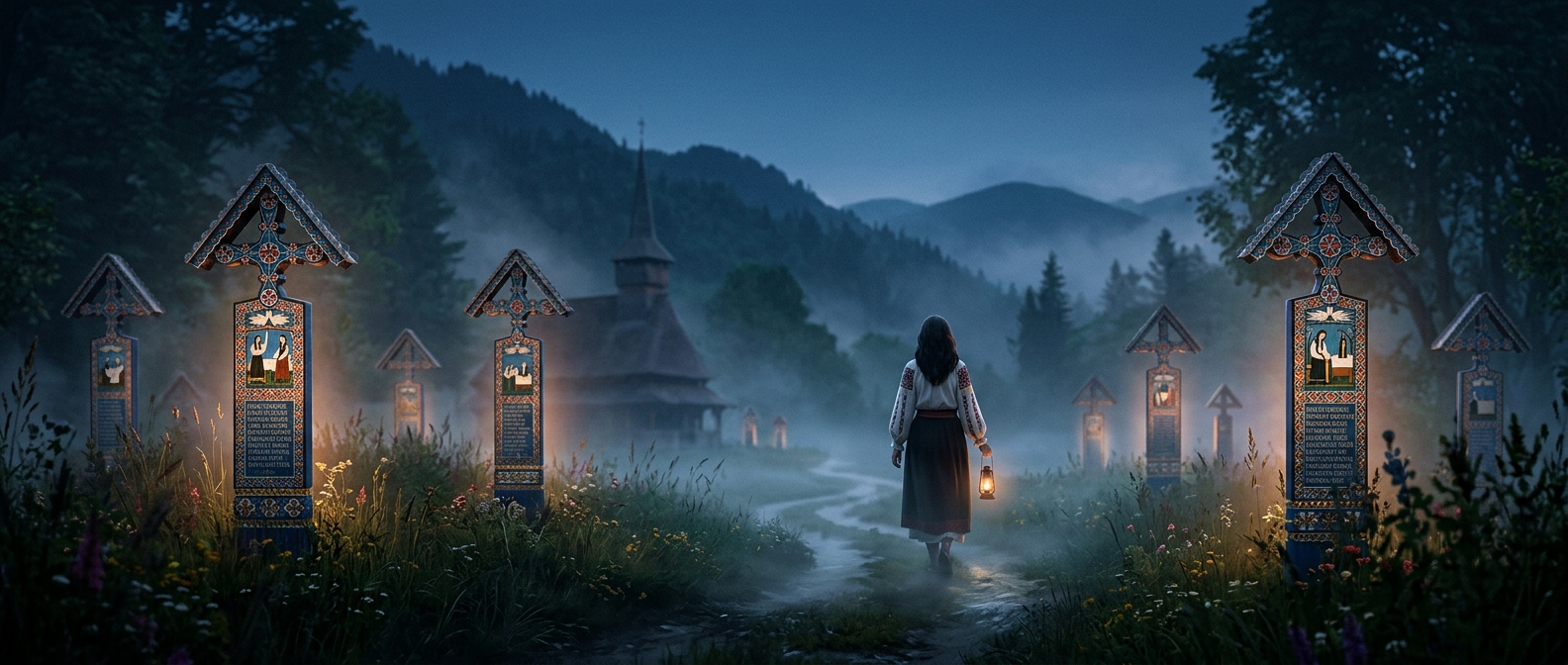
In Săpânța, a village in northern Romania, the cemetery’s crosses do more than mark where people are buried. Many show a painted scene from the person’s life—a craft, a job, or an ordinary moment—paired with a verse that tells visitors who that person was. A shepherd might appear with his flock; a craft worker with the tools of the trade.
The tradition is associated with local woodcarver Stan Ioan Pătraș, who began making the distinctive crosses in the 1930s. Their scenes and verses turn each grave marker into a compact portrait, preserving details that a plain name and date would leave out.
Humor as a way of remembering
The poems can tease the deceased as well as honor them. That blend of affection and candor gives the cemetery its unusual tone: death is acknowledged, but a person’s flaws, habits, and social role remain part of the story. The humor is not simply decoration; it makes the memorial feel like a continuation of village life, where people are remembered as recognizable individuals rather than anonymous names.
The crosses also offer an informal record of the community. Taken together, their painted scenes show the work and routines that shaped local lives across generations. For visitors, the result is less a collection of solemn monuments than a walk through many small, highly specific biographies—each ending with the same reminder that a life can be remembered in its own voice.