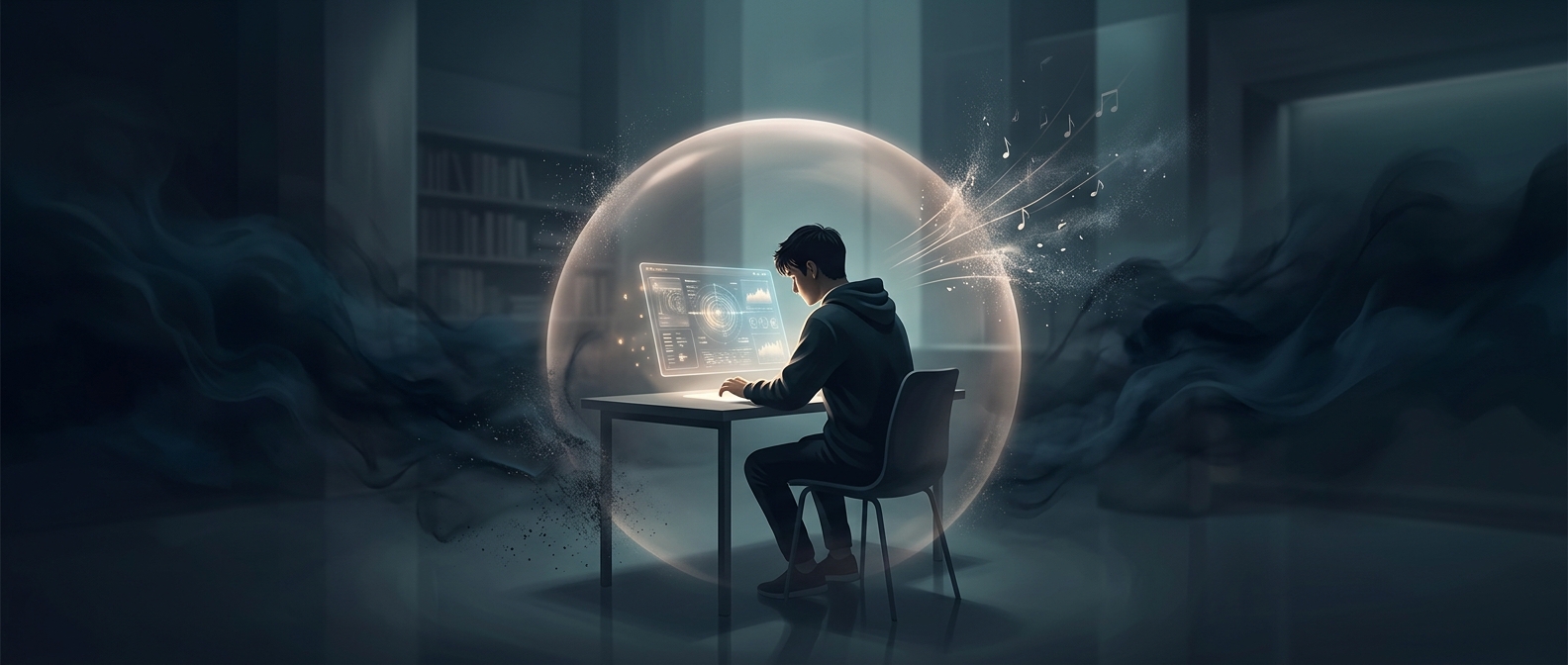
How attention can leave a sound unnoticed
Sound may reach your ears without becoming something you consciously register. The ears convert sound waves into nerve signals, but the brain still has to select and interpret those signals. When you are absorbed in a book or game, attention is already occupied: it is helping you follow a sentence, track a character, or decide what to do next. Other sounds can be processed only lightly, without breaking into awareness.
Why your name does not always break through
The brain does not simply switch off everything outside your focus. It continues to monitor the surroundings, but gives priority to information that seems relevant. A familiar voice or your own name can often attract attention because it carries personal meaning. Yet that pull is not guaranteed to win against a demanding task, especially if you are concentrating intensely or the sound is quiet or masked by other noise.
This is why someone can call your name and later find that you did not respond, even though the sound physically reached your ears. Your brain may have registered enough to keep monitoring the environment, but not enough for you to notice and act on it.
The practical distinction
Not hearing a call in this everyday sense is usually about attention, not a failure of the ears. It also explains why repeating a name more loudly, moving closer, or waiting for a natural pause in the activity can work: each makes the sound more likely to compete with the task for attention. A sound can be heard by the auditory system without becoming a conscious experience.