Why the change matters at street level
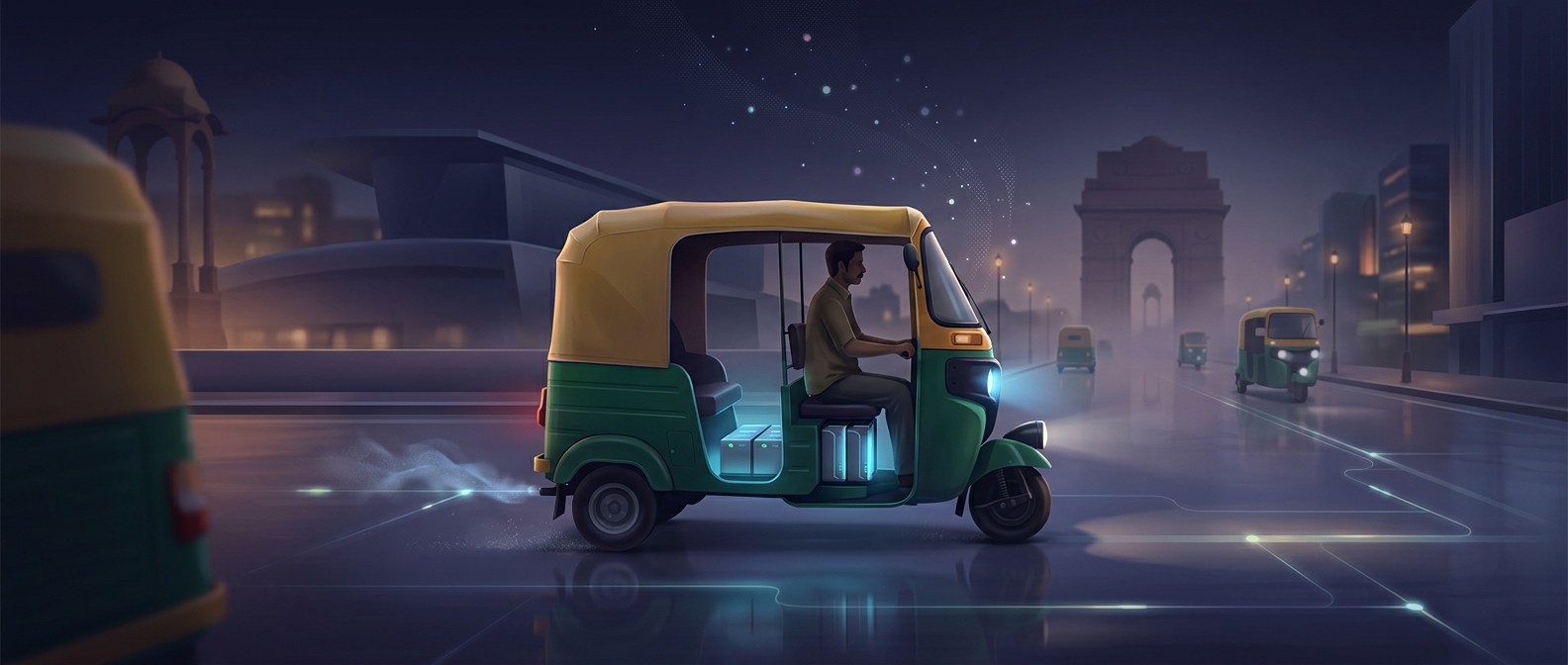
A combustion auto-rickshaw makes noise and exhaust whenever its engine is running, including while it waits in traffic. An electric motor draws power from a battery instead, so the vehicle has no tailpipe emissions and avoids the repeated engine vibration and revving that add to street noise. The benefit is especially noticeable where vehicles, pedestrians, and shops share a narrow, crowded road.
That does not mean electric travel has no environmental footprint: generating the electricity and making the battery also have impacts. But removing exhaust from the vehicle shifts pollution away from the curb, where people are breathing it directly.
The battery changes the daily routine
The engine-and-fuel routine gives way to a battery-and-charging routine. Drivers need access to charging and enough time to replenish the battery; how far a vehicle can travel between charges depends on its battery, load, traffic, and driving conditions. For a working rickshaw, those details affect how many fares it can carry in a day, so the transition depends on practical operating needs as well as the vehicle itself.
Electric motors also have fewer moving parts than combustion engines, which can mean less engine maintenance. The tradeoff is that battery condition and charging become central concerns. On a crowded Delhi street, the change is tangible: less engine rattle and no exhaust pipe sending fumes into the immediate surroundings, without requiring more road space.