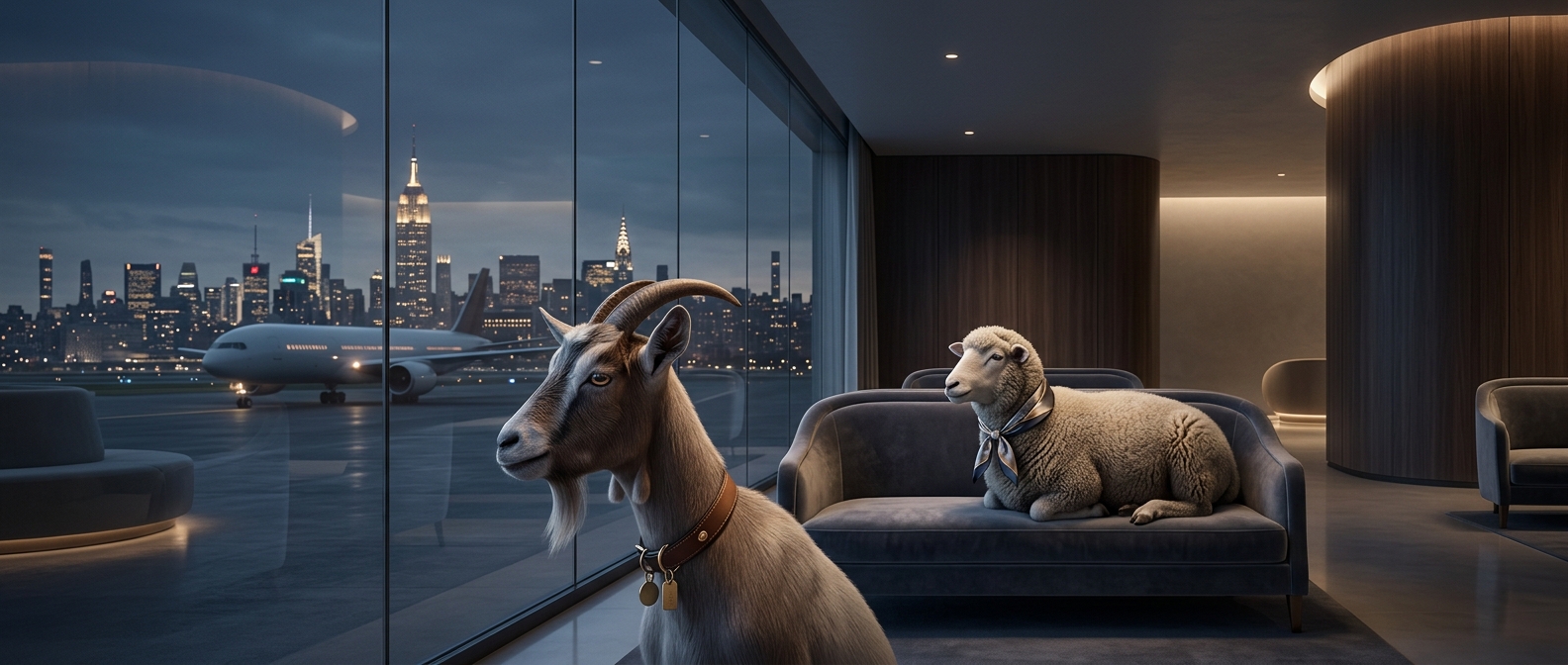
Why an airport needs an animal terminal
For an animal, an international flight does not end at the aircraft door. It still has to be unloaded, moved through airport procedures, and handed over for its next step—whether that is onward transport, inspection, or collection. The ARK gives those tasks a dedicated place at JFK rather than treating animals as ordinary freight or trying to move them through passenger facilities.
That matters because animals cannot all be handled the same way. Livestock, racehorses, and exotic pets differ in size, temperament, and care needs. A horse may need room to stand and be checked; a small animal needs secure containment; a penguin requires conditions suited to its environment. Separate stalls and habitat space let staff accommodate those differences while animals wait.
Comfort is also a logistics problem
Climate control is more than a luxury feature: it helps keep conditions stable while animals are inside the terminal. Quarantine areas provide a way to keep some animals apart from others while they undergo required checks or wait for clearance. Separation can matter when animals arrive from different places or have different handling needs.
The facility’s 24-hour operation also fits the unpredictable rhythm of air travel. Flights and handoffs do not always line up with ordinary business hours, and an animal may need care during a delay rather than simply being left in a cargo area. The result is a specialized transfer point: the airport journey includes a managed stop for the animal, not just a flight and a crate.