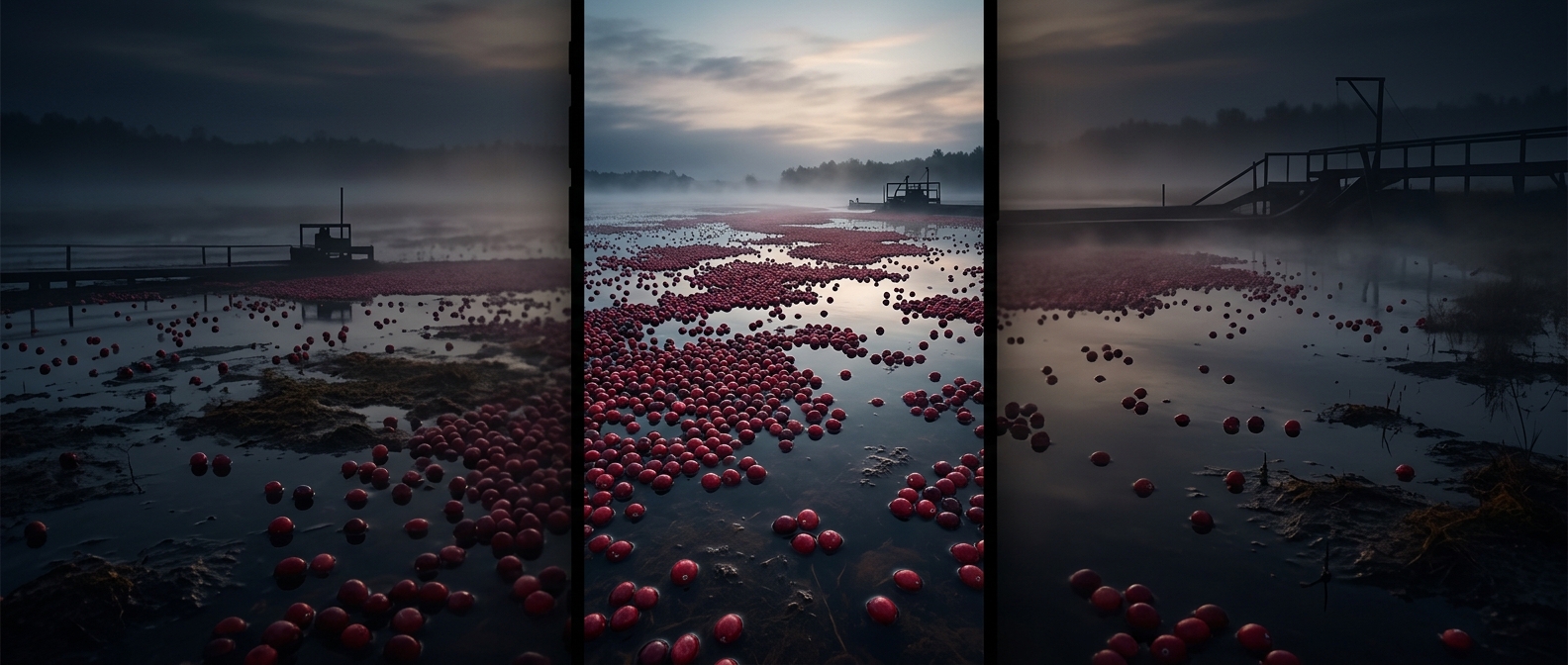
A cranberry bog is a managed field, not an underwater habitat
Commercial cranberry “bogs” are carefully managed growing beds. Cranberries grow on low, trailing vines rooted in acidic soil, and the roots need air as well as moisture. Growers control water levels through the seasons; keeping the plants deeply submerged would deprive them of the conditions they need to grow.
Flooding turns the crop into a floating harvest
At harvest, growers temporarily flood a bed and use water reels to knock ripe berries from the vines. Cranberries have small air spaces inside their flesh, which make them buoyant. Once loosened, the fruit rises to the water’s surface, where it can be corralled and collected much more easily than berries picked individually from among the vines.
The flood is therefore a short-lived harvesting tool, not the vines’ ordinary living arrangement. After the crop is removed, the water is drained so the bed can return to growing conditions. The same field can shift from a low, green carpet of vines to a floating layer of red fruit—because the berries’ built-in buoyancy makes temporary flooding useful.