When a Familiar Face Becomes Unreadable
The frightening part of an encounter with someone who cannot be reasoned with is not just the possibility of danger. It is the failure of a basic social tool: reading another person’s words and reactions to predict what they will do next. A threat that can be negotiated with has boundaries; an unpredictable one offers no reliable way to make it stop.
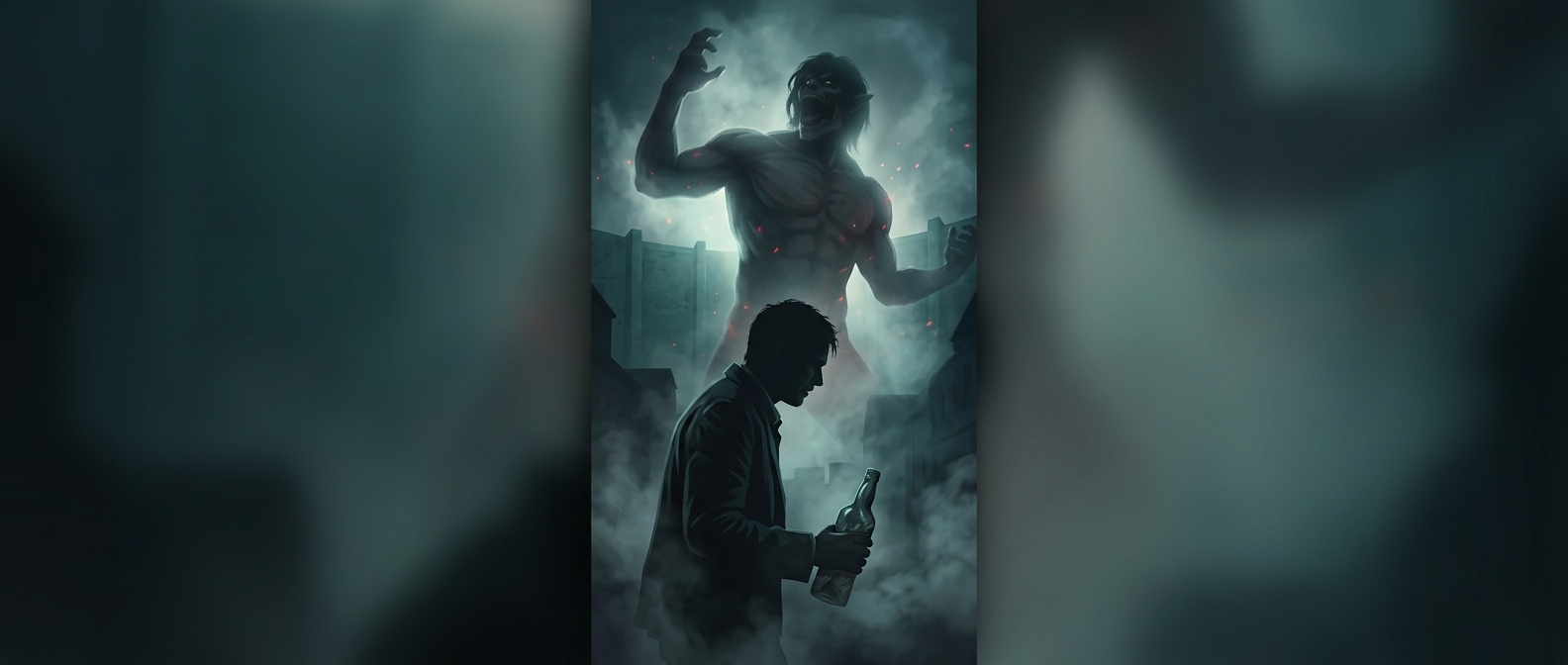
That emotional problem gave Isayama a useful starting point for the Titans. Their bodies look human enough to invite recognition, but their behavior does not offer the reassuring signs of ordinary human intent. The gap between familiar shape and incomprehensible action makes them disturbing in a way that a plainly monstrous creature might not be.
A Monster That Defeats Interpretation
This is a design choice with consequences for the story’s tension. Against an enemy whose motives are unclear, characters cannot count on persuasion, shared rules, or even a clear explanation of what is happening. They must judge danger from movement and circumstance, often with little time to act. The uncertainty becomes part of the threat.
The internet-cafe encounter was an inspiration, not a claim that a Titan is a portrait of one person. Its lasting contribution is more abstract: the fear of being trapped in front of someone whose behavior you cannot understand or influence. That is why the Titans’ human outline matters. It makes the communication failure feel less like meeting an alien and more like watching the familiar rules of human contact collapse.