A name chosen before the bricks
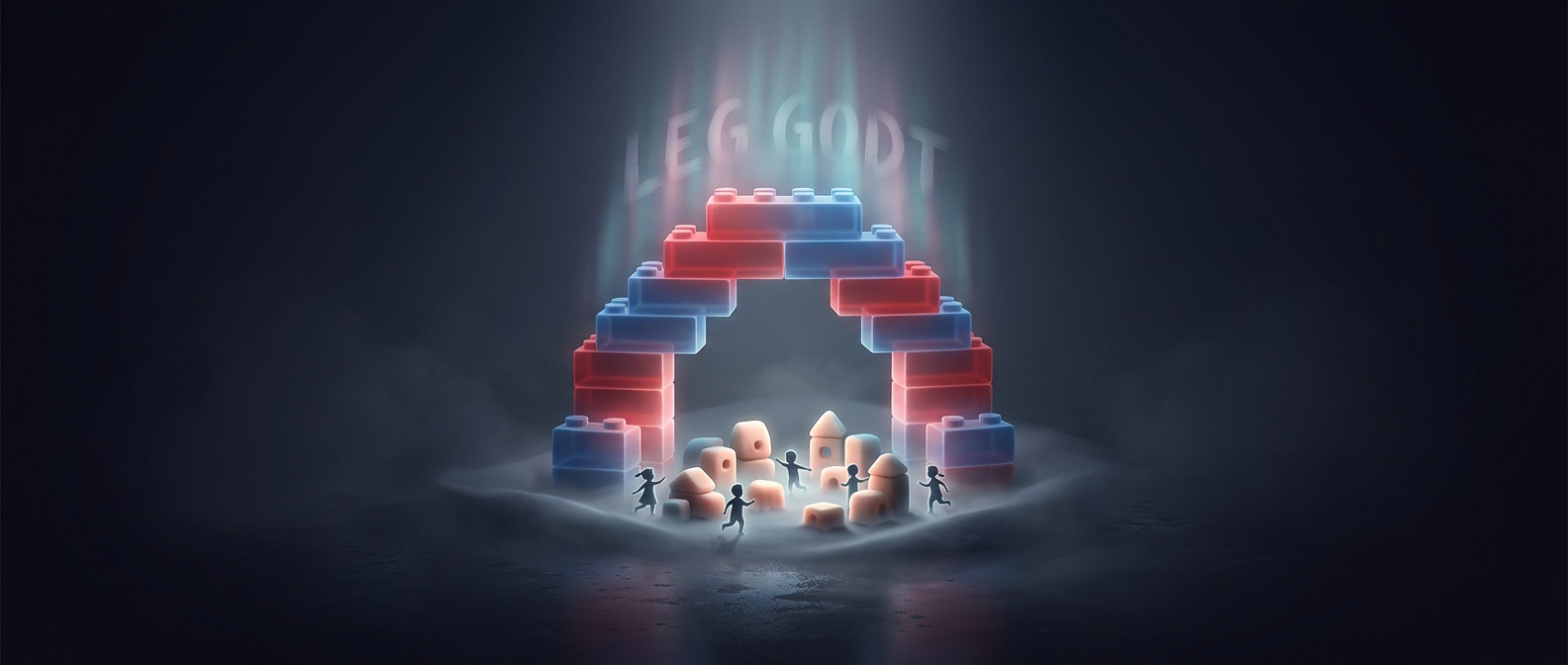
When Danish carpenter Ole Kirk Christiansen named his toy business LEGO in 1934, the company was not yet defined by the interlocking plastic bricks now associated with it. It had begun making toys only a couple of years earlier, when Christiansen’s workshop in Billund was producing wooden playthings. The short name drew on a phrase suited to a maker of toys in many forms, not just one particular product.
That timing helped the name outlast a major change in what the company made. LEGO later moved from wooden toys into plastic ones, and its interlocking bricks became its signature. The name did not need to change with the material: it could still stand for the larger idea of play.
A coincidence that fits the product
There is a second, often-noted meaning attached to the word. In Latin, lego can mean “I put together.” That is a coincidence, not the name’s origin: Christiansen formed it from Danish words. Yet the accidental fit became especially striking once the company’s bricks made assembling pieces its defining activity.
The name’s history therefore links two different stages of the business: a Danish workshop making varied toys and a global brand built around construction. Its later Latin resonance sounds almost prophetic, but the original choice was simpler—and came before the product that made the coincidence memorable.