A game redesigned around planted feet
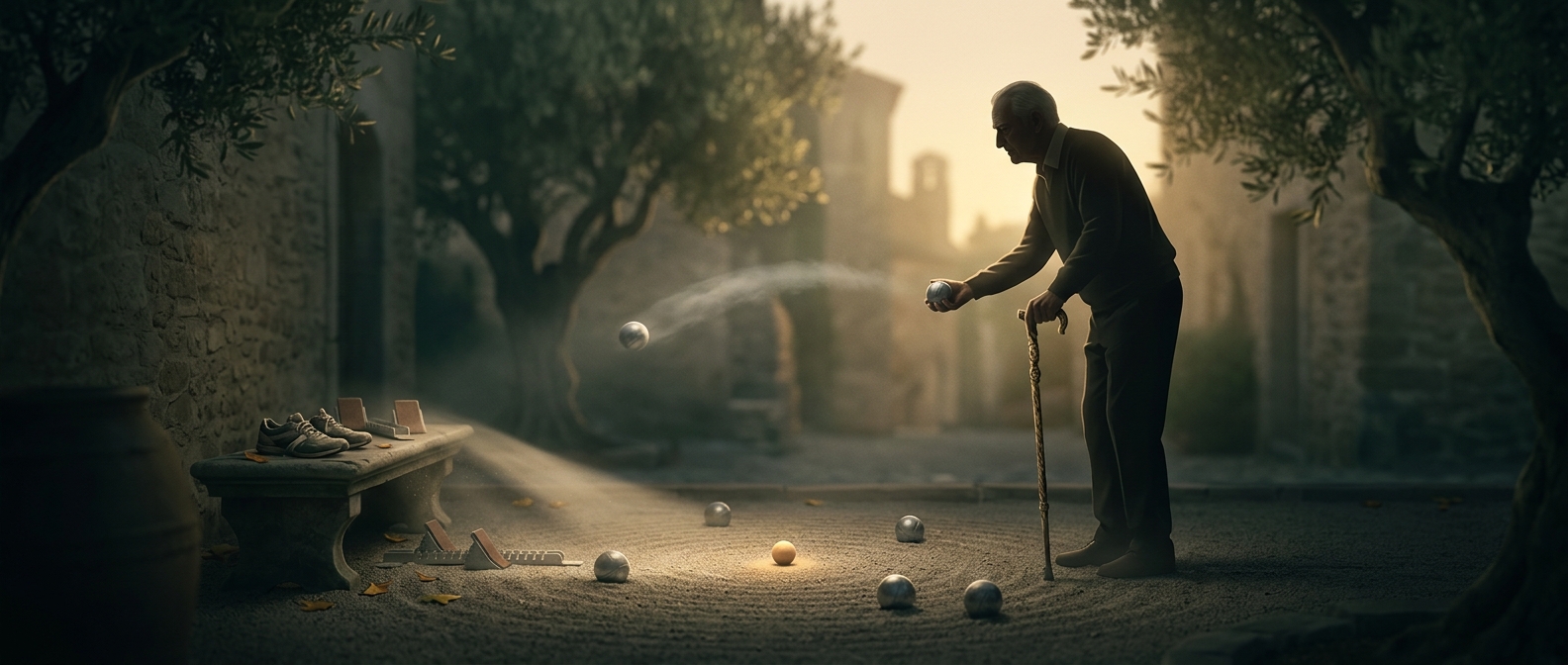
Pétanque grew out of jeu provençal, a southern French ball game in which players often took a run-up before throwing. In the early 1900s, a café owner in La Ciotat adapted that style so his friend, who had arthritis and could no longer manage the running approach, could still join in.
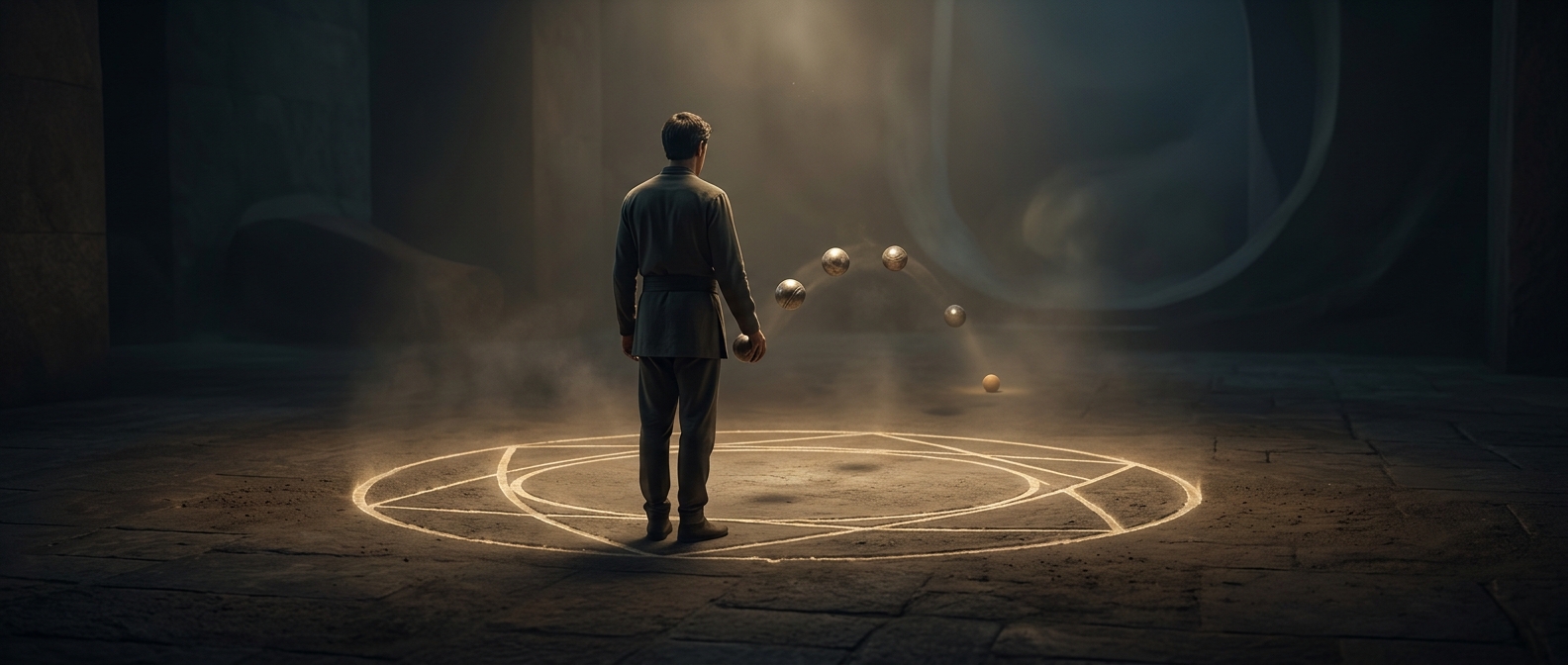
The change was simple but decisive: players throw while standing with both feet planted inside a small circle. The name pétanque comes from the Provençal phrase pès tancats, meaning “feet planted.”
How the change shaped the game
Without a run-up, players rely less on momentum and more on controlled throwing. They aim either to place their ball close to the small target ball, called the cochonnet, or to knock an opponent’s ball away. The same basic idea works on a compact gravel or dirt playing area, so the game does not require a running lane or a large, carefully prepared pitch.
That adjustment made pétanque playable for someone with limited mobility—and gave the game its defining rhythm: players take turns stepping into a circle, choosing their throw, and sending a metal ball across the ground. A change made so one friend could keep playing became the rule that distinguishes pétanque from its running-start predecessor.