A work sack becomes a handicap
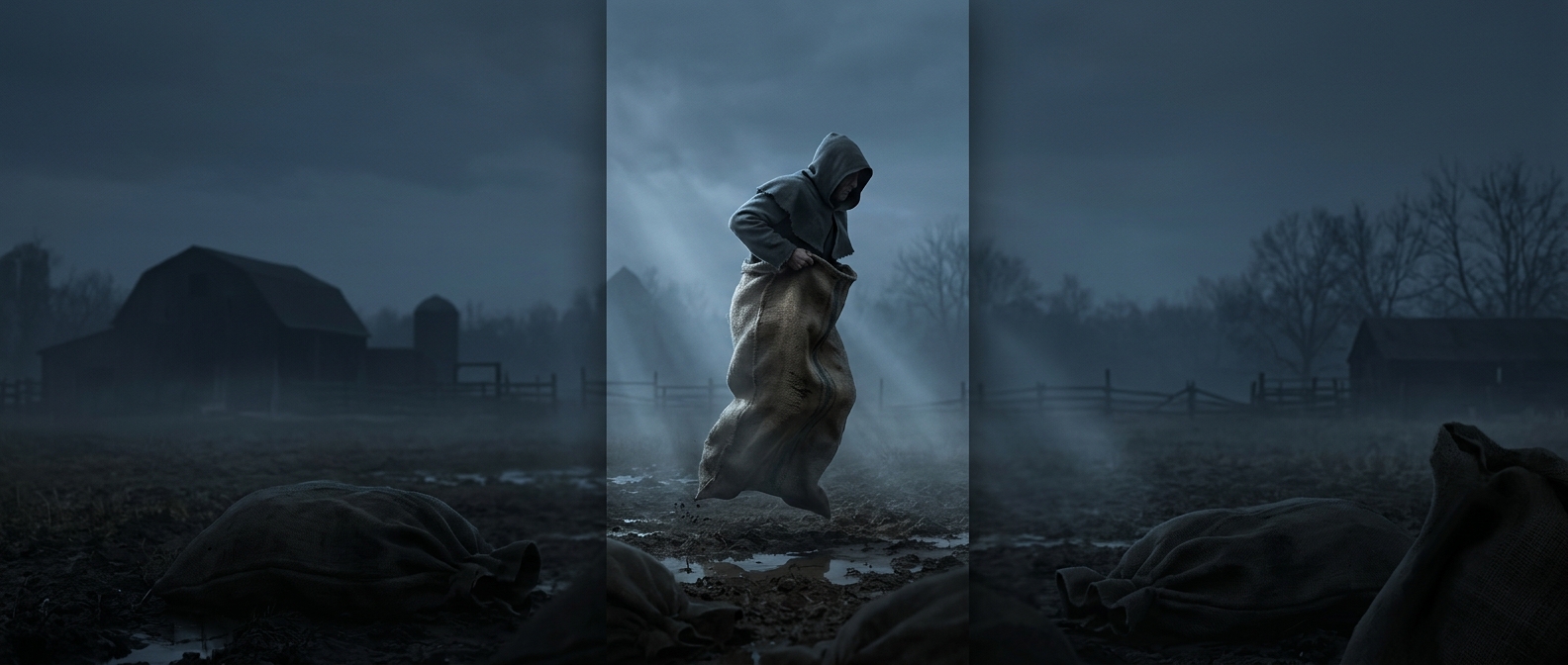
A burlap sack was made to carry goods, not to help someone move quickly. Once a worker climbed inside and held its rim around the waist, the bag bound both legs together. Running was out; each step had to become a hop, and a small loss of balance could send the racer tumbling.
That simple constraint is what makes a sack race funny and competitive. Everyone faces the same awkward movement, but racers still have to judge how hard to push off, how far to hop, and when to steady themselves. A powerful leap can gain ground—or end in a fall.
The packaging supplies the challenge
The game needs little equipment beyond sacks and open space. Leftover bags could be repurposed for a contest without turning them into anything new: the packaging itself sets the rules. The race also makes the challenge visible to spectators. Instead of ordinary running, competitors lurch forward in short jumps, often trying to recover without stepping out of the sack.
Rules can vary—for example, whether a fallen racer may get up and continue—but the central idea remains the same: the sack turns a familiar race into a test of balance and timing. A leftover tool of farm work becomes the obstacle everyone has to overcome.