A forestry tool became a test of nerve
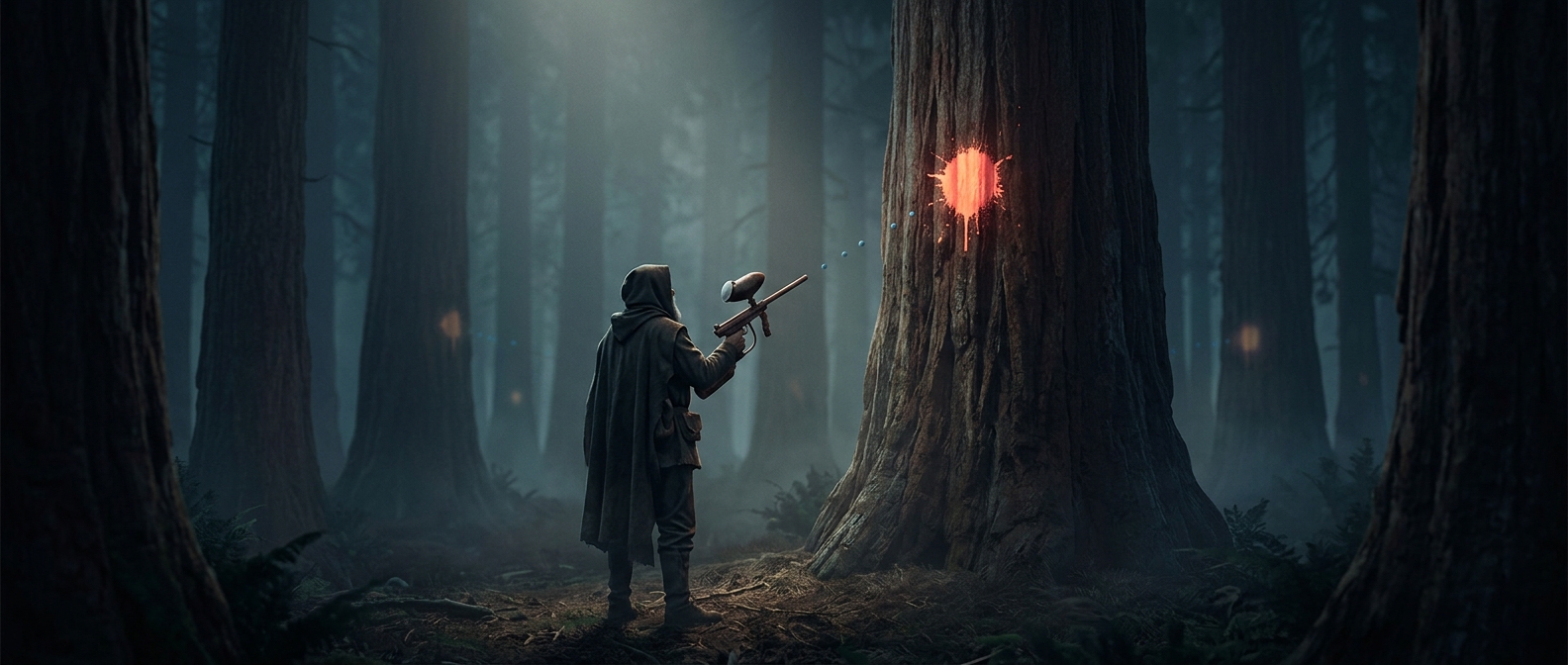
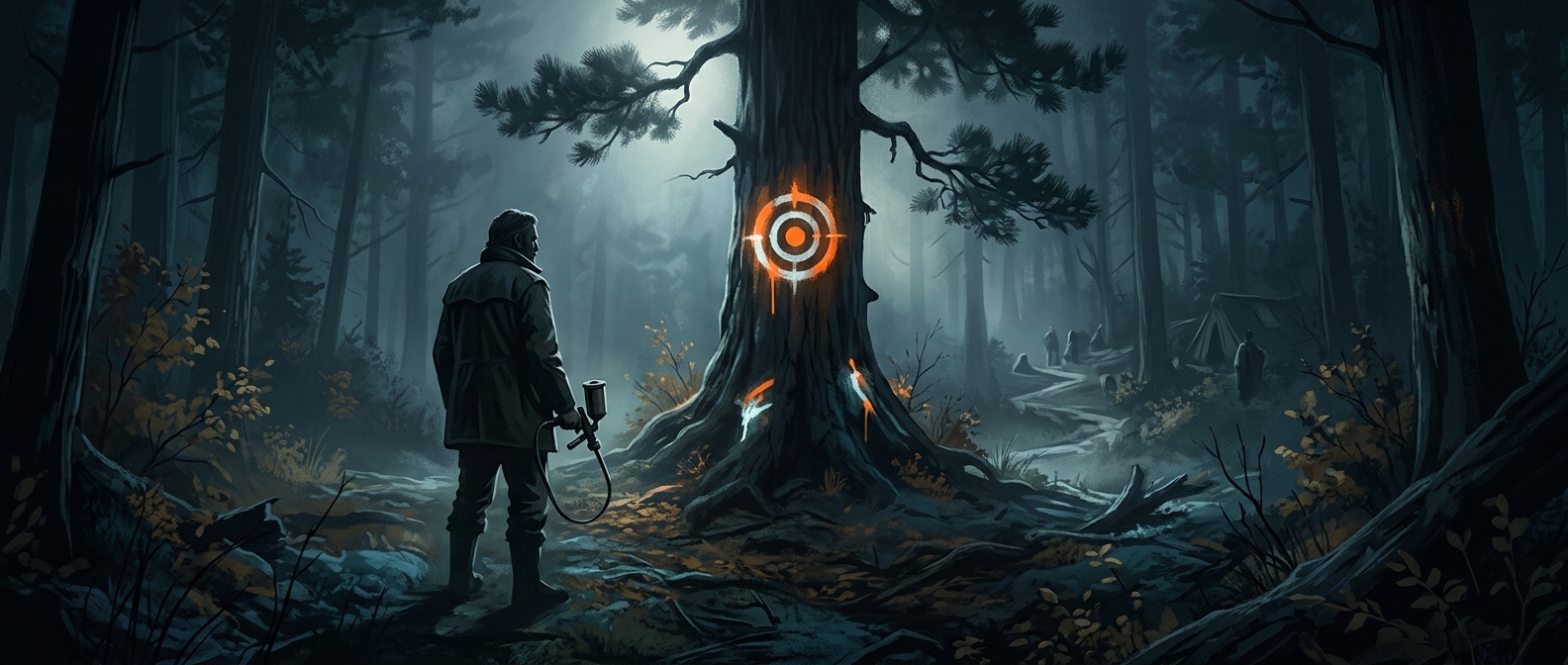
The first paintball markers were not designed for sport. They were made to shoot paint-filled capsules at trees, letting forestry workers mark trunks that were too distant or difficult to reach. In 1981, friends Hayes Noel and Charles Gaines saw a different use for the equipment: a way to test their disagreement over whether people with different backgrounds could survive in the wilderness.
A marker could tag a person from a distance, turning a hypothetical argument into a game with an immediate, visible consequence. The paint made a hit easy to recognize; players did not have to decide whether someone had been struck. That simple feedback helped make the contest playable rather than merely a dangerous free-for-all.
From argument to organized game
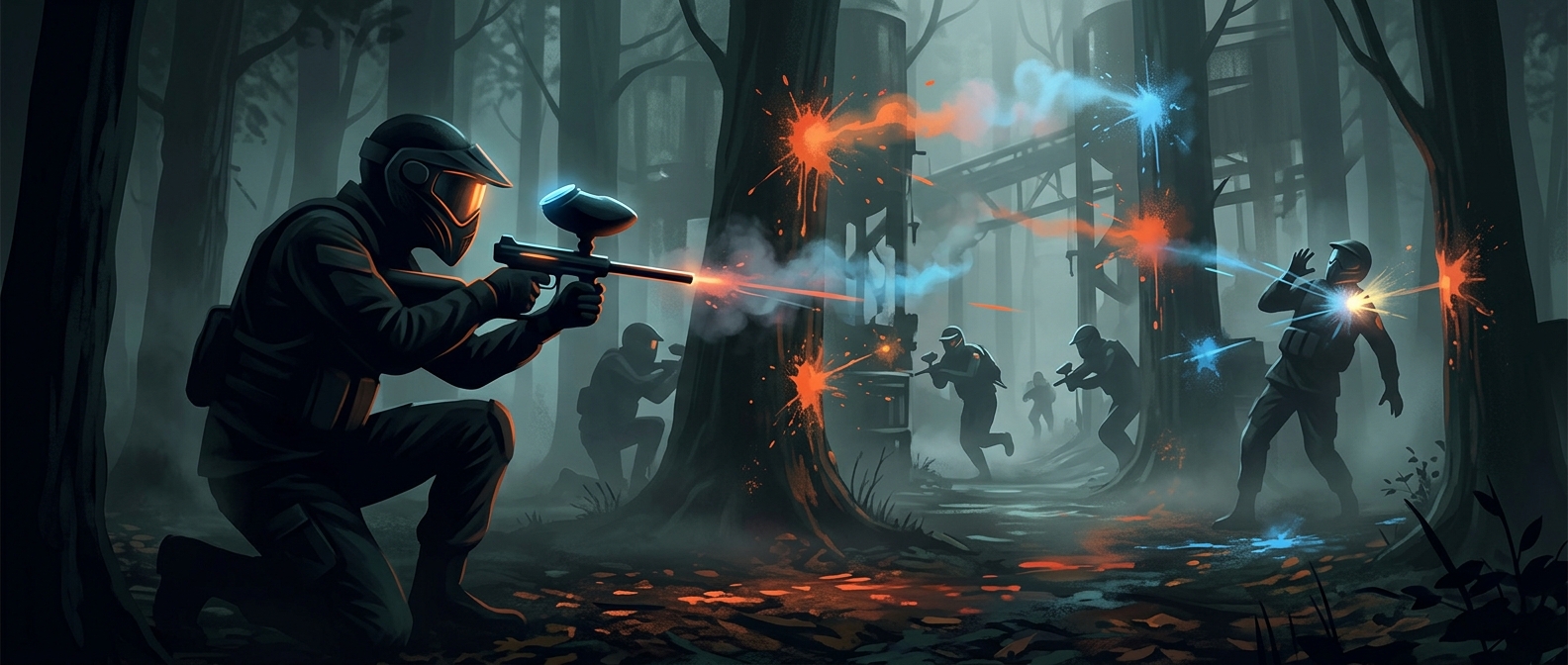
Noel and Gaines brought the idea to a group of friends. On June 27, 1981, twelve players met in New Hampshire for a game built around capturing flags. The objective gave the players more to do than simply shoot at one another: they had to move through the woods, avoid being marked, and make decisions under pressure.
That combination shaped paintball’s identity. The marker supplied the tool, but the rules turned it into a contest of movement and strategy. A device meant to leave a mark on a tree became a way to settle a debate through play—and the first game made the argument something players could experience, not just discuss.