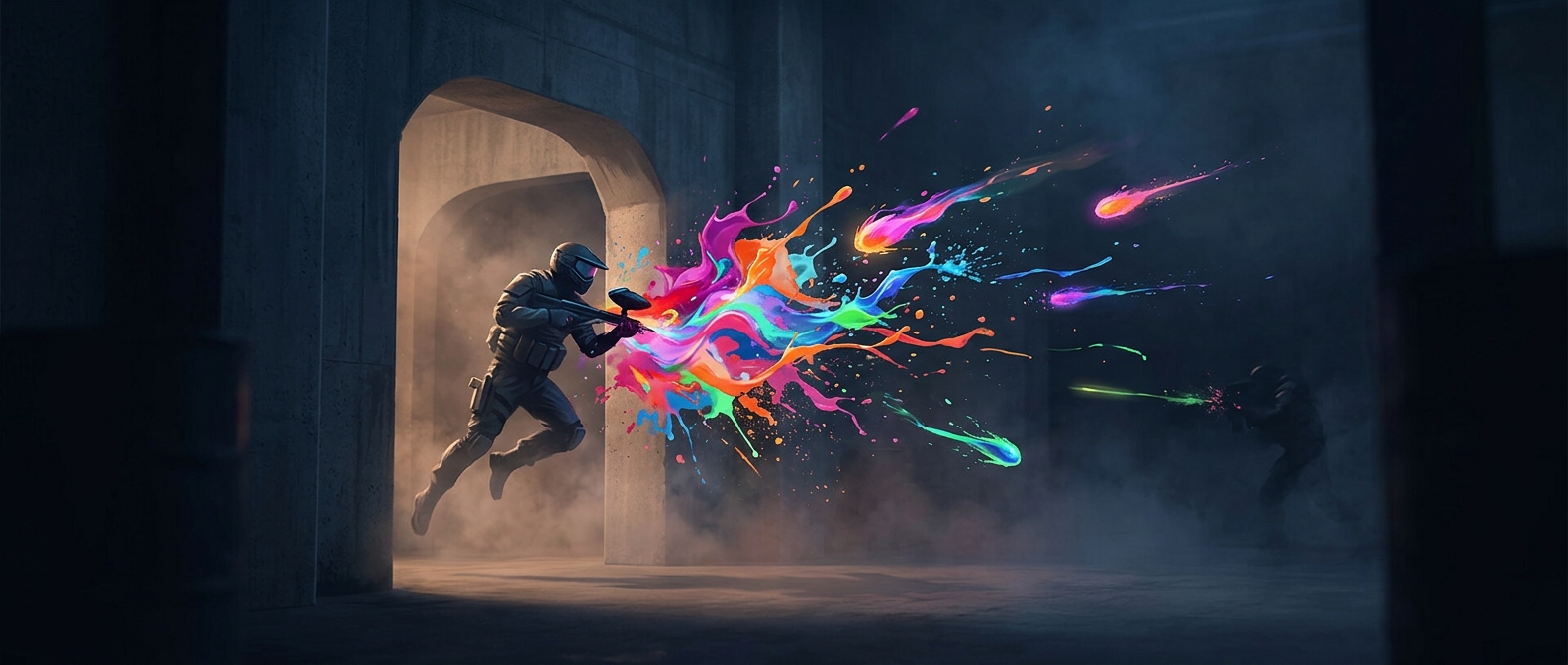
How a Paintball Makes Its Mark
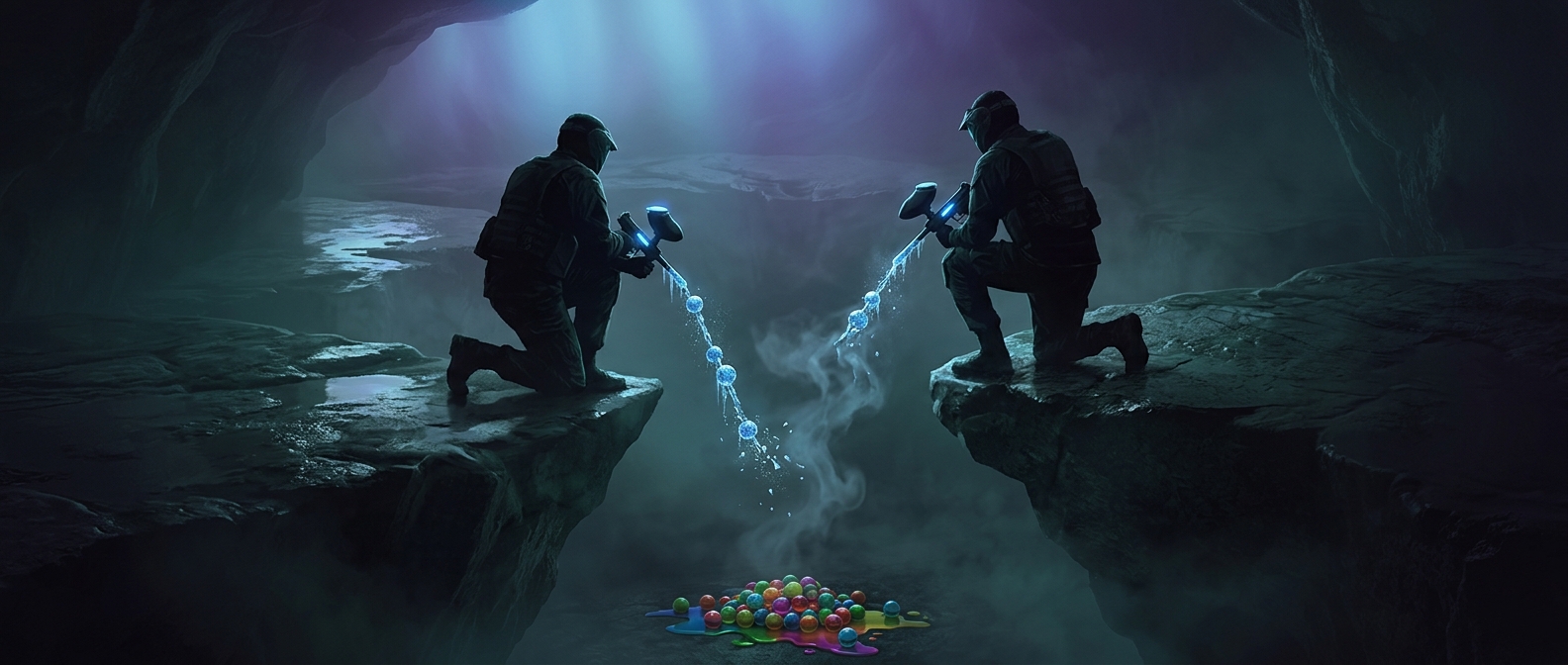
A paintball is a small, thin-walled capsule filled with colored liquid. A marker—paintball’s term for the launcher—uses compressed gas to push the capsule through its barrel. The shell is made to rupture on impact, releasing paint that can be wiped away rather than behaving like a permanent dye.
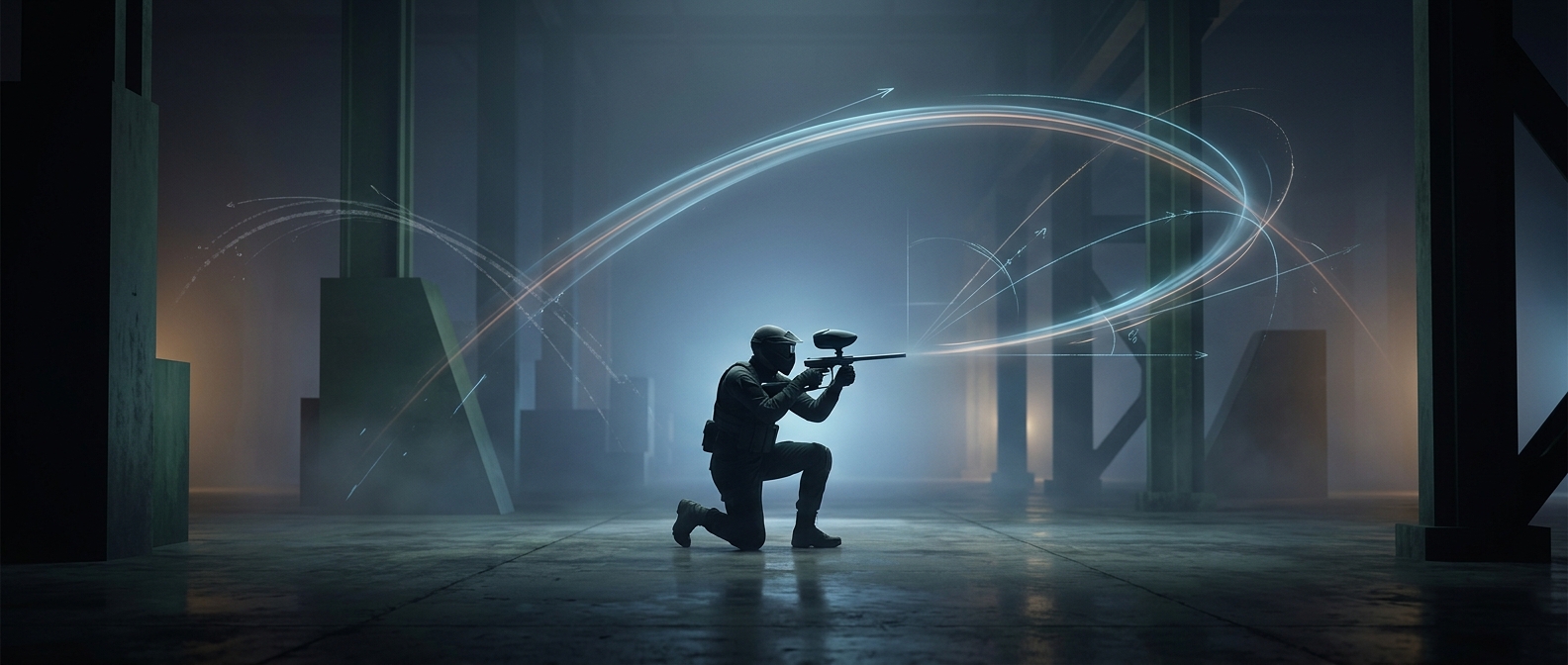
That design creates a balancing act. The shell must survive the trip through the marker and the flight to its target, but break when it hits. If it bursts too early, the shot leaves a mess inside the equipment; if it stays intact on impact, it may leave no visible mark. Temperature and handling can affect how brittle the shell is, so not every hit produces the same splat.
Why the Game Has So Many Rules
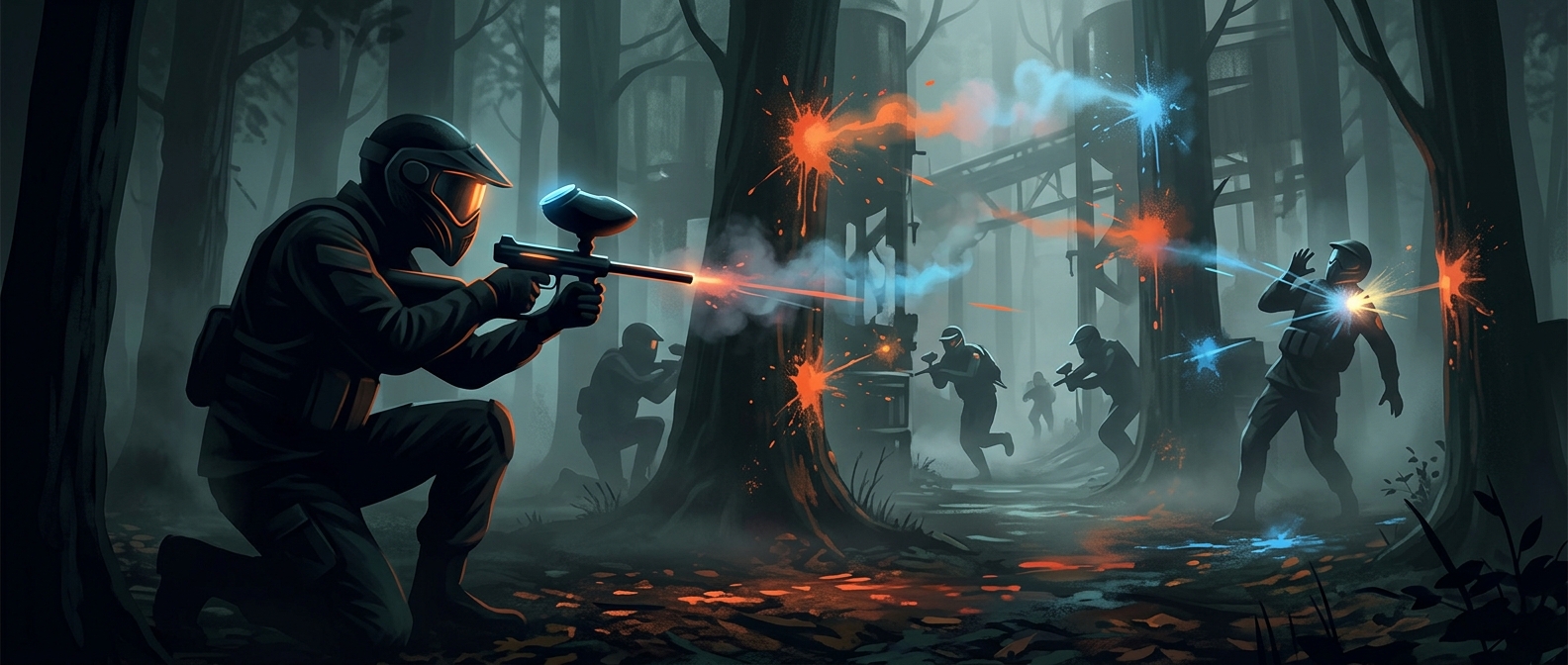
The visible mark helps settle a basic question: was a player hit? But the capsule still carries enough force to sting, and an exposed eye is especially vulnerable. That is why paintball depends on protective gear and field rules, not just on the paint being washable. Full-face masks protect the eyes and face, while field procedures help keep markers from firing when play has stopped.
The result is a game built around a deliberate compromise: a shot should be forceful enough to travel and leave evidence, yet the equipment and rules must make that impact manageable. The colorful splatter is not merely decoration—it is the game’s simple, immediate record of what happened.