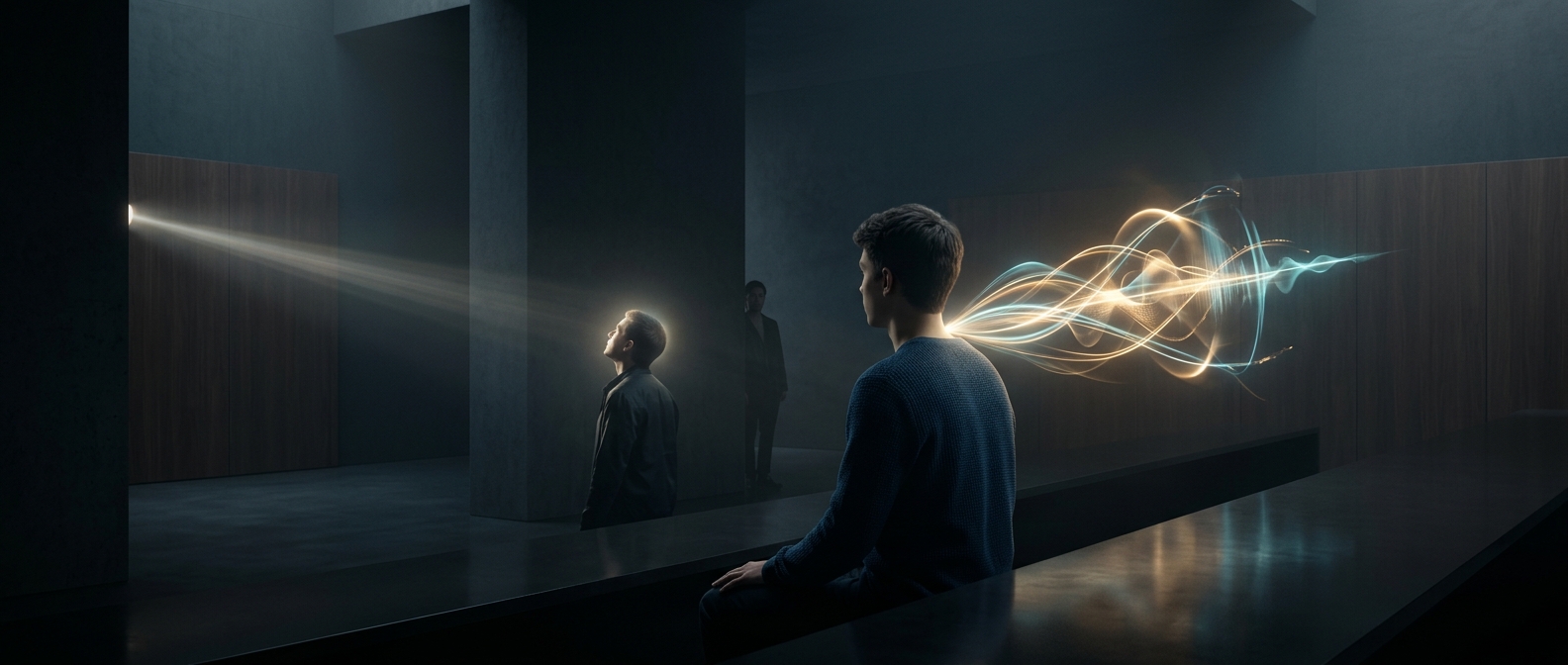
Why a nearby question can feel like yours
Conversation is not heard as a clean sequence of turns. In a busy room, your brain has to separate voices, extract words, and decide which parts matter—all while tracking what is happening around you. A question can register as meaningful before you have fully worked out who it was meant for.
That matters because understanding speech is partly predictive. As a sentence unfolds, listeners use its wording and context to anticipate what might come next. If the question fits something you know about or are already thinking about, your mind may begin preparing an answer while the speaker is still finishing.
Meaning can outrun social bookkeeping
Figuring out the addressee—who is being spoken to—relies on cues such as a name, eye contact, body orientation, or the conversation’s recent history. Those cues may be subtle, brief, or easy to miss, especially when attention is split. The words themselves can be clear even when the social handoff is not.
Meanwhile, conversation rewards quick responses. A pause may signal that someone should speak, so listeners often prepare to take a turn rather than wait to analyze every cue. If the question sounds relevant and there is a moment to answer, that readiness can carry you into a reply before you notice the speaker was looking past you.
The small mismatch behind the awkward moment
The mistake is not necessarily that you failed to hear the question. You may have heard it accurately but attached it to the wrong conversational turn. In effect, your mind solved “What is being asked?” a beat before it solved “Who is being asked?”
That is why a quick glance or a name can prevent the mix-up: it supplies the missing information about where the turn is directed. And when those cues arrive late, the answer may already be out.