A winter refuge in Nagano’s mountain valley
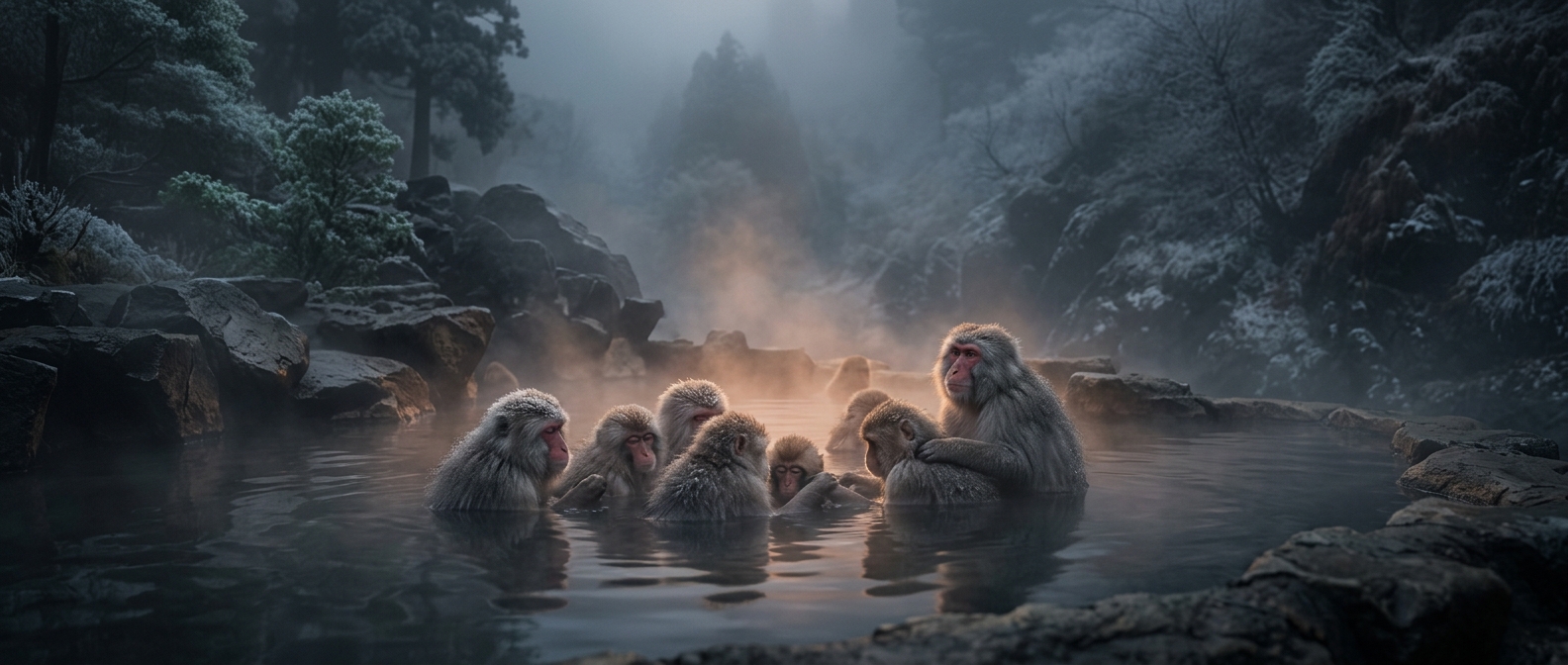
At Jigokudani Yaen-Koen, a monkey park in Yamanouchi, the bathing pool is fed by a natural hot spring. The surrounding mountains can be cold and snowy, but geothermal heat keeps the water warm. For macaques, stepping into it offers a direct way to lose less body heat during long winter spells.
Japanese macaques are adapted to cold: they grow thick winter coats and can huddle together for warmth. A hot soak is an additional option, not a necessity. Monkeys can leave the pool and return to ordinary foraging and social life; the bath is part of their environment, rather than a human-style daily ritual.
A learned behavior shaped by tourism
The bathing became a familiar sight after macaques began using hot water associated with a nearby human bathing facility. To keep the monkeys out of that facility, the park established a pool for them. The result is a distinctive meeting of animal behavior and local tourism: a natural spring supplies the heat, while a managed park makes the monkeys easier to observe.
The animals’ tolerance of visitors comes from repeated exposure, not an invitation to approach. Keeping a respectful distance matters because these are wild monkeys, not performers. Their quiet presence in the water can look almost human, but the practical story is simpler: a cold-adapted animal has found a warm place in a snowy landscape—and generations of visitors have learned to watch without joining them.