How a gene can leave a mark on a strand
Hair texture begins in the follicle, the small pocket in the skin where each hair grows. The follicle’s shape and the way its cells build the hair shaft help determine whether a strand grows relatively straight, wavy, or curly. Genes influence those processes by guiding cell behavior and the production of structural proteins in the shaft.
A genetic variant does not dictate a hairstyle on its own. Texture reflects many inherited influences, and different combinations can produce similar-looking hair. A Neanderthal-derived variant, where it has a measurable effect, is one small part of that larger mix—not a stand-alone explanation for someone’s curls or straight hair.
Ancient DNA, inherited in fragments
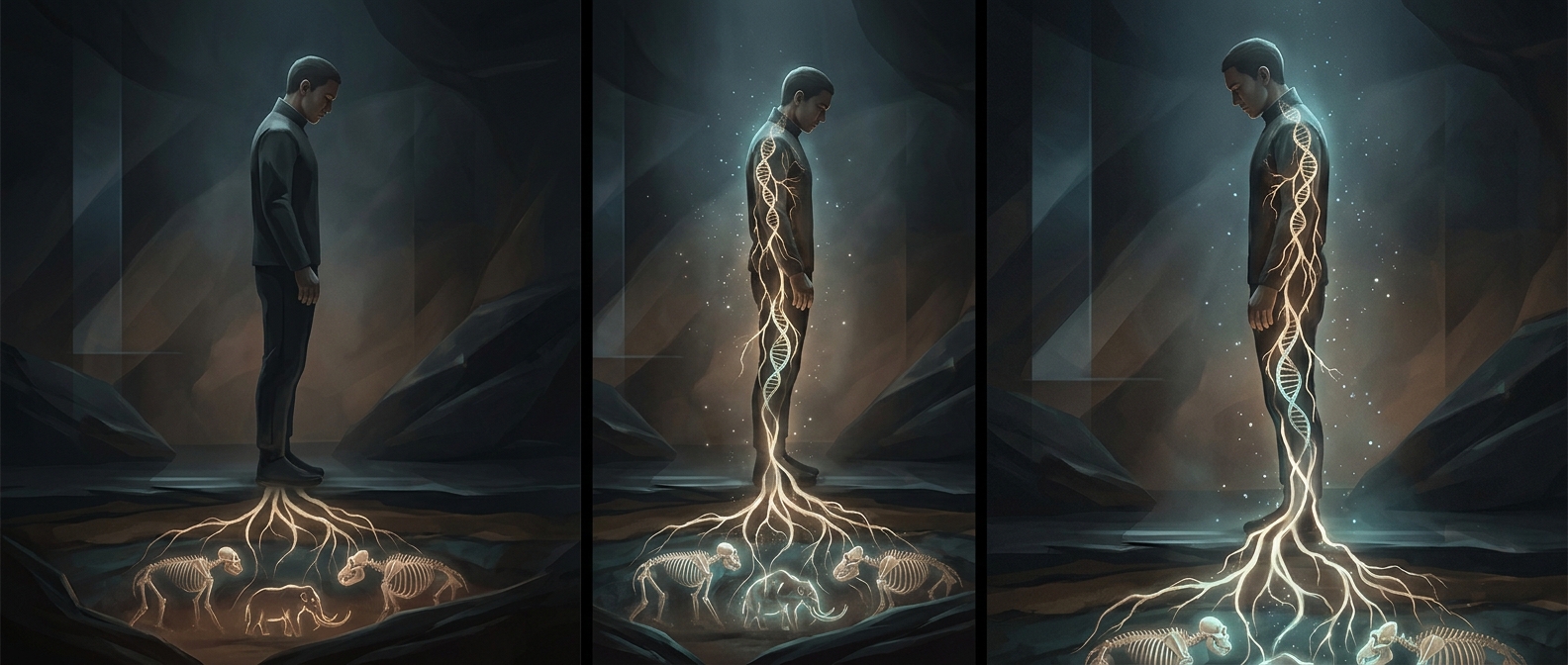
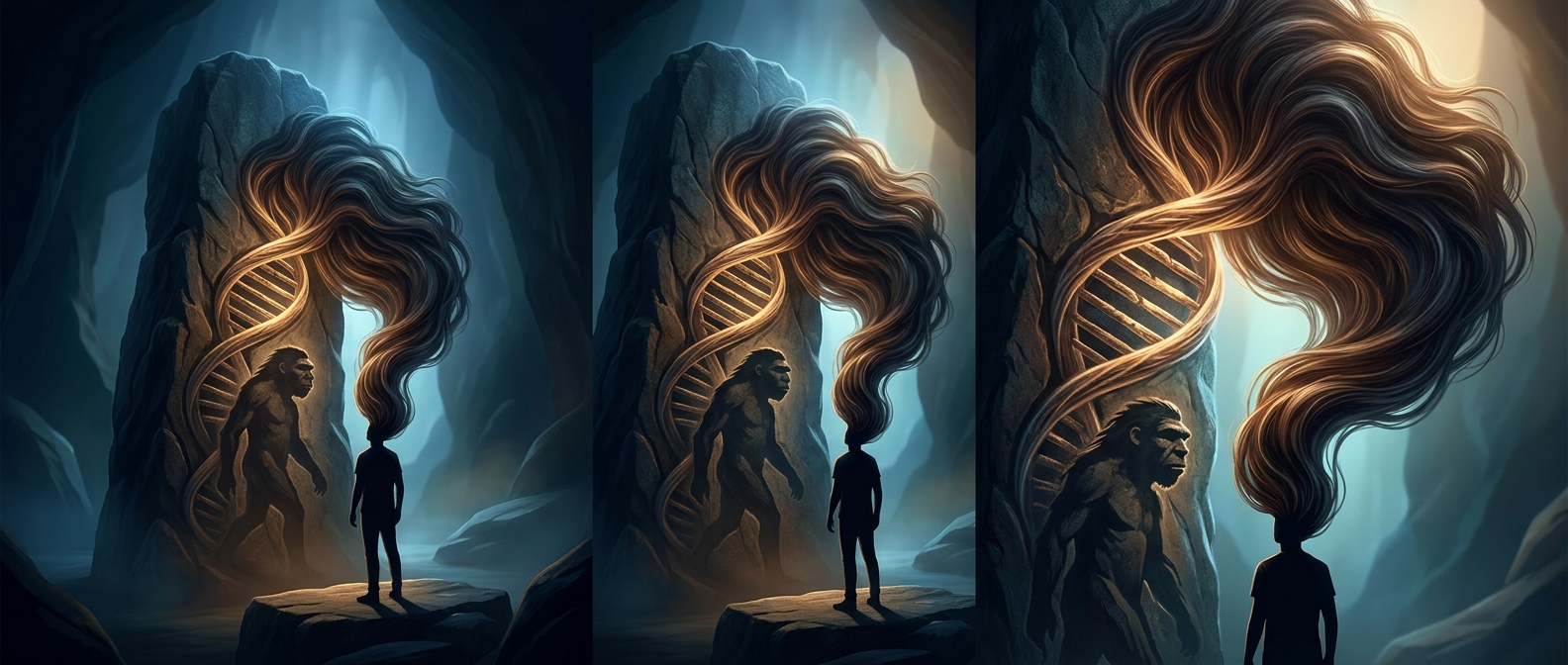
When some early modern humans had children with Neanderthals, pieces of Neanderthal DNA entered the ancestry of later generations. Those pieces were passed down and reshuffled over time; people today carry different combinations of them. Some surviving variants may influence traits by changing how genes work, including instructions relevant to hair growth.
The result is a subtle legacy, not a visible label of ancestry. A person’s hair texture comes from a whole set of genetic and biological influences, so an ancient variant can contribute without deciding the outcome. Its path from an ancestor to a strand growing today runs through a tiny change in instructions that helps shape a follicle’s work.