The railroad turned the prairie into a viewing platform
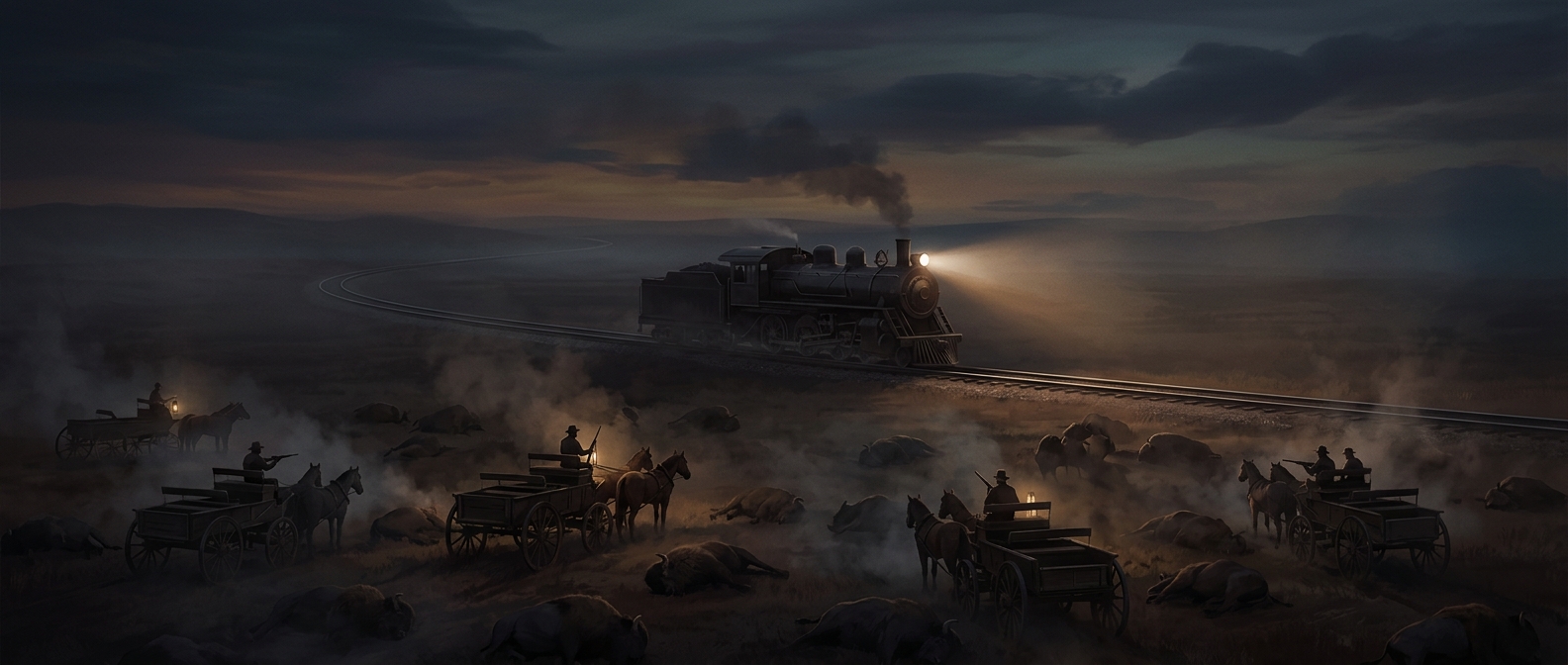
A train made bison easier to find than they were on foot: it crossed open grassland quickly, carrying passengers past herds that could be difficult to approach on horseback. From the cars, tourists could shoot without leaving the relative comfort and safety of the train. Rail companies could sell the experience as an unusual attraction, turning a journey across the plains into a spectacle as well as transportation.
A hunt without the usual use for the animal
Traditional hunting generally involved bringing an animal down for food, clothing, tools, or other practical needs. In these rail excursions, shooting could be the point in itself. When animals were killed and left behind, their bodies provided no such return; the landscape became a grim byproduct of entertainment.
This spectacle unfolded amid a much broader slaughter of bison, including killing for hides and other commercial purposes. Railways helped open the plains to traffic and settlement, while the destruction of bison helped undermine the food supply and lifeways of Indigenous peoples who depended on them. The tourists’ shots were only one part of that larger transformation, but they made the violence visible as leisure.
What the ride concealed
From a passenger car, the prairie could seem like scenery passing by. Yet the train’s speed and comfort also made it possible to treat living herds as targets without confronting the work or consequences of hunting on the ground. The striking detail is not just that people fired from trains, but that a railroad could package the killing itself as part of the trip.