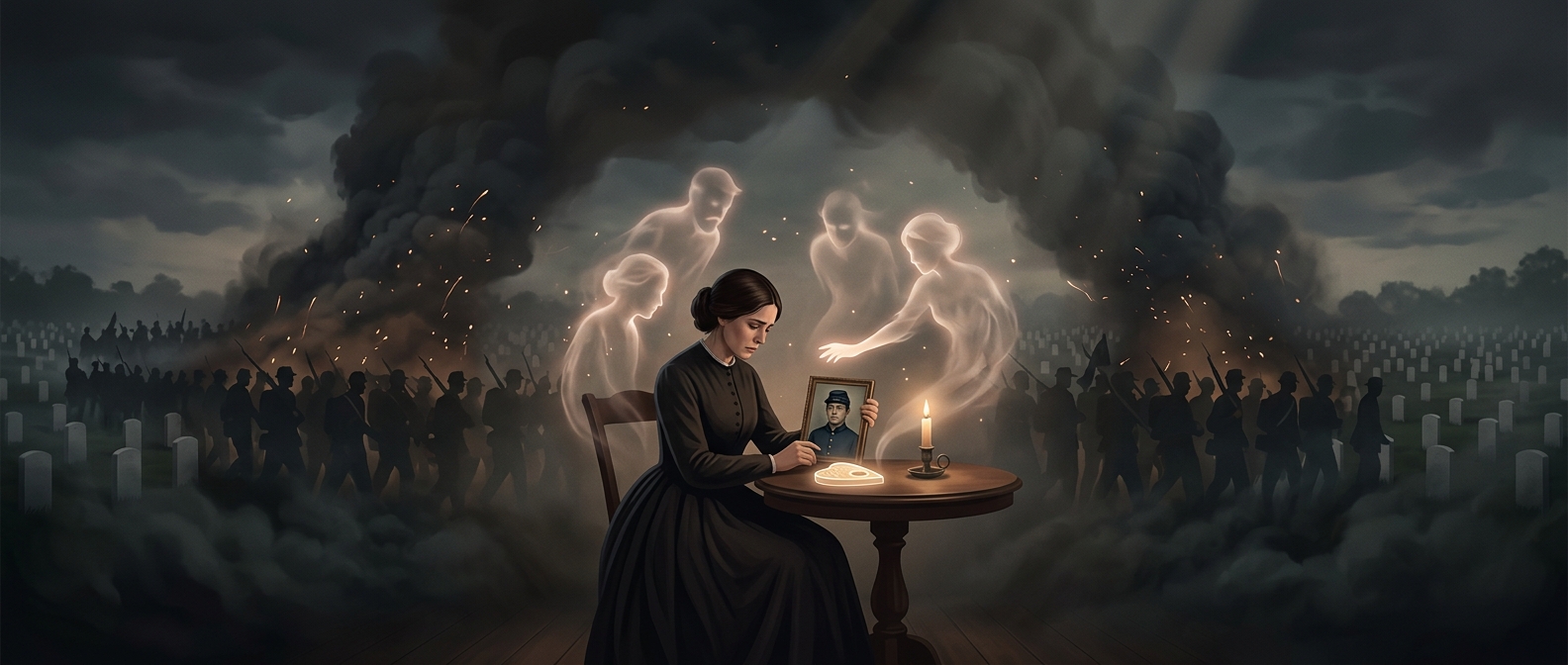
From séances to a system
In mid-19th-century France, séances—gatherings where participants sought messages from the dead—were attracting attention, but their reports varied widely. Allan Kardec, the pen name of educator Hippolyte Léon Denizard Rivail, tried to make sense of that variety by treating mediumistic communications as material to compare and organize, rather than as isolated marvels.
He posed questions through different mediums and set answers alongside one another. The aim was to identify ideas that recurred and build a coherent account of the spirit world. That process gave a scattered practice a framework: Kardec’s 1857 book The Spirits’ Book presented questions and answers in an organized form, followed by further works that developed the system.
What the framework claimed
Kardec’s Spiritism taught that spirits survive bodily death, can communicate through mediums, and progress morally through successive lives. In this view, communication with the dead was not just a spectacle; it could offer lessons about responsibility, suffering, and spiritual development. The books’ orderly question-and-answer style made those claims easier to study and teach.
Kardec’s method gave Spiritism a recognizable structure and helped it spread beyond individual séances. But comparison and organization do not, by themselves, establish that spirits were the source of the messages. The system is best understood as a religious and philosophical tradition built around that belief—not as a scientifically verified account of the afterlife.